
Gua Sha Benefits: What Actually Works, Backed by Research
- Norman Church
- 3 days ago
- 7 min read

The most reliable gua sha benefits are better microcirculation, short-term relief from muscle and headache pain, and temporary de-puffing in the face. That’s what small clinical studies and practitioner reports consistently show. The tradeoff: bruising or petechiae (those tiny red dots) is normal and expected. Skip it if you’re on blood thinners, have broken skin, or are dealing with an active rash.
Key Takeaways
Gua sha’s benefits are real but modest: it improves short-term circulation and pain relief, and temporarily reduces facial puffiness, without permanently reshaping tissue.
Point | Details |
Evidence is real but limited | Small trials show short-term relief for neck pain and migraines, but large studies are lacking. |
Facial effects are temporary | De-puffing comes from fluid movement, not lasting structural change to the face. |
Bruising is normal, not dangerous | Petechiae typically fade within days; worsening swelling or infection signs need a doctor. |
Technique differs by area | Face needs light, short strokes; body work uses firmer pressure and longer strokes. |
Skip it with certain conditions | Avoid gua sha on blood thinners, open wounds, active rashes, or recent surgical sites. |
Table of Contents
What Is Gua Sha, Exactly?
Gua sha originated in traditional Chinese medicine as a scraping technique meant to move stagnant “qi,” or energy, trapped beneath the skin. In plain terms, it’s a practice where a smooth-edged tool is pressed and dragged across the skin in repeated strokes to stimulate blood flow.
The tool matters less than technique, but material does affect the experience:
Jade or rose quartz: cool to the touch, favored for facial work because of gentle gliding and lower risk of dragging skin.
Stainless steel: heavier, holds a consistent edge, often preferred for body work where more pressure is needed.
Bian stone (traditional): the original material used in TCM practice, still used by some practitioners today.
Facial gua sha uses light, short strokes aimed at cosmetic goals like puffiness reduction. Body gua sha uses firmer, longer strokes and targets muscle tension, typically on the back, neck, or shoulders.
How Does Gua Sha Work on the Body?
Scraping the skin triggers a cascade of local physiological responses rather than one single mechanism. Research on scraping-type therapies, including a physiologic review published on NCBI, points to a few overlapping effects:
Increased microcirculation: the scraping motion boosts blood flow to the treated area, which may explain why skin looks flushed and warm afterward.
Localized immune response: the petechiae caused by scraping appear to activate anti-inflammatory signaling in the skin, according to mechanisms described by WebMD.
Lymphatic movement: gentle pressure can help shift fluid that’s pooled under the skin, which is the leading theory behind facial de-puffing.
Mechanical muscle relaxation: firmer strokes on the body may release surface tension in tight muscle fibers, similar to a targeted massage.
Traditional practitioners describe this as releasing blocked qi. Western clinicians describe the same visible result as improved circulation and lymphatic drainage. Both framings point to the same effect: something changes locally in the tissue, even if the explanation for why differs by tradition.
What Are the Real Benefits of Gua Sha?
The benefit categories fall into three buckets: pain relief, skin and lymphatic effects, and a set of more specific, condition-based uses still under early study.
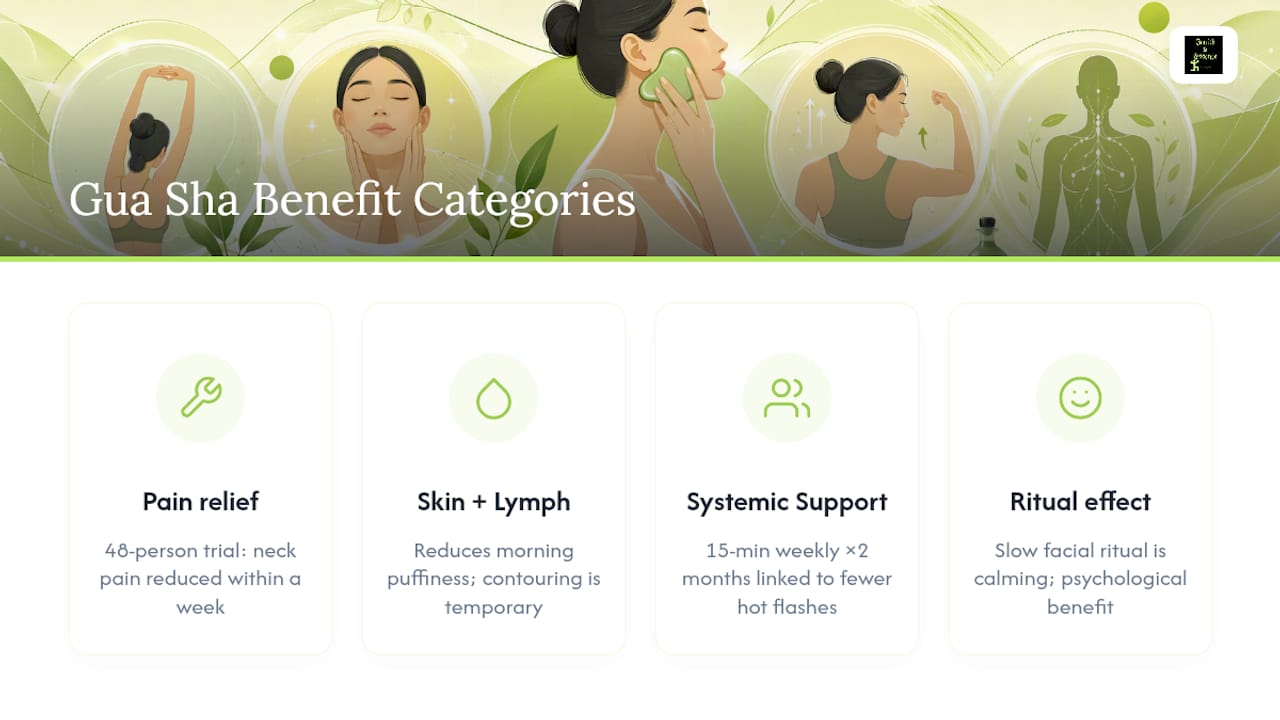
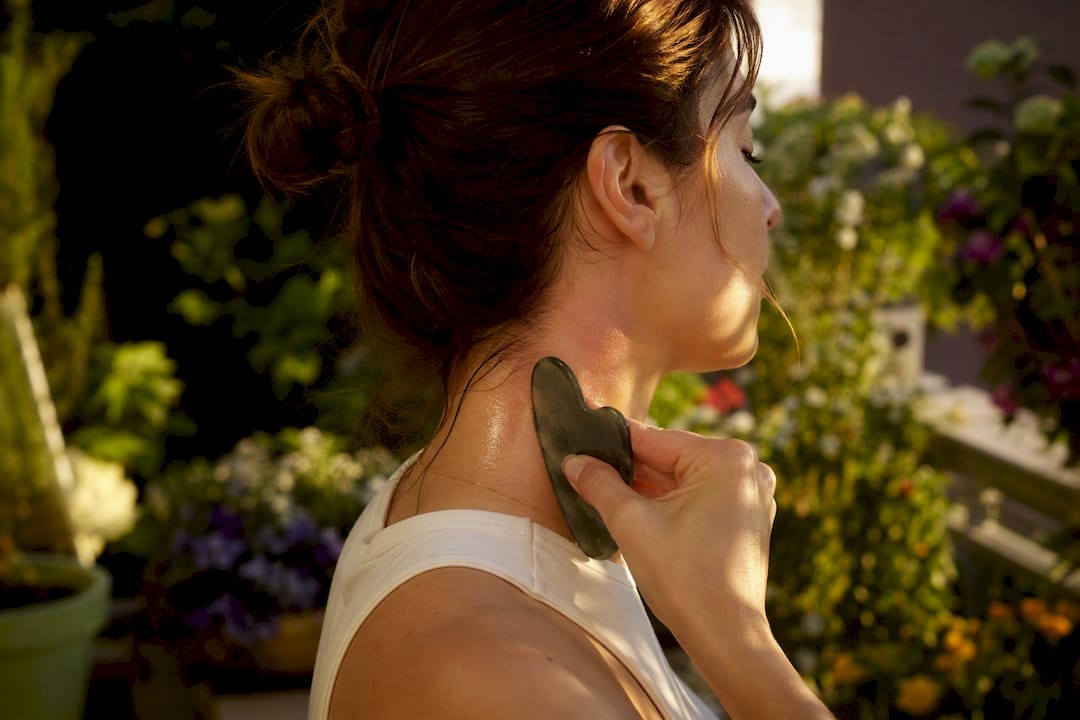
Musculoskeletal pain relief. A 48-person clinical trial found significant neck pain reduction within one week of gua sha treatment. Relief in these trials tends to show up fast, often within days, but there’s no strong evidence it lasts without repeat sessions.
Headache and migraine relief. One 2020 study reported that half of participants experienced migraine relief during an acute episode after gua sha treatment. That’s a meaningful signal, though it’s one study, not a settled finding.
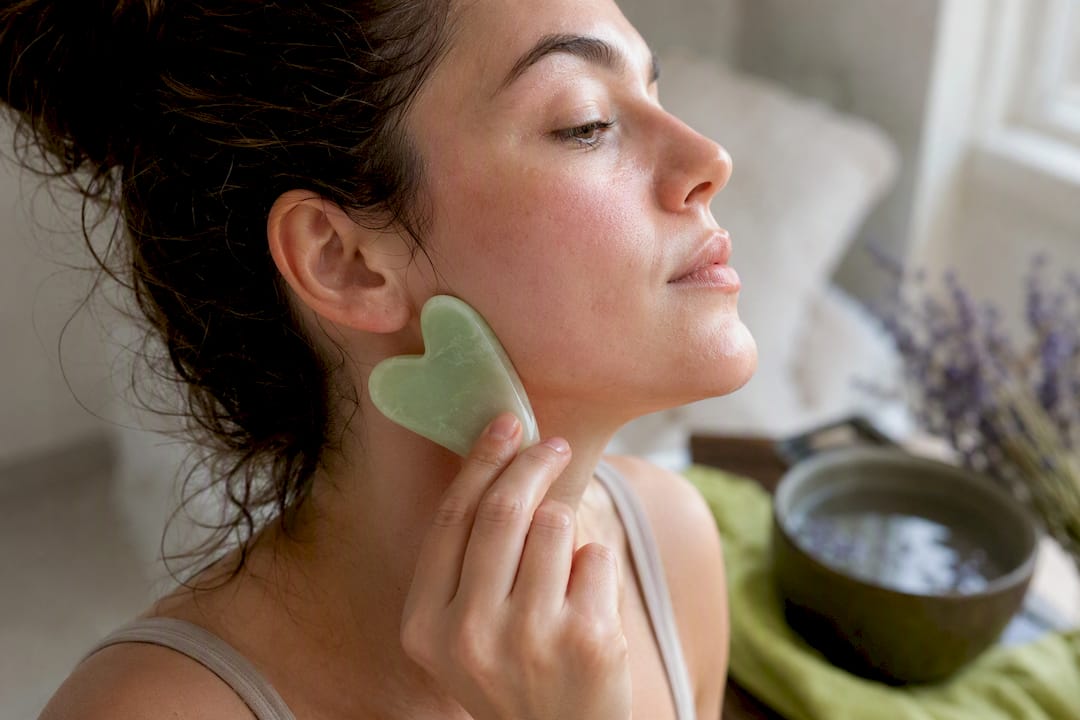
Facial puffiness and contouring. Facial gua sha produces a genuine, visible reduction in morning puffiness through improved circulation and lymphatic drainage, according to a board-certified acupuncturist at Henry Ford Health. Any jawline definition you see afterward is temporary, driven by fluid movement, not permanent restructuring of the face.
Systemic symptom support. Weekly 15 minute sessions over two months were linked to reduced hot flashes, insomnia, and headaches in perimenopausal women in one small study. Similar small-scale reports mention easing breast engorgement in nursing mothers, though this remains anecdotal territory more than proven protocol.
The ritual effect. Even without a single measurable physiological change, the slow, deliberate act of facial gua sha is genuinely calming. That psychological wind-down is a real, secondary benefit, not a consolation prize.
What Does the Research Actually Show?
Short-term benefits for pain and circulation show up repeatedly in small studies, but the overall evidence base remains limited and inconsistent in design. Here’s what’s been documented:
A 2020 study found 50% of participants got migraine relief during acute episodes.
A 48-person clinical trial showed significant neck pain reduction after one week.
Small studies on weekly 15-minute sessions over two months found reduced perimenopausal symptoms.
PubMed-indexed research on gua sha is dominated by small trials and observational studies, not large randomized controlled trials.
The honest read: short-term pain and circulation effects are reasonably well supported across multiple small studies. Claims about lasting structural change to the face, or gua sha as a standalone treatment for chronic disease, are not.
What Are the Side Effects and Who Should Avoid It?
Bruising and petechiae, those small red or purple dots from broken capillaries, are the most common visible effects, and they’re usually gone within a few days. Skip gua sha, or check with a doctor first, if any of these apply:
You take blood thinners or have a bleeding disorder.
You have open wounds, active rashes, or inflamed acne in the treatment area.
You’ve had recent surgery near the intended site.
You have an active skin infection.
You’re pregnant (some practitioners avoid certain pressure points; check with your provider).
You have notably thin or fragile skin, common with certain medications or older age.
Pro Tip: If you notice swelling that gets worse instead of better after 48 hours, or any sign of infection like warmth and spreading redness, stop and call your doctor. That’s not typical bruising.
How Do You Do Gua Sha Safely at Home?
Facial gua sha calls for light pressure and short strokes; body gua sha uses firmer pressure and longer strokes, and the two shouldn’t be confused.
For the face:
Cleanse skin and apply a slip agent, like a hydrating facial serum or facial oil, so the tool glides instead of drags.
Hold the tool at roughly a 15 degree angle against the skin.
Start at the jawline and stroke outward toward the ear.
Move to the cheek, then gently under the eye (very light pressure here), then the brow bone.
Repeat each stroke 3 to 5 times per area.
Keep total session time to 5 to 10 minutes, done 2 to 3 times a week.
Stop immediately if you feel sharp pain, not just pressure.
For the body: target tight areas like the upper back, shoulders, or neck. Use firmer pressure, longer strokes (a few inches at a time), and limit sessions to 10 to 15 minutes. For chronic pain, 2 to 3 sessions per week is a reasonable starting frequency, backing off if petechiae hasn’t faded from the last session.
Pro Tip: Never drag a gua sha tool over active acne or inflamed breakouts; it can spread bacteria and worsen irritation. A pre-treatment botanical facial steam can help open pores and soften skin before you start.
When Should You See a Professional Instead?
See a licensed acupuncturist or a trained manual therapist if you’re dealing with significant or chronic pain, a complex medical condition, or you want results beyond cosmetic de-puffing. Look for a licensed acupuncturist (LAc) or a licensed massage therapist with specific gua sha training; for medical conditions like TMJ pain or facial paralysis, a board-certified acupuncturist is the safer route.
Before booking, ask three things: what specific training they have in gua sha, whether anything in your health history rules it out, and how many sessions they’d realistically expect before you see results.
Is Gua Sha Worth Trying?
For short-term de-puffing and as a low-risk add-on to a pain management routine, gua sha earns its popularity. It’s not a substitute for medical treatment of chronic conditions, and the research, while encouraging, is still thin. Try it gently, watch how your skin responds, and see a clinician if pain persists beyond what a home routine should reasonably fix.
Sources
These are the primary clinical and research sources referenced throughout this guide.
FAQ
What happens if you use gua sha every day?
Daily use raises the risk of skin irritation, excess bruising, and petechiae that don’t have time to heal between sessions. Most guidance supports 2 to 3 sessions per week for the face and a similar cadence for the body.
What’s the main disadvantage of gua sha?
The biggest drawback is visible bruising and petechiae, plus the fact that clinical evidence, while promising, comes mostly from small studies rather than large controlled trials. Results also tend to be temporary and require repeat sessions to maintain.
How often should you use a gua sha tool?
Most practitioners and clinical protocols use 2 to 3 sessions per week, with facial sessions lasting 5 to 10 minutes and body sessions running 10 to 15 minutes. Some symptom-specific studies used a single 15-minute session weekly over two months.
What do dermatologists think of gua sha?
Dermatologists and clinicians generally agree gua sha offers real, short-term benefits for circulation and puffiness but caution that it’s not a substitute for structural skincare treatments or medical care. Most emphasize realistic expectations: temporary de-puffing and relaxation, not permanent contouring.
Recommended
Comments