
Do Silicone-Free Conditioners Actually Work Better?
- Norman Church
- 22 hours ago
- 9 min read

Yes, for most people. A silicone-free conditioner typically cuts down on product buildup, lets roots move and lift again, and often leaves sensitive scalps less irritated. The tradeoff is real, too: you lose some of that instant, glassy smoothness silicones deliver, and if you rely on heat styling, you’ll need a different kind of protection.
Here’s what that means in practice:
Fine or oily hair usually sees a noticeable difference
Curl definition tends to improve with continued use
Very damaged or heavily heat-styled hair may require a slower transition
If you’re ready to try it, skip to the switching plan below. If you want the reasoning first, keep reading.
Key Takeaways
Silicone-free conditioners reduce buildup and improve root volume for most hair types, though very damaged or heavily heat-styled hair may still benefit from silicones.
Point | Details |
Biggest winners | Fine, oily, low-porosity, and curly hair types typically see the fastest, most noticeable improvement. |
Main tradeoff | Expect less instant gloss and a need for separate heat protection if you style with heat often. |
Test before committing | Try an ends-only swap for two to three washes, or a four-week full trial, before judging results. |
Read the label | Ingredients ending in “-cone,” “-conol,” or “-siloxane” signal silicones; check before buying. |
Where to start | Essencezenith’s curated hair products carry a 30-day guarantee, making a low-risk trial possible. |
Table of Contents
What Are Silicones and Why Do They Cause Buildup?
Silicones are synthetic polymers added to conditioners, serums, and heat protectants to make hair feel smooth immediately. They coat the hair shaft in a microscopic film that reduces friction between strands, which is why silicone-treated hair feels slippery right out of the shower. That same film adds shine, tames frizz, and can help protect against heat damage, which is exactly why they became a haircare staple in the first place.
The problem is that not all silicones rinse away evenly. Water-soluble types (often listed as PEG-modified or “hydrolyzed” silicones) wash out with a normal shampoo. Non-water-soluble types, like dimethicone or amodimethicone, build a more stubborn film that needs a stronger surfactant to fully remove.
Pro Tip: Check the ingredient list for anything ending in “-cone,” “-conol,” “-siloxane,” or “-silane” (dimethicone, cyclopentasiloxane, amodimethicone). Those endings almost always signal a silicone, water-soluble or not.
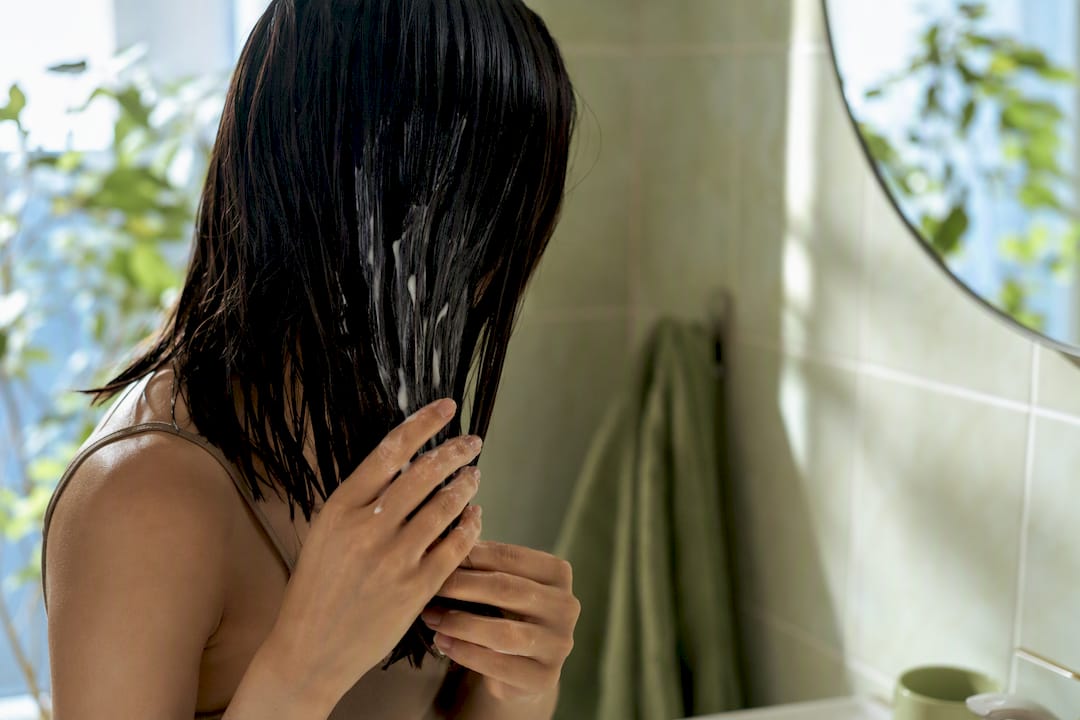
You’ll find these ingredients most often in conditioners, leave-in serums, and heat protectant sprays, since slip and heat resistance are their whole job.
What Are the Real Benefits of a Silicone-Free Conditioner?
Switching away from silicone-heavy formulas changes more than how your hair feels on wash day. Here’s the priority order, based on what actually shows up first and what takes longer to notice.
Less buildup over time. Without a film accumulating wash after wash, hair doesn’t develop that dull, weighed-down texture that used to require a clarifying shampoo to fix.
Lighter hair with better root volume. Fine or thin hair stops going flat by midday because there’s no coating gluing strands together at the scalp.
Sharper curl and wave definition. Many curl-care routines lean on silicone-free or lightweight water-soluble formulas specifically because heavy coatings can smash curl clumps and dull definition.
More comfortable scalps. Sensitive or acne-prone scalps often react better once heavy occlusive coatings are gone, since a silicone-free conditioner tends to hydrate without stacking on layers of buildup.
Better absorption of actives. Low-porosity hair, which already resists moisture, benefits when there’s no film blocking hydrating or repair ingredients from reaching the shaft.
Fewer clarifying washes needed. Pairing a silicone-free shampoo with a silicone-free conditioner tends to keep hair feeling clean longer, so you’re not reaching for a deep-clean wash every week just to undo coating.
Dermatologist-reviewed guidance frames this shift as most valuable for people whose hair feels coated or flat rather than genuinely damaged, since that group sees lightweight moisture do its job without residue getting in the way.
Which Hair and Scalp Types Benefit Most?
Not everyone needs to make this switch, and knowing which category you fall into saves you from chasing a fix your hair doesn’t need.
Fine, limp hair: Heavy silicones weigh strands down at the root. Lighter conditioning restores lift almost immediately.
Oily or buildup-prone scalps: Coatings trap sebum and debris close to the skin, which can worsen oiliness and irritation over a few washes.
Low-porosity hair: The cuticle already lies flat and resists moisture. A silicone film makes that worse by blocking hydration from getting in at all.
Curly and textured hair: Many curl routines favor silicone-free or water-soluble formulas because they preserve clump definition instead of smoothing curls into a limp mass.
Very damaged, bleached, or frequently heat-styled hair: This is where silicones still earn their keep. The smooth film they create can mask surface damage and add a layer of heat protection that a silicone-free formula won’t fully replace on its own.
If your hair is chemically processed or you’re flat-ironing daily, going fully silicone-free might reveal texture problems the coating was hiding.
What Are the Tradeoffs of Going Silicone-Free?
Nothing here is free. You give up some things to gain others, and it helps to know exactly what you’re trading before you commit.
Less instant gloss. Silicones physically smooth the cuticle for shine; without them, hair looks more natural but less polished right after washing.
Possible added frizz on very dry or high-porosity hair until you add a leave-in conditioner or a light oil on the ends.
A heat protection gap. If your old conditioner doubled as heat protection, you’ll need a dedicated silicone-free heat protectant before flat ironing or blow-drying.
A simple test beats guessing. Try a silicone-free conditioner on damp ends only for two to three washes, or commit to a four-week full swap, before judging the results.
Pro Tip: Judge success by root volume, ease of detangling, and scalp comfort, not by how glossy your hair looks in the mirror right after the shower. Gloss fades fast; the other three tell you if the switch is actually working.
How Do You Switch to Silicone-Free Conditioner?
Here’s a routine you can start this week, without overhauling everything at once.
Pick your swap strategy first. Replacing just the conditioner is the gentler option and easier to evaluate. A full routine swap (shampoo and conditioner both silicone-free) clears buildup faster but makes it harder to tell which product caused which change.
Clarify once before you start. A clarifying shampoo strips existing silicone buildup so your new conditioner isn’t fighting old residue. After that, you rarely need one more than once every few weeks.
Apply conditioner on the lengths and ends, not the scalp, unless your scalp runs dry. This avoids weighing down roots while still moisturizing where hair actually needs it.
Look for humectants and light emollients. Ingredients like glycerin, aloe, or plant-derived emollients such as diheptyl succinate provide slip without building a heavy film. Skip heavy butters or waxes if lightweight results are the goal.
Track results by week. Expect lighter-feeling roots almost immediately. Give it two to six weeks to judge curl definition, volume, and scalp comfort fairly.
Troubleshoot frizz or dryness by adding a leave-in on damp hair or a drop of lightweight oil on the ends. If hair still feels unmanageable after a full month, your texture may need more emollient than a fully silicone-free line provides.
Why Trust This Guide on Silicone-Free Hair Care
This guidance comes from cross-referencing dermatologist-reviewed sources and cosmetic chemistry explainers, not marketing claims dressed up as science. Cosmetic chemists and dermatologists generally agree silicones aren’t inherently harmful; the right choice depends on your hair goals and how often you wash.
Essencezenith built its catalog around that same principle. The brand curates beauty products with powerful, sustainable ingredients that enhance natural beauty rather than just covering it up, which is a meaningfully different standard than stocking whatever sells fastest.
A few things back that up in practice:
Personalized service and fast shipping, so switching products doesn’t mean weeks of waiting
A user-friendly shopping experience built around genuine customer feedback that shows real efficacy, not just star ratings
A 30-day satisfaction guarantee that lets you return any unused item if a formula doesn’t work for your hair
That last point matters more than it sounds. Testing a new conditioner is a gamble everywhere else. Here, it isn’t.
Does Silicone-Free Conditioner Cost the Environment Less?
Silicones themselves aren’t classified as toxic, but their environmental footprint differs from plant-based alternatives in one specific way: biodegradability. Non-water-soluble silicones like dimethicone break down far more slowly in wastewater treatment systems than the plant-derived emollients typically used in silicone-free formulas.
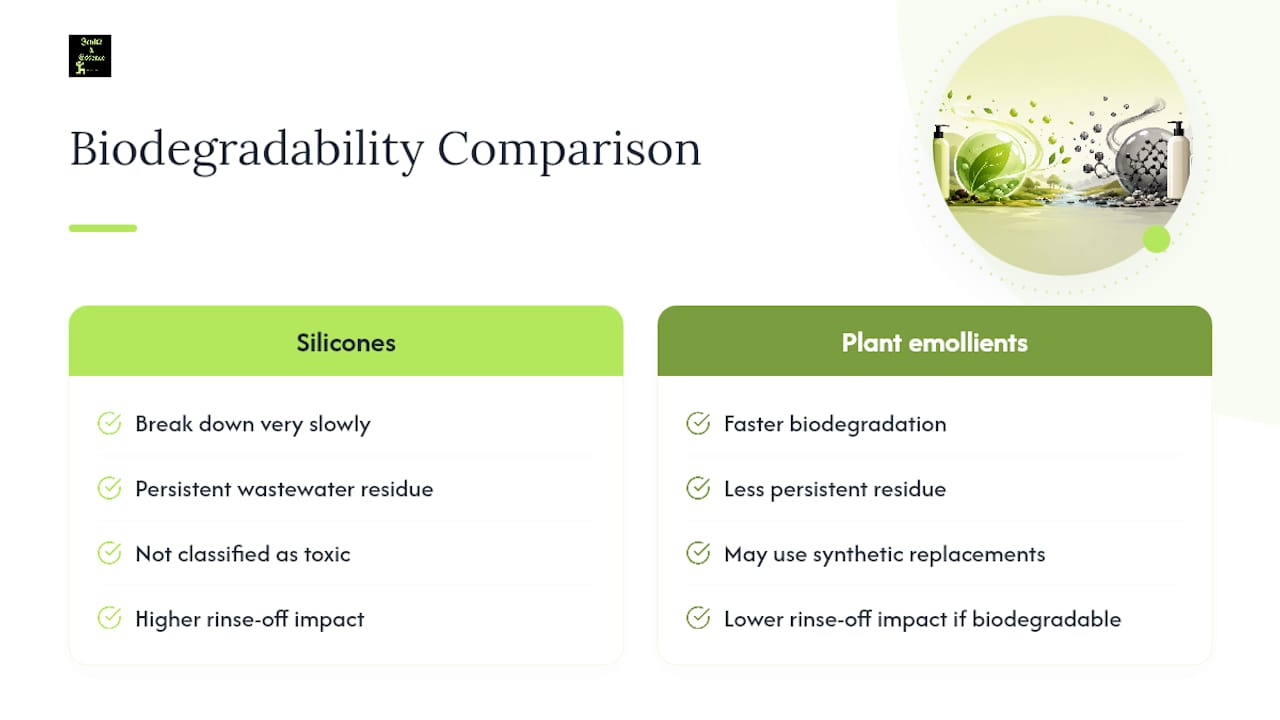
That doesn’t make every silicone-free conditioner automatically greener. Some rely on synthetic replacement polymers that carry their own manufacturing footprint, and a “silicone-free” label says nothing about packaging, palm oil sourcing, or water use during production. The most meaningful environmental gain shows up when a silicone-free formula also uses biodegradable emollients and responsibly sourced plant oils, since that combination avoids the persistent-residue problem without swapping in a different synthetic burden.
For rinse-off products like conditioner, the volume that goes down the drain daily across millions of households makes ingredient biodegradability a bigger factor than it is for leave-in products used in small amounts. If minimizing environmental impact is your main reason for switching, read past the “silicone-free” claim on the front of the bottle and check what’s replacing the silicone on the ingredient list.
Is It True That All Silicones Are Bad for Hair?
No, and this is where a lot of haircare advice oversimplifies things. Silicones aren’t inherently damaging; they’re a tool that works well for specific goals and poorly for others. The myth that “silicone equals bad ingredient” ignores that silicones genuinely protect hair during heat styling and chemical processing, which is exactly why professional colorists often recommend silicone-containing products after a bleach service.
A second common misconception is that silicones “suffocate” hair, as if hair were a living organ that breathes. Hair shafts are dead keratin. What silicones actually do is create a barrier that can block moisture and product absorption over time, which is a real downside for hydration, just not the dramatic one the suffocation myth implies.
There’s also a widespread assumption that switching to silicone-free products fixes hair health problems broadly. It doesn’t. Structural hair issues or hormonal causes of hair thinning require medical attention, not a shampoo aisle swap. Silicone-free products help with buildup, volume, and coating-related dullness. They are not a treatment for hair loss, breakage from over-processing, or scalp conditions that need a dermatologist.
Finally, some shoppers assume “silicone-free” and “sulfate-free” mean the same thing. They don’t. Sulfates are cleansing agents in shampoo; silicones are conditioning agents. A product can be free of one, both, or neither.
What I’d Actually Try First
If your hair feels coated, flat, or resistant to moisture, start with an ends-only swap for two to three washes before committing fully. Judge it by root lift and scalp comfort, not shine, over about four weeks. If you want a low-risk way to run that test, Essencezenith’s curated hair products are a reasonable place to start.
Try a Silicone-Free Routine Without the Risk
Essencezenith curates beauty products with powerful, sustainable ingredients built to enhance your natural texture, not mask it under a coating you’ll have to strip out later.

That curation extends to hair care specifically. If you’re dealing with color-treated hair and want a gentle, silicone-free cleanser to pair with your new conditioner, the vegan color care shampoo is formulated for that exact situation. For a clarifying reset before you start your trial, the onion and biotin shampoo bar strips old buildup without stripping moisture. Every purchase carries Essencezenith’s 30-day satisfaction guarantee, so if a formula doesn’t work for your specific hair, you can return it unused. Combined with fast shipping and a shopping experience built around real customer feedback, testing a new routine here carries almost none of the guesswork that usually comes with switching haircare products.
Ready to test it? Browse Essencezenith’s beauty and hair care catalog and start with one product instead of overhauling your whole shelf.
Sources
FAQ
Are silicone-free conditioners better than regular ones?
For fine, oily, low-porosity, or buildup-prone hair, yes, since silicone-free formulas tend to hydrate without heavy coating. For very damaged or heavily heat-styled hair, silicones still offer protective benefits worth keeping.
What is the healthiest conditioner for your hair?
There’s no single “healthiest” formula since it depends on your hair type, but a silicone-free conditioner with humectants and light plant-derived emollients works well for most people trying to avoid buildup while still getting real hydration.
Why should you avoid silicone in hair products?
You don’t need to avoid it entirely. Silicones become a problem mainly when non-water-soluble types accumulate faster than your shampoo removes them, leading to the dull, coated feeling that drives most people to switch in the first place.
What are the best natural hair conditioners without silicone?
Look for formulas listing glycerin, aloe, plant oils, or emollients like diheptyl succinate instead of ingredients ending in “-cone” or “-siloxane.” Essencezenith’s curated hair products are built around this exact ingredient philosophy.
Recommended
Comments