
Why Research Shows Niacinamide Serum Brightens in 8–12 Weeks


Niacinamide serum is a clinically supported topical form of vitamin B3 that strengthens the skin barrier, calms redness, regulates oil, and gradually evens skin tone. Hydration improves within a couple of weeks; pigment and texture changes take longer. It’s well tolerated by most skin types, though anyone taking oral nicotinamide supplements for a medical condition should check with a doctor first.
TL;DR:
Most effective at 4-5% concentrations, with visible skin improvements typically appearing after 8 to 12 weeks of consistent use.
It strengthens the skin barrier by increasing ceramide levels, reducing water loss and improving tolerance of other actives.
Its anti-inflammatory properties calm redness and inflammation, particularly beneficial for rosacea and acne-prone skin.
Niacinamide moderates sebum production and minimizes pore appearance but does not replace prescribed acne treatments.
Combining niacinamide with other ingredients like vitamin C or acids requires careful timing to prevent destabilization and irritation.
Table of Contents
The Science-Backed Benefits of Topical Niacinamide
Niacinamide earns its reputation because it works on several skin problems at once, not because it’s trendy. Each benefit traces back to a specific mechanism, and knowing the mechanism helps you set realistic expectations for what a serum can and can’t do.
Barrier support and ceramide synthesis. Niacinamide increases the skin’s own production of ceramides, the lipids that hold moisture in and keep irritants out. Split-face randomized studies show measurable improvements in barrier function and hydration with 4–5% niacinamide formulations over 8–12 weeks. A stronger barrier also means better tolerance of other actives, which is part of why niacinamide shows up so often in routines that include retinoids or acids.
Redness and inflammation control. Niacinamide calms inflammatory pathways in the skin, which is why dermatologists frequently recommend it for rosacea-prone or acne-prone complexions. The Cleveland Clinic lists calming redness among niacinamide’s core benefits, alongside its role in supporting the skin barrier.
Oil regulation and pore appearance. Niacinamide can modulate sebum production, which tends to make pores look smaller since enlarged pores are often linked to excess oil and buildup around the follicle. This makes it a reasonable adjunct for oily or acne-prone skin, though WebMD’s clinical review is clear that it supports, rather than replaces, prescription acne treatment.
Brightening through melanosome inhibition. Here’s the part most product labels skip: niacinamide doesn’t bleach pigment or shut down melanin production. It works by inhibiting the transfer of melanosomes from melanocytes to skin cells, which slows how existing pigment reaches the surface. That’s why brightening effects build gradually rather than showing up overnight.
Anti-aging and texture. Clinical reviews link niacinamide to reduced fine lines and improved elasticity, likely tied to its effect on collagen production and cell turnover.
Cellular support. Niacinamide is a precursor to NAD+, a molecule involved in cellular energy and repair, which may explain part of its role in supporting skin resilience against photoaging.
A quick way to see how the benefits stack up:
Barrier: more ceramides, less water loss, better tolerance of actives
Redness: calms inflammatory response
Oil and pores: regulates sebum, visually tightens pore appearance
Tone: slows melanosome transfer for gradual brightening
Texture and aging: supports elasticity and fine-line improvement
How Do You Use Niacinamide Serum in a Routine?
Niacinamide is one of the easier actives to slot into an existing routine because it plays well with almost everything.
Cleanse and tone first. Apply niacinamide serum to clean, slightly damp skin. Damp skin helps the serum spread evenly and may improve absorption.
Apply before moisturizer and sunscreen. Niacinamide works in both AM and PM routines. In the morning, follow with moisturizer and sunscreen. At night, follow with your usual moisturizer or occlusive.
Pair with vitamin C carefully. Older formulations sometimes destabilized when mixed with vitamin C, but most modern serums are formulated to avoid this. Using them at separate times of day (vitamin C in the morning, niacinamide at night) is still a reasonable approach if you have sensitive skin.
Buffer retinoids with niacinamide. Apply your retinoid to dry skin, wait 5 to 10 minutes, then layer niacinamide on top. Experts often recommend niacinamide as a buffering step specifically because it supports the barrier while reducing irritation risk from stronger actives.
Go easy with acids and exfoliants. If you’re using AHAs or BHAs, alternate nights or apply niacinamide after the acid step once your skin adjusts.
For sensitive skin, start with a 2% formulation every other night. Oily or acne-prone skin generally tolerates daily 4–5% use well. For anyone building an anti-aging routine, our guide on layering niacinamide with vitamin C walks through timing in more detail.
Pro Tip: Introduce niacinamide on its own for the first week before adding a new acid or retinoid. That way, if you notice irritation, you know which product caused it.
What Concentration of Niacinamide Actually Works?
Most of the clinical evidence behind niacinamide’s benefits comes from 4% to 5% formulations, tested in split-face randomized trials over 8 to 12 weeks. That’s the range dermatology reviews point to when discussing measurable improvements in barrier function, pigmentation, and texture.
If you have very reactive or sensitive skin, a 2% concentration is a reasonable starting point. It’s gentler while still delivering benefit, and you can build tolerance from there.
Higher marketed concentrations, sometimes 10% or even 20%, are common on store shelves, but clinical guidance suggests they don’t consistently outperform the 4–5% range and may increase the odds of irritation instead. More isn’t automatically better here.
A few things worth checking on the label:
Percentage listed clearly rather than buried in a vague “with niacinamide” claim
Complementary ingredients like ceramides or hyaluronic acid, which support hydration alongside niacinamide
Stable delivery systems. Newer formulations use microencapsulation or liposomal carriers to improve absorption and shelf stability
No unnecessary irritants like added fragrance or high alcohol content, especially if you’re using it alongside retinoids or acids
A niacinamide serum paired with ceramides, like the gel moisturizer formulated with both, gives you the barrier benefit from two directions at once.
How Long Does Niacinamide Take to Work?
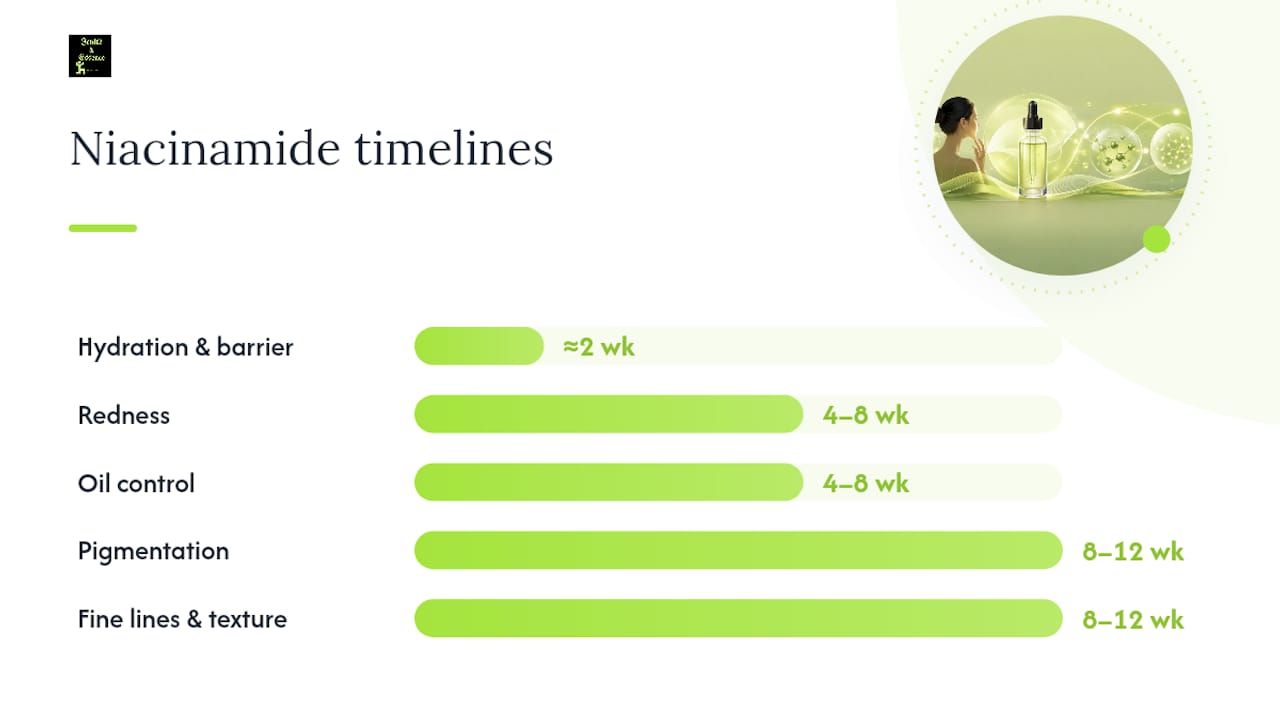
Results depend entirely on what you’re tracking. Hydration changes show up fast; pigment changes do not, and expecting them on the same timeline is where most disappointment comes from.
Benefit | Typical timeline | Evidence source |
Hydration and barrier feel | within a couple of weeks | Split-face randomized trials |
Redness reduction | 4–8 weeks | Clinical and expert commentary |
Oil control | 4–8 weeks | Mechanistic and clinical studies |
Hyperpigmentation improvement | 8–12 weeks | Split-face trials, ~4% formulations |
Fine lines and texture | 8–12 weeks | Clinical reviews |
Most of this data comes from split-face studies, where one side of a participant’s face gets the active treatment and the other gets a control. That design controls for individual variation in skin type and lifestyle, which makes the results more reliable than a typical before-and-after photo. The research on niacinamide’s pigment effects consistently uses this method, and the 8 to 12 week window shows up across multiple trials using roughly 4% formulations.
One caveat worth flagging: marketing that promises immediate spot fading is overselling what the ingredient does. Pigment improvement requires consistent use over several weeks or months, and often works best combined with sunscreen and, in some cases, other brightening actives.
Is Niacinamide Serum Safe for Every Skin Type?
Topical niacinamide has one of the better safety profiles among active ingredients. Most people can use it daily without issue, but a few things are worth knowing before you start.
Mild irritation is possible but uncommon. A small percentage of users report transient itching or tingling, usually resolving as skin adjusts.
Topical niacinamide won’t cause flushing. That reaction is associated with oral niacin (nicotinic acid), which triggers a prostaglandin-mediated response. Topical nicotinamide doesn’t work the same way, so the two shouldn’t be confused.
Stop use if irritation persists beyond the first week or two, or if you notice signs of an allergic reaction like swelling or hives.
Oral nicotinamide is a different conversation entirely. It’s been studied in clinical trials for reducing new nonmelanoma skin cancers in high-risk patients, but that’s a systemic medical application requiring physician supervision, not a cosmetic decision you make on your own.
If you’re combining niacinamide with prescription treatments for rosacea, eczema, or acne, mention it to your dermatologist so they can factor it into your plan.
Where This Article’s Claims Come From
The benefits described here aren’t guesswork. They’re drawn from peer-reviewed mechanistic reviews on niacinamide’s role in skin aging and pigmentation, clinical commentary from institutions like the Cleveland Clinic, and dermatology-focused writing from Baylor College of Medicine’s blog network.
Mechanistic and clinical evidence on barrier function, pigmentation, and aging endpoints
Clinical commentary distinguishing topical from oral use
Expert-reviewed summaries of niacinamide’s core skin benefits
This retailer offers skincare formulations, including niacinamide serums and moisturizers built around ceramide and hyaluronic acid support, and backs purchases with a satisfaction guarantee so customers can test products on their own skin without financial risk.
The strongest skincare claims are the ones you can trace back to a study design, not just a bottle’s marketing copy. That’s the standard this article holds itself to.
You can verify any claim here by following the linked studies directly rather than taking a product label’s word for it.
What Actually Matters When You’re Choosing a Niacinamide Serum
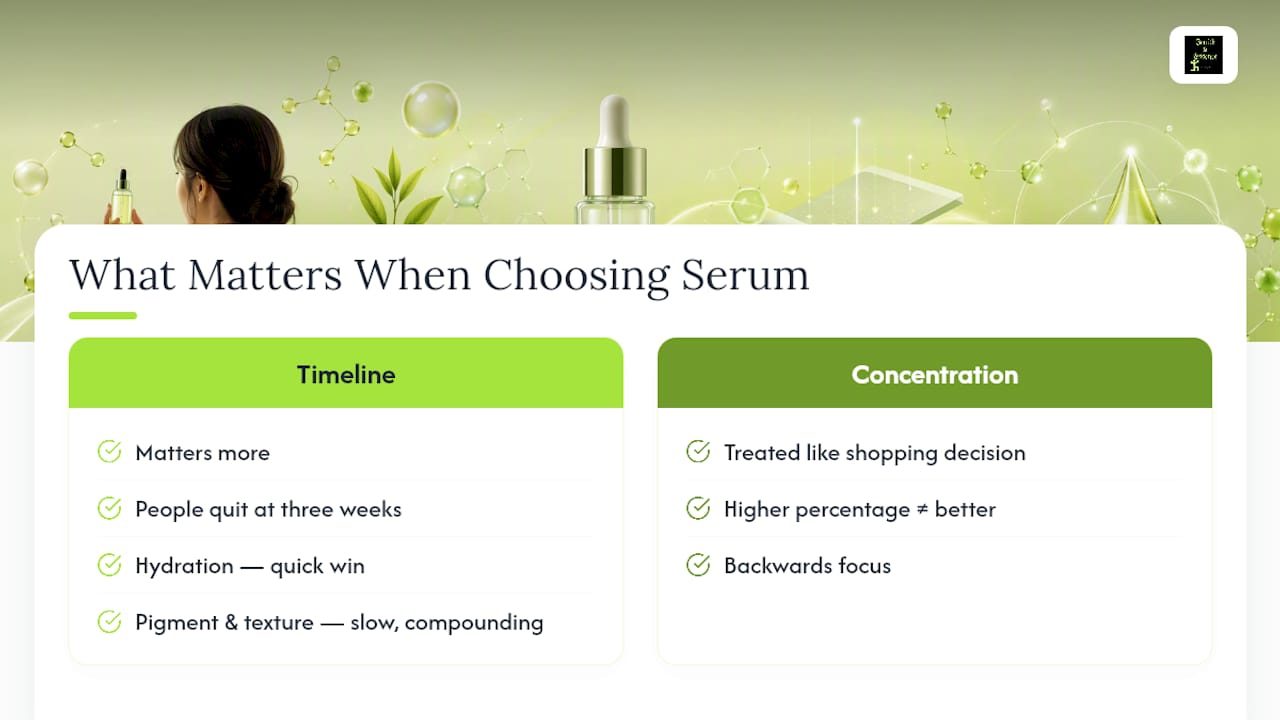
Most niacinamide advice online treats concentration like a shopping decision: higher percentage, better serum. That’s backwards.
The bigger gap in conventional advice is timeline management. People quit a perfectly good serum at three weeks because they don’t see spot fading, not realizing that pigment change was never supposed to show up that fast. Hydration is the quick win. Pigment and texture are the slow, compounding ones.
— Norman
This article is general information, not a substitute for advice from a qualified doctor. Consult a qualified healthcare professional about your own circumstances before acting on anything here.
Sources
FAQ
Is It Okay to Use Niacinamide Serum Every Day?
Start every other day if you have sensitive skin, then build up.
What Shouldn’t You Mix With Niacinamide?
Niacinamide is compatible with most ingredients, including retinoids and vitamin C in modern stable formulations, though very sensitive skin may benefit from using strong acids or high-dose vitamin C at a different time of day to reduce irritation risk. There’s no strict chemical incompatibility, just a tolerance consideration for reactive skin.
Which Is Better, Hyaluronic Acid or Niacinamide?
They solve different problems, so it’s not really an either/or choice. Hyaluronic acid pulls moisture into the skin, while niacinamide strengthens the barrier, calms redness, and evens tone. Many routines use both together.
Does Niacinamide Remove Dark Spots?
Niacinamide doesn’t remove dark spots instantly, but it can gradually reduce their appearance by slowing melanosome transfer, with visible improvement typically reported around 8 to 12 weeks of consistent use. Pairing it with daily sunscreen improves results since unprotected sun exposure can offset the gains.
Recommended
Comments