
The Role of Antioxidants in Beauty: Skin Health Guide

TL;DR:
Antioxidants neutralize free radicals to protect skin from aging and damage. Consistent daily use of well-formulated antioxidants combines with sunscreen for optimal skin health.
Antioxidants are defined as molecules that neutralize free radicals, protecting skin cells from oxidative damage that accelerates aging and weakens the skin barrier. The role of antioxidants in beauty extends far beyond marketing copy. These compounds actively interrupt the biological processes that cause wrinkles, uneven tone, and dehydration. Vitamins C and E, niacinamide, and polyphenols like green tea extract each target different aspects of skin damage. Understanding how they work, and how to use them correctly, separates a routine that delivers real results from one that simply sounds good on paper.
How do antioxidants protect skin from oxidative stress?
Oxidative stress is the primary driver of extrinsic skin aging. UV radiation, air pollution, cigarette smoke, and even poor sleep all trigger the overproduction of reactive oxygen species (ROS), which are unstable molecules that attack skin cells, collagen fibers, and DNA.
The skin has its own built-in antioxidant defenses, but endogenous antioxidants are insufficient against the oxidative load from modern environmental exposure. That gap is exactly where topical and dietary antioxidants step in.
When ROS accumulate unchecked, they activate inflammatory signaling pathways, including NF-κB and AP-1, and trigger matrix metalloproteinases (MMPs). MMPs are enzymes that break down collagen and elastin, the structural proteins that keep skin firm and smooth. Antioxidants intercept ROS and inhibit these stress pathways, preserving the extracellular matrix and reducing chronic inflammation.
The practical result is skin that holds its structure longer, stays more hydrated, and shows fewer signs of UV-induced damage. This is the core mechanism behind every antioxidant claim you see on a serum label.
UV radiation generates singlet oxygen and hydrogen peroxide directly in skin tissue.
Air pollution deposits particulate matter that triggers sustained ROS production.
Glycation from high-sugar diets cross-links collagen, compounding oxidative stiffness.
Infrared radiation penetrates deeper than UV and generates mitochondrial ROS.
Pro Tip: Apply your antioxidant serum in the morning, before sunscreen. Antioxidants work downstream of UV damage by neutralizing ROS that sunscreen cannot fully block. The two together cover both ends of the photoprotection equation.
Which antioxidants work best in skincare products?
Not all antioxidants perform the same job. Matching the right compound to your skin concern is the difference between visible results and wasted product.
Antioxidant | Primary Skin Benefit | Formulation Note |
Vitamin C (L-ascorbic acid) | Collagen synthesis, brightening, UV protection | Requires pH below 3.5; oxidizes quickly in air and light |
Vitamin E (tocopherol) | Lipid barrier protection, anti-inflammatory | Fat-soluble; most stable when paired with vitamin C |
Niacinamide (vitamin B3) | Barrier repair, redox balance, pore appearance | Water-soluble; stable across a wide pH range |
Green tea extract (EGCG) | Anti-inflammatory, broad-spectrum antioxidant | Polyphenol; synergizes well with vitamins C and E |
Resveratrol | Collagen protection, anti-inflammatory | Light-sensitive; best in opaque, airtight packaging |
Vitamin C: the benchmark antioxidant
Vitamin C is the most studied topical antioxidant in dermatology. It supports collagen synthesis, reduces hyperpigmentation, and provides measurable photoprotection. The catch is formulation. Oxidized ascorbic acid is biologically inactive, meaning a poorly packaged vitamin C product delivers nothing. Look for L-ascorbic acid in opaque, airtight packaging with a pH below 3.5.
Vitamin E and niacinamide: the supporting cast
Vitamin E is fat-soluble, which means it protects the lipid-rich layers of the skin barrier that water-soluble antioxidants cannot reach. Pairing it with vitamin C creates a synergistic effect. Combining hydrophilic and lipophilic antioxidants protects both the aqueous and lipid compartments of skin simultaneously. Niacinamide adds another layer by supporting the skin’s own redox balance and reinforcing the barrier, making it a strong complement to both.
Polyphenols: the plant-derived powerhouses
Green tea extract, resveratrol, and quercetin are polyphenols with strong anti-inflammatory and antioxidant activity. Green tea’s primary active compound, epigallocatechin gallate (EGCG), suppresses UV-induced MMP activity and reduces inflammatory cytokines. These ingredients work well in combination formulas because they target overlapping but distinct ROS pathways.
Pro Tip: Check the product shelf life before you buy. Vitamin C and resveratrol degrade faster than most people realize. A product that sat in a warehouse for six months may have lost significant potency before it reaches your bathroom shelf.
What does the science say about antioxidants and skin health?
The clinical evidence for antioxidant benefits is stronger than most beauty marketing suggests, and more nuanced than the headlines imply.
A systematic review and meta-analysis found that antioxidant-rich interventions increased skin hydration with a Hedges’ g of 1.75 in preclinical studies and a mean difference of 2.12 in clinical studies. Trans-epidermal water loss (TEWL), a key measure of barrier integrity, decreased with a Hedges’ g of 2.15 in preclinical models. These are large effect sizes. They indicate that antioxidants produce meaningful, measurable changes in how well skin retains moisture.
“Clinical endpoints such as trans-epidermal water loss, erythema, DNA damage biomarkers, and inflammatory mediators provide objective evidence for antioxidant efficacy beyond subjective skin appearance claims.” — Systematic Review, MDPI Antioxidants
A separate clinical trial tested an advanced antioxidant serum against a vitamin C serum and a control. The advanced serum reduced UV-induced erythema by up to 354% versus the control group. It also produced significant decreases in UV-induced DNA damage, inflammatory markers, and MMP-9 activity (p less than 0.001). That level of photoprotective effect from a topical antioxidant is clinically significant.
The important caveat is that antioxidant effects vary by type and treatment duration. A vitamin C serum will not deliver the same barrier-repair results as niacinamide. A green tea extract targets inflammation more directly than it targets collagen synthesis. Matching antioxidant class to skin concern, and committing to consistent use over weeks rather than days, is what produces the outcomes the research documents.
Understanding how clinical studies validate beauty claims helps you read product marketing with a sharper eye and choose formulas backed by real evidence.
How to build an antioxidant-rich skincare routine
A well-structured routine puts antioxidants where they do the most work. The sequence matters as much as the ingredients.
Cleanse with a gentle, pH-balanced cleanser. Harsh cleansers strip the acid mantle and reduce the skin’s natural antioxidant capacity before you even apply a product.
Apply antioxidant serum on clean, slightly damp skin. Water-soluble antioxidants like vitamin C and niacinamide absorb best at this stage. Press gently rather than rubbing to avoid mechanical irritation.
Layer a vitamin E or polyphenol-rich moisturizer over the serum. This seals in the water-soluble actives and adds lipid-phase antioxidant protection. Look for formulas that include tocopherol or green tea extract alongside ceramides.
Apply broad-spectrum SPF 30 or higher as the final morning step. Antioxidants act downstream of UV damage. Sunscreen prevents ROS formation upstream. Neither replaces the other.
Repeat antioxidant application at night with a focus on repair-oriented ingredients. Retinol and niacinamide work well in the evening alongside antioxidants because the skin’s repair cycle peaks during sleep.
Post-procedure skin benefits significantly from antioxidants as well. Vitamins C and E neutralize ROS generated during laser resurfacing and microneedling, reducing post-treatment redness and accelerating healing. If you have a cosmetic procedure scheduled, ask your provider about incorporating antioxidant support into your recovery protocol.
Pro Tip: Avoid mixing high-concentration L-ascorbic acid (above 15%) with retinol in the same step. Both are effective, but combining them at high concentrations can cause irritation. Use vitamin C in the morning and retinol at night for the best results from both.
Key takeaways
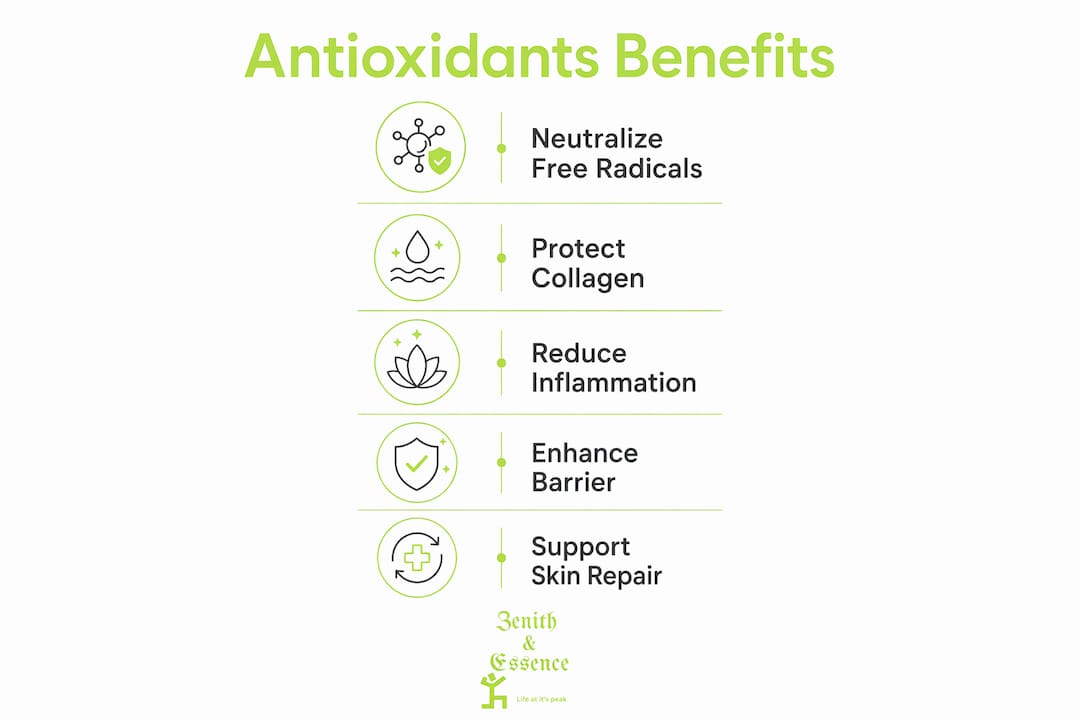
Antioxidants protect skin by neutralizing free radicals, preserving collagen, and reinforcing the barrier, but their results depend entirely on formulation quality, ingredient matching, and consistent daily use.
Point | Details |
Free radical neutralization | Antioxidants interrupt ROS damage before it breaks down collagen and triggers inflammation. |
Formulation quality matters | Vitamin C is inactive once oxidized; choose stable, properly packaged products for real results. |
Pair with sunscreen | Antioxidants and SPF work on different parts of the UV damage pathway and must be used together. |
Match antioxidant to goal | Vitamin C targets brightening, niacinamide targets barrier repair, and polyphenols target inflammation. |
Consistency drives results | Clinical studies measure outcomes over weeks; daily use is required for measurable skin improvement. |
Why I think most people are using antioxidants wrong
After years of reading the dermatology literature and testing formulas, the single biggest mistake I see is treating antioxidants as an optional add-on rather than a daily non-negotiable. People reach for vitamin C when they notice dullness, use it for two weeks, see modest results, and move on. That is not how the biology works.
The research is clear that antioxidant effects require consistent treatment duration to show up in measurable endpoints like TEWL and erythema reduction. Skin turnover alone takes roughly four weeks. Collagen remodeling takes months. Expecting a serum to deliver visible anti-aging results in two weeks is like expecting a single gym session to change your body composition.
The second mistake is ignoring formulation. I have seen people spend significant money on vitamin C serums that arrived in clear glass bottles, stored them on a sunny bathroom shelf, and wondered why they saw no results. Oxidized ascorbic acid does nothing. The formulation stability and delivery of an antioxidant product is not a minor detail. It is the whole game.
My honest recommendation: pick two or three well-formulated antioxidants that match your specific skin concerns, use them every single day, and pair them with SPF without exception. That approach, done consistently, is what the clinical data actually supports.
— Norman
Antioxidant-enriched products at Essencezenith
Essencezenith curates beauty products built around ingredients that the science supports, not just ingredients that photograph well on a label.

The Herbal Magic Moisturizing Cream combines antioxidant-rich botanicals with barrier-supporting ingredients designed to reduce TEWL and reinforce skin hydration. For a targeted antioxidant delivery, the Hydrating Facial Serum provides a concentrated dose of skin-health actives in a stable, fast-absorbing formula. Every product at Essencezenith comes with a 30-day satisfaction guarantee, so you can assess real results without risk. Browse the full antioxidant beauty collection and find the formulas that match your skin goals.
FAQ
What is the role of antioxidants in beauty?
Antioxidants neutralize free radicals that cause oxidative damage to skin cells, collagen, and DNA. This protection reduces visible aging, supports hydration, and strengthens the skin barrier.
Can antioxidants prevent skin aging?
Antioxidants slow extrinsic aging by interrupting the oxidative and inflammatory processes that break down collagen. They reduce but do not fully prevent aging, especially without consistent sunscreen use.
Which antioxidant is best for anti-aging?
Vitamin C is the most clinically studied antioxidant for anti-aging, supporting collagen synthesis and photoprotection. Combining it with vitamin E and niacinamide produces broader results across multiple skin pathways.
How long does it take for antioxidants to improve skin?
Clinical studies measure meaningful changes in hydration and barrier function over several weeks of consistent use. Visible improvements in tone and texture typically require at least four to eight weeks of daily application.
Do antioxidants replace sunscreen?
Antioxidants do not replace sunscreen. Sunscreen blocks ROS formation upstream by filtering UV radiation, while antioxidants neutralize ROS that form downstream. Both are required for complete photoprotection.
Recommended
Comments