
Beauty Quiz Personalization: Smarter Product Picks

TL;DR:
Beauty quiz personalization uses targeted questionnaires to match shoppers with customized product recommendations. It reduces decision fatigue, builds confidence, and extends engagement by offering full routines rather than individual items. AI-driven quizzes outperform static ones, improving conversion rates and fostering long-term trust through transparency and detailed, scientific questions.
Beauty quiz personalization is defined as the practice of using targeted, interactive questionnaires to match shoppers with products suited to their specific skin type, hair texture, ingredient preferences, and beauty goals. The role of beauty quiz personalization has grown from a novelty feature into a core shopping tool, with brands like Function of Beauty and Sephora building entire product lines around quiz-driven recommendations. Guided beauty experiences now outperform traditional browsing, and the data behind that shift is hard to ignore. Shoppers who take a well-designed quiz spend more time evaluating products, add more items to their cart, and return to repurchase at higher rates.
How do personalized beauty quizzes improve shopping experiences?
Beauty quizzes solve one of online shopping’s biggest problems: too many choices and too little context. A shopper browsing a skincare catalog with 400 products has no reliable way to filter by their exact combination of needs, such as oily skin, fragrance sensitivity, and a preference for vegan formulas. A well-built quiz does that filtering in under three minutes.

The core benefit is the reduction of decision fatigue. Beauty quizzes act as pre-purchase consultations, narrowing a vast catalog down to a short list of products that actually fit the shopper’s profile. That narrowing builds confidence. A shopper who receives a recommendation tied to their specific answers feels less like they are guessing and more like they are making an informed choice.
The effects of tailored beauty quizzes go beyond just product matching. Quizzes that include virtual try-on elements or ingredient explainers extend the time shoppers spend evaluating a product. Guided journeys extend evaluation time by 40% and double the likelihood of adding to cart. That extended engagement is not accidental. It reflects a shopper who is genuinely learning about what they are buying.
The best quizzes also shift the recommendation from a single product to a full routine. A shopper who answers questions about their scalp condition, hair goals, and styling habits gets back a shampoo, conditioner, and leave-in treatment, not just one item. That multi-step output reflects how real beauty routines work and gives the shopper a complete picture of what their regimen could look like.
Key consumer benefits of personalized beauty quizzes include:
Reduced decision fatigue: Filters hundreds of products down to a targeted shortlist.
Higher buyer confidence: Recommendations tied to specific answers feel earned, not random.
Longer product evaluation: Interactive elements keep shoppers engaged and better informed.
Routine building: Multi-product outputs reflect real beauty habits and increase purchase completeness.
Educational value: Quizzes teach shoppers about their own skin or hair needs in the process.
Pro Tip: When taking a beauty quiz, answer every question as specifically as possible. Vague answers produce generic results. If a quiz asks about your scalp condition, choose the most accurate descriptor, not the most flattering one.
What is the evidence on beauty quiz personalization effectiveness?
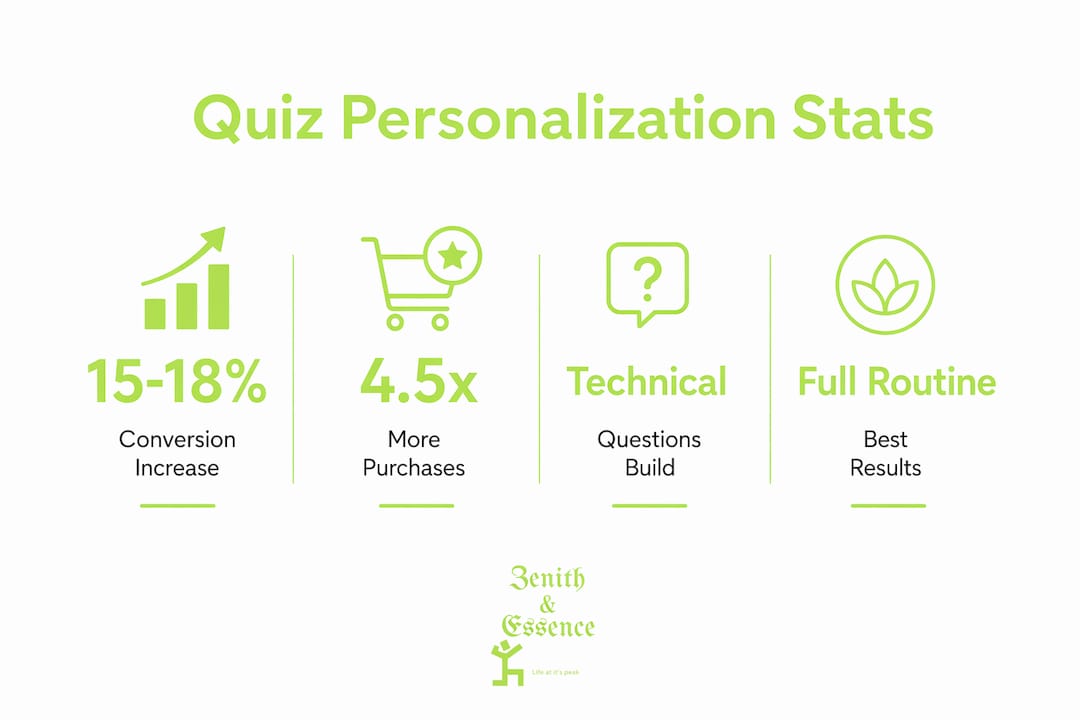
The business case for personalized beauty quizzes is well established. AI-driven quiz recommendations increase conversion rates by 15–18% in health and beauty. Shoppers who receive personalized recommendations are 4.5 times more likely to purchase than those who browse without guidance. These are not marginal improvements. They represent a fundamental shift in how purchase decisions get made.
The most striking example comes from a haircare company that replaced generic product lists with a technically accurate personalized quiz. The result was a 137% increase in conversion rates. The quiz asked shoppers to select up to five hair goals, which then fed a formulation engine capable of producing billions of product combinations. That level of specificity made the recommendation feel credible, not algorithmic.
Retention numbers are equally strong. 78% of buyers are more likely to repurchase when personalized content is part of their experience. That figure matters because repurchase is where beauty brands build sustainable revenue. A shopper who trusts the quiz trusts the brand.
Quizzes also generate zero-party data, meaning information shoppers voluntarily share. Tailored email and SMS campaigns built from quiz data yield higher click-through rates than generic broadcasts. That data advantage compounds over time as brands build richer profiles of their shoppers.
“Explaining the rationale behind quiz recommendations builds trust and reduces returns.” — Visual Quiz Builder
Metric | Result |
Conversion rate increase | 15–18% with AI-driven quiz personalization |
Conversion lift (case study) | 137% after replacing generic lists with a personalized quiz |
Repurchase likelihood | 78% of buyers prefer personalized content |
Purchase probability | 4.5x higher with personalized recommendations |
Evaluation time | 40% longer with guided quiz experiences |
How does quiz design affect the quality of beauty personalization?
Not all quizzes deliver the same results. The architecture of a quiz, meaning how questions are structured and how answers feed recommendations, determines whether the output feels like expert advice or a marketing trick.
Static branching quizzes follow a fixed decision tree. A shopper answers question one, which determines question two, and so on until a preset recommendation appears. These work well for straightforward needs but break down when shoppers have complex, overlapping requirements. A shopper who needs a vegan formula, has a nickel allergy, and wants to avoid sulfates will often fall through the gaps of a static quiz. Most static branching quizzes fail for complex consumer needs, while conversational AI tools adapt in real time and handle multi-constraint queries far more accurately.
The depth of questions also shapes how much shoppers trust the output. Technical friction, such as questions about scalp pH or strand thickness, increases perceived expertise. When a quiz asks a shopper to describe their hair porosity or identify their Fitzpatrick skin type, it signals that the recommendation engine behind it is working with real data, not surface-level guesses. That perception of expertise directly correlates with trust.
Quiz type | Strengths | Weaknesses |
Static branching quiz | Simple to build, fast to complete | Fails with multi-constraint needs |
AI conversational tool | Adapts in real time, handles complexity | Requires more sophisticated technology |
Single hero product quiz | Quick recommendation | Limits order value, undermines trust |
Routine-based quiz | Builds full regimens, increases order value | Longer completion time |
Single product quizzes carry a specific risk. Quizzes that promote one hero product limit average order value and can feel like a sales funnel rather than a consultation. Shoppers notice when every quiz path leads to the same product. That pattern erodes trust fast.
Pro Tip: Before trusting a quiz’s output, check whether it recommends a full routine or just one product. A quiz that always ends at a single item is likely optimized for sales, not for your skin.
How can you use personalized beauty quizzes effectively in 2026?
Knowing how to use a quiz well is as important as finding a good one. Most shoppers treat quiz results as a final answer. The better approach is to treat them as a starting point for building a regimen.
Follow these steps to get the most from any personalized beauty quiz:
Choose quizzes that explain their reasoning. A quiz that shows you why a product was recommended, citing your specific answers, is far more trustworthy than one that just presents a list. Explaining recommendation rationale reduces returns and builds long-term brand loyalty.
Use results to build a full routine, not just buy one item. A single moisturizer will not fix a complex skin concern. Look for quizzes that output a morning and evening regimen, or at minimum a cleanser, treatment, and moisturizer combination.
Treat the quiz as an educational tool. The questions themselves teach you something. If a quiz asks about your skin’s barrier function or your hair’s elasticity, research those terms. Understanding your own biology makes every future purchase smarter.
Evaluate quiz credibility before trusting the output. Look for quizzes backed by dermatologists, trichologists, or formulation chemists. Generic quizzes with five questions and no scientific framing are marketing tools, not consultation tools. For a broader framework on evaluating beauty brands, the trustworthy beauty brand checklist from Essencezenith covers nine criteria worth reviewing.
Revisit your quiz results seasonally. Skin and hair change with climate, diet, and age. A quiz result from six months ago may no longer reflect your current needs. Retaking a quiz after a seasonal shift often surfaces better-matched products.
The importance of beauty quiz customization also extends to how you shop after the quiz. Use the ingredient list from your recommended products to cross-reference other items in a brand’s catalog. That habit turns one quiz result into a repeatable shopping framework. For more on applying digital tools to beauty purchases, the best practices for online beauty buying guide from Essencezenith covers the full picture for 2026.
Key Takeaways
Beauty quiz personalization increases conversion rates, builds shopper trust, and produces better long-term results when quizzes use technical questions, explain their reasoning, and recommend full routines rather than single products.
Point | Details |
Quizzes reduce decision fatigue | They filter large catalogs into targeted shortlists, improving confidence and purchase rates. |
Technical questions build trust | Detailed, scientific questions signal expertise and make recommendations feel credible. |
Routine outputs outperform single picks | Multi-product regimen quizzes increase order value and better reflect real beauty habits. |
AI tools handle complexity better | Conversational AI adapts to multi-constraint needs that static branching quizzes miss. |
Quiz data fuels better marketing | Zero-party data from quizzes enables segmented campaigns with higher click-through rates. |
What I’ve learned from years of watching quiz personalization evolve
I have watched beauty quiz technology go from a novelty to a genuine purchase driver, and the gap between a well-designed quiz and a lazy one has never been wider. The quizzes that actually change shopping behavior share one trait: they make the shopper feel seen. Not flattered. Seen. There is a difference.
The quizzes I trust ask uncomfortable questions. They want to know if my scalp is oily by noon, whether I have had a reaction to silicones, and what my actual hair goals are beyond “healthy and shiny.” That specificity is not friction. It is the signal that the recommendation on the other end is worth taking seriously.
Where I see the most room for improvement is in transparency. Too many quizzes still hide their logic. They ask ten detailed questions and then present a product with no explanation of why it was chosen. That gap is where trust breaks down. The brands that show their work, connecting each recommendation back to a specific answer, are the ones that earn repeat customers.
The future of this space is not more questions. It is better reasoning. AI tools that adapt in real time and explain their outputs will replace static quizzes within a few years. When that shift happens, the biotechnology advances in beauty already reshaping formulation will merge with personalization engines to produce recommendations that feel genuinely clinical. That is the version of beauty shopping worth waiting for.
My advice: use quizzes as a starting point, not a final word. Cross-reference results with ingredient research, read real customer reviews, and build your routine iteratively. The quiz gets you 70% of the way there. Your own observation gets you the rest.
— Norman
Essencezenith’s natural products fit quiz-driven routines

Personalized quiz results are only as good as the products they point to. Essencezenith curates products built around sustainable, effective ingredients designed to complement the kind of targeted routines that quiz recommendations produce. The natural vegetable deodorant from Essencezenith is a strong example: it fits cleanly into quiz-driven personal care routines that prioritize clean formulas and ingredient transparency. Every product comes with a 30-day satisfaction guarantee, so adding a new item to your regimen carries no risk. If a quiz result points you toward cleaner, more intentional personal care, Essencezenith is a logical next step.
FAQ
What is beauty quiz personalization?
Beauty quiz personalization is the use of interactive questionnaires to match shoppers with products suited to their specific skin type, hair texture, and ingredient preferences. It functions as a digital pre-purchase consultation that replaces generic browsing.
How do beauty quizzes improve conversion rates?
AI-driven personalized quizzes increase conversion rates by 15–18% in health and beauty, and shoppers are 4.5 times more likely to purchase when they receive personalized recommendations. One haircare brand reported a 137% conversion lift after replacing generic product lists with a quiz format.
Are static quizzes or AI tools better for beauty personalization?
AI conversational tools outperform static branching quizzes for shoppers with complex needs, such as multiple ingredient restrictions or overlapping skin concerns. Static quizzes work for straightforward profiles but fail when multi-constraint queries are involved.
Why do detailed quiz questions build more trust?
Technical questions about scalp pH, strand thickness, or skin barrier function signal that the recommendation engine is working with real data. Shoppers perceive detailed, scientific questions as more expert-level than surface-level queries, which increases confidence in the output.
Should quiz results recommend one product or a full routine?
Routine-based quizzes that output multi-product regimens are more effective than single hero product quizzes. They reflect how real beauty routines work and produce higher average order values while giving shoppers a more complete and useful result.
Recommended
Comments