
Regenerative Agriculture Beauty: What You Need to Know
- Norman Church
- 3 days ago
- 8 min read


Regenerative agriculture beauty is a sourcing philosophy that rebuilds ecosystems rather than simply reducing harm. Where conventional sustainability asks brands to do less damage, regenerative sourcing asks them to leave the land measurably better than they found it. Soil health, biodiversity, and carbon sequestration are the three pillars, and they apply directly to how beauty ingredients are grown, harvested, and brought to your skin.
This is not a niche trend. Brands like Davines, L’Oréal, and Beauty Seeds are already building supply chains around these principles, highlighted by products like the grass fed tallow face body cream that emphasize local sourcing of regenerative ingredients, and the U.S. market is catching up fast. Here is what the practice actually involves:
Restoring soil organic matter through no-till farming, cover cropping, and composting
Increasing plant and insect biodiversity through polycultures and agroforestry
Sequestering carbon in the soil rather than releasing it into the atmosphere
Partnering directly with farmers and indigenous communities for fair, place-specific sourcing
Producing botanical extracts that are cleaner and more potent because the soil they come from is healthier
What is regenerative agriculture beauty, and how does it work?
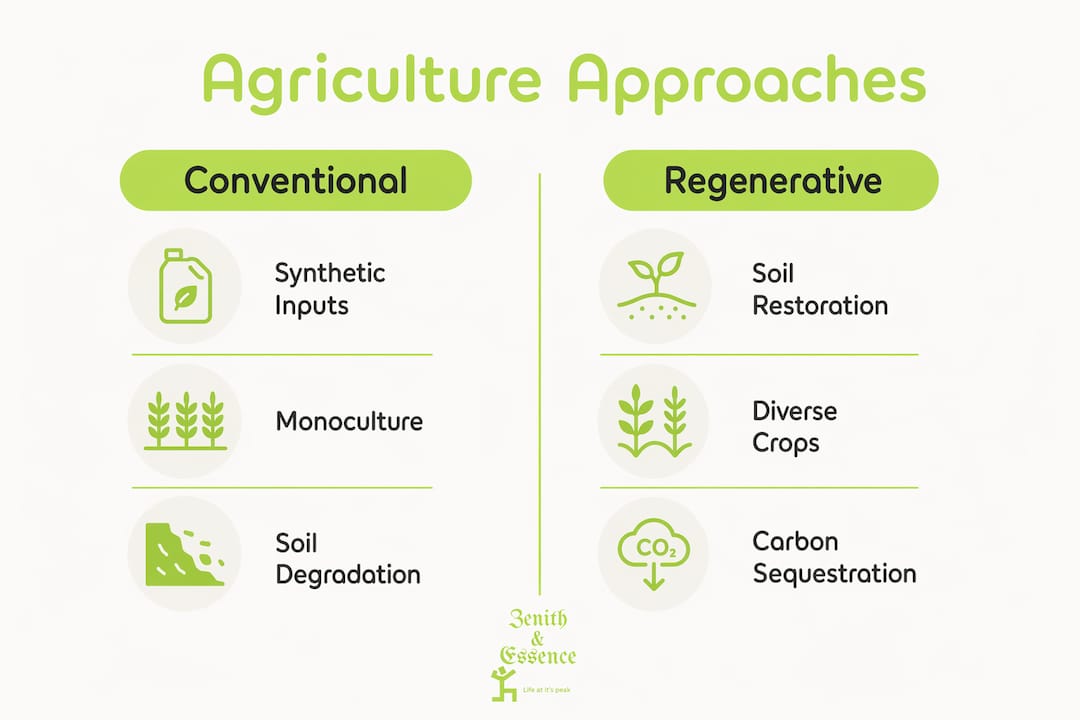
Regenerative agriculture, as applied to beauty ingredient sourcing, centers on a set of specific farming practices that actively restore rather than preserve. The key techniques include permanent soil cover, minimal or no tillage, crop diversity, companion planting, and agroforestry. Each one feeds into the others: healthier soil supports more diverse plant life, which in turn attracts pollinators and beneficial insects, which reduces the need for chemical inputs.
The social dimension matters just as much as the ecological one. Regenerative sourcing means fair wages, community investment, and long-term relationships with growers. A brand cannot claim regenerative credentials while extracting value from the farmers who make it possible.
The core principles at a glance:
No or minimal tillage to preserve soil structure and microbial networks
Cover cropping to protect bare soil and add organic matter between harvests
Crop rotation and polycultures to break pest cycles and build resilience
Agroforestry to integrate trees into farming systems for carbon storage and habitat
Composting and organic amendments to feed soil biology without synthetic inputs
Direct brand-farmer partnerships tailored to local ecosystems and communities
Goal | Regenerative approach | Conventional approach |
Soil carbon | Actively increased through cover crops and compost | Often depleted by tillage and monocultures |
Biodiversity | Enhanced through polycultures and habitat management | Reduced by monocultures and pesticides |
Carbon sequestration | A primary outcome, not a side effect | Rarely a design goal |
Chemical inputs | Minimized or eliminated | Routinely applied |
Farmer relationships | Long-term, co-designed partnerships | Transactional supply contracts |
How brands like Davines, L’Oréal, and Beauty Seeds are leading the way
The clearest proof that regenerative beauty works at scale comes from brands already doing it. Davines, L’Oréal, and Beauty Seeds each represent a different model for integrating regenerative ingredient sourcing into real product lines.
Davines, the Italian professional hair care brand, has built its ingredient sourcing around what it calls “slow food” partnerships with small farms. The brand works directly with growers to source botanicals using regenerative methods, prioritizing local and traditional varieties that support regional biodiversity. This is not a marketing overlay. It shapes which ingredients appear in formulations and how those formulations perform.
L’Oréal has committed to sourcing ingredients from regenerative farms as part of its broader sustainability program. At that scale, the challenge is verification and consistency across a global supply chain. The brand has invested in direct grower partnerships and third-party auditing to close that gap, though the work is ongoing.
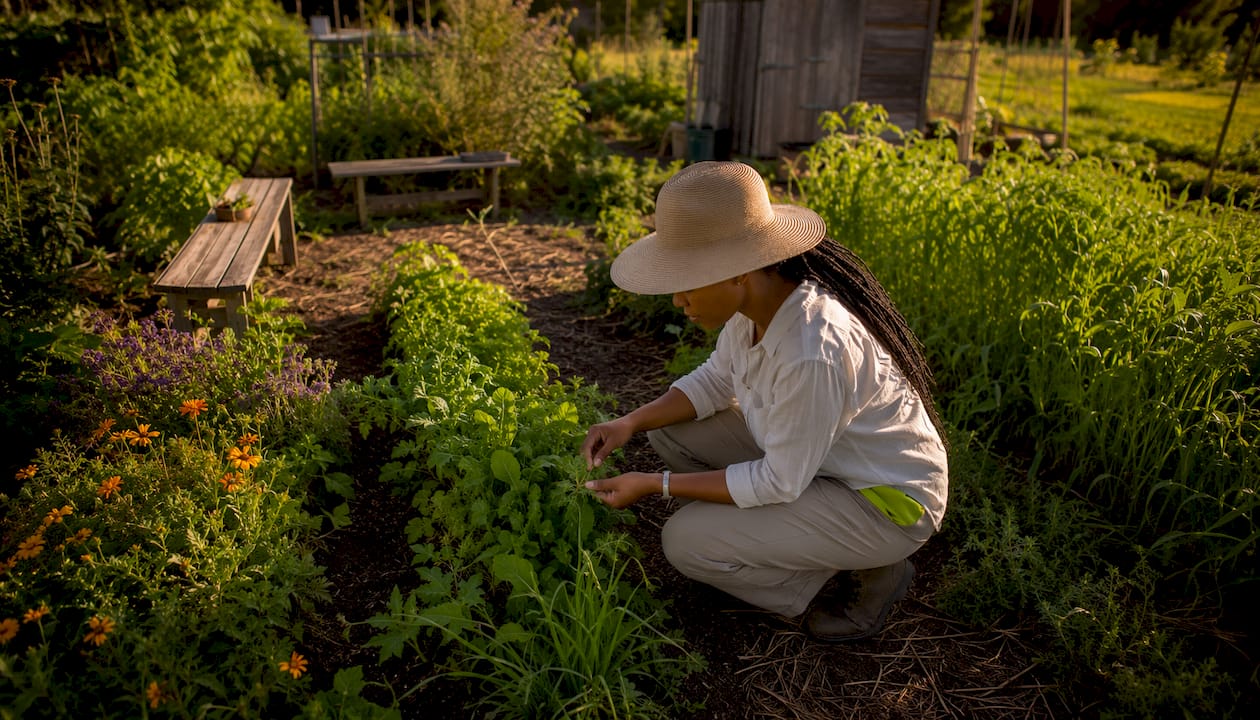
Beauty Seeds focuses specifically on regeneratively farmed botanical actives, positioning the entire brand around the connection between soil health and ingredient efficacy. The premise is straightforward: a plant grown in biologically rich soil produces more of the secondary metabolites that make botanical extracts effective in skin care. You can explore how ethical sourcing criteria separate genuine leaders from brands that only use the language.
What these three brands share is a willingness to build direct relationships with farmers rather than buying through commodity markets. That is the structural shift regenerative beauty requires.
Why regenerative farming produces better beauty ingredients
The environmental case for regenerative agriculture is well documented. Regenerative systems enhance soil organic carbon, increase water retention, and support biodiversity compared to conventional farming. For beauty specifically, those ecological gains translate into measurable ingredient quality differences.
Soil rich in microbial life produces plants with higher concentrations of phytonutrients and secondary metabolites. These are the compounds that give botanical extracts their actual activity in skin care: antioxidants, polyphenols, adaptogens. A plant stressed by depleted soil produces fewer of them. Jason Rowntree, a sustainable agriculture researcher at Michigan State University, has explained that fostering biodiversity in regenerative farms enhances soil microbial dialogue, requiring fewer fertilizers and yielding cleaner, more potent botanical extracts. That is the direct link between farm practice and what ends up in your serum.
Benefits for the environment and for your products:
Higher phytonutrient density in plants grown in biologically active soil
Cleaner extracts with fewer residual agrochemicals
Greater resilience in supply chains because biodiverse farms withstand climate stress better
Carbon captured in soil rather than released, contributing to climate goals
Reduced water runoff and erosion, protecting local watersheds
Stronger ecosystems that support pollinators critical to many beauty botanicals
Shifting from monoculture to perennial and diverse plant systems also improves nutrient bioavailability while maximizing land-based carbon capture. For a beauty brand, that means the active ingredients in a product can do more with less, which is why regeneratively sourced extracts often appear at lower concentrations in formulas without sacrificing efficacy.
Common misconceptions about regenerative beauty you should know
The biggest misconception is that regenerative agriculture and organic farming are the same thing. They are not. Organic farming avoids synthetic inputs, which matters. But regenerative agriculture goes further by actively adding to soil organic matter, enhancing carbon sequestration, and rebuilding biodiversity. A farm can be certified organic and still deplete its soil over time. A regenerative farm is specifically designed not to.
The second misconception is that regenerative beauty is a fixed certification you can look up on a label. It is not. Because ecological conditions vary so widely by region, soil type, and climate, regenerative sourcing cannot rely on uniform standards. It is a direction, not a destination, and it requires bespoke collaboration between brands and growers tailored to local contexts.
Misconceptions worth clearing up:
“Regenerative” does not mean perfect or chemical-free by definition
No single universal certification covers all regenerative claims
Regenerative beauty is not a passing trend; it addresses structural problems in how ingredients are farmed
A product labeled “natural” or “organic” is not automatically regenerative
Regenerative sourcing does not guarantee lower prices; the investment in soil and farmer relationships costs more upfront
Pro Tip: When evaluating a brand’s regenerative claims, look for named farm partnerships, specific growing regions, and transparency about which ingredients are regeneratively sourced. Vague language like “sustainably inspired” or “earth-friendly” without farm-level detail is a red flag.
How regenerative beauty is taking shape in the U.S. market
The U.S. market is at an interesting inflection point. Consumer demand for transparency in beauty ingredient sourcing has grown steadily, and a small but expanding group of American brands and ingredient suppliers are responding with genuine regenerative programs rather than marketing language.
One of the clearest signals comes from the research community. Jason Rowntree’s work at Michigan State University has been recognized for its contribution to understanding how soil microbe-plant interactions drive ingredient quality in regenerative systems. His findings reinforce what forward-thinking beauty brands are already acting on.
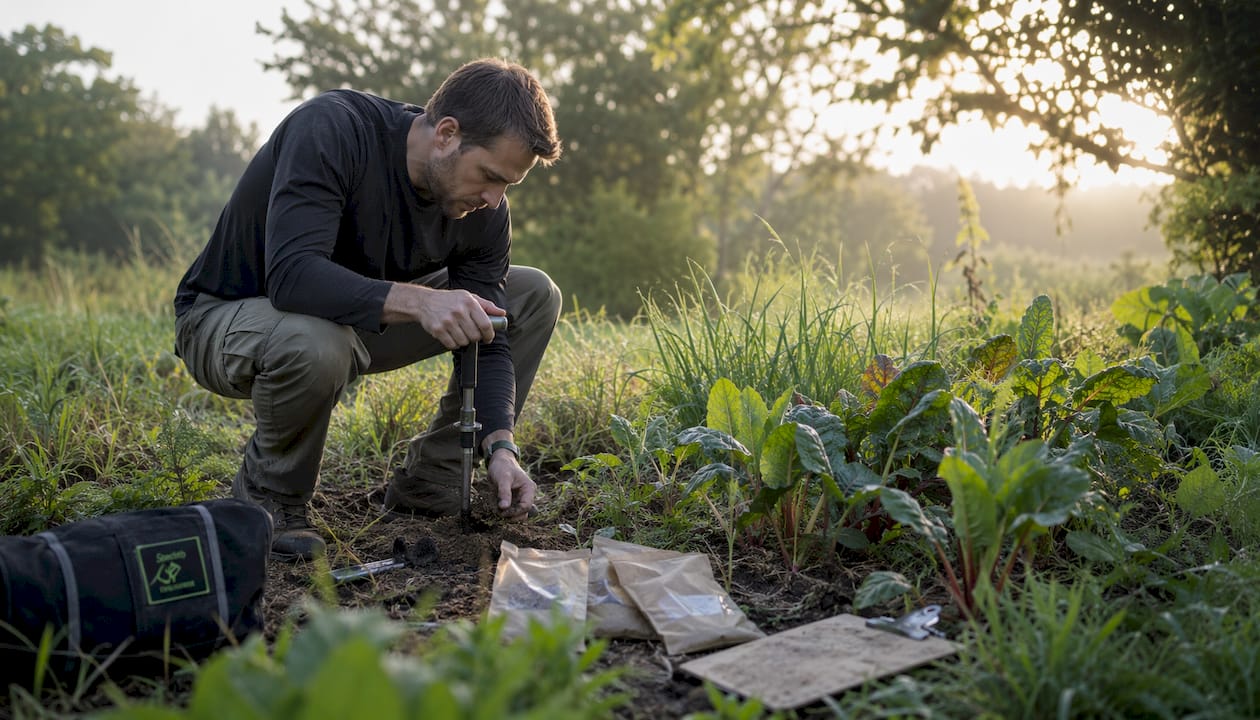
Scaling regenerative sourcing in the U.S. faces real obstacles. Transitioning a farm from conventional to regenerative practice takes years before soil health visibly improves. Brands sourcing at volume need suppliers who can commit to multi-year partnerships, which is a harder ask than a standard purchase order. The policy environment is also still catching up; the USDA’s sustainable agriculture programs support research and farmer adoption, but regenerative-specific funding and regulatory frameworks remain limited.
Social equity is part of the picture too. The most credible U.S. regenerative programs include fair compensation, knowledge-sharing with farming communities, and in some cases, co-ownership models that give growers a stake in the brand’s success. Brands that source locally also reduce transportation emissions and support regional food and farming economies. Starting with ingredients native to a region supports cultural relevance, reduces carbon footprints, and ensures ecological appropriateness.
Essencezenith curates products from brands committed to exactly this kind of sourcing. If you want to shop with confidence that your purchases support regenerative practices, the sustainable living collection is a good place to start. For a broader look at what sustainable beauty actually means versus what brands claim, the sustainable beauty explainer on the Essencezenith blog breaks it down clearly.
How regenerative agriculture compares to other farming approaches used in beauty
Understanding where regenerative agriculture sits relative to other practices helps clarify what it actually delivers.
Conventional agriculture prioritizes yield and cost efficiency. It relies on synthetic fertilizers, pesticides, and frequent tillage. Soil organic matter declines over time, biodiversity drops, and carbon is released rather than stored. For beauty brands, this means cheaper ingredients but also more residual agrochemicals and less phytonutrient density.
Organic farming removes synthetic inputs, which protects soil biology from chemical disruption. But organic certification does not require active soil restoration. An organic farm can still use tillage, grow monocultures, and deplete soil carbon. Organic and regenerative are complementary but distinct frameworks. Many regenerative farms are also organic, but not all organic farms are regenerative.
Agroecology shares significant overlap with regenerative agriculture. The Food and Agriculture Organization describes agroecology as applying ecological and social principles to farming system design, optimizing interactions between plants, animals, humans, and the environment. Regenerative agriculture can be understood as a practical application of agroecological principles focused specifically on soil restoration and carbon sequestration.
Biodynamic farming adds a philosophical layer, treating the farm as a self-sustaining organism. It overlaps with regenerative in its emphasis on soil health and biodiversity but follows a specific set of practices tied to the Demeter certification standard.
The most forward-thinking beauty brands are not choosing one approach exclusively. Combining regenerative farming with upcycling, wild-harvesting, and biotechnology lets brands scale ingredient supply without adding new ecological pressure. Each method handles a different part of the sourcing challenge, and together they reduce the total footprint of a product line more effectively than any single approach alone.
Key Takeaways
Regenerative agriculture beauty actively restores soil health, biodiversity, and carbon storage in ingredient farming, producing cleaner, more potent botanicals while leaving ecosystems better than before.
Point | Details |
Beyond sustainability | Regenerative sourcing rebuilds ecosystems rather than simply reducing harm, making it a step beyond conventional sustainability. |
Soil drives ingredient quality | Biologically rich soil produces plants with higher phytonutrient density, directly improving the potency of botanical extracts. |
Not a certification | Regenerative is a direction, not a fixed standard; it requires tailored brand-farmer partnerships specific to each ecosystem. |
Organic is not the same | Organic farming avoids synthetics; regenerative agriculture actively adds soil organic matter and rebuilds biodiversity. |
U.S. adoption is growing | Brands and researchers like Jason Rowntree at Michigan State University are advancing regenerative sourcing in the American market. |
FAQ
What is regenerative beauty in simple terms?
Regenerative beauty means sourcing ingredients from farms that actively restore soil health, biodiversity, and carbon storage rather than just avoiding harm. The goal is to leave the land better than it was before each growing season.
Does regenerative agriculture actually work?
Yes. Research shows that regenerative practices enhance soil organic carbon, increase water retention, and improve biodiversity compared to conventional farming.
Is regenerative agriculture the same as organic farming?
No. Organic farming avoids synthetic inputs, while regenerative agriculture actively rebuilds soil organic matter and biodiversity. The two approaches are complementary but address different problems.
What is an example of a regenerative diet or sourcing approach in beauty?
Sourcing ingredients from perennial, agroforestry, and diverse plant-based systems is a core example. These systems act as carbon sinks and improve nutrient bioavailability in the botanicals used in skin and hair care products.
How can you tell if a beauty brand is genuinely regenerative?
Look for named farm partnerships, specific growing regions, and ingredient-level transparency. Brands like Davines and Beauty Seeds publish sourcing details; vague “earth-friendly” language without farm-level specifics is not enough.
Recommended
Comments