
Waterless Beauty Formulation: Your 2026 Skincare Guide
- Norman Church
- Jun 20
- 7 min read

TL;DR:
Waterless beauty products use concentrated carriers like oils, butters, and powders instead of water, making them more potent and sustainable. They require fewer preservatives, last longer, and reduce environmental impact through smaller packaging and lighter shipments. These formulations are effective for most skin types and enhance skin health by delivering higher active concentrations with less irritation.
Waterless beauty formulation is defined as skincare and cosmetic products made without added water, using concentrated carriers like botanical oils, butters, waxes, and powdered actives instead. This approach removes the single largest filler in conventional beauty, which means every drop you apply works harder. Brands like RMS Beauty and Kosmatology have built entire lines around this principle, and the broader market is following fast. The shift is driven by two forces that now define modern skincare: demand for genuine potency and growing pressure to reduce environmental impact.
What is waterless beauty formulation and how does it differ from traditional skincare?
Conventional beauty products contain 60–80% water as their primary ingredient. That water is not inert. It dilutes every active ingredient in the formula and creates a breeding ground for bacteria, which forces formulators to add preservatives just to keep the product stable on a shelf. Waterless formulations, also called anhydrous formulations in cosmetic chemistry, skip water entirely. The result is a product built almost entirely from functional ingredients.
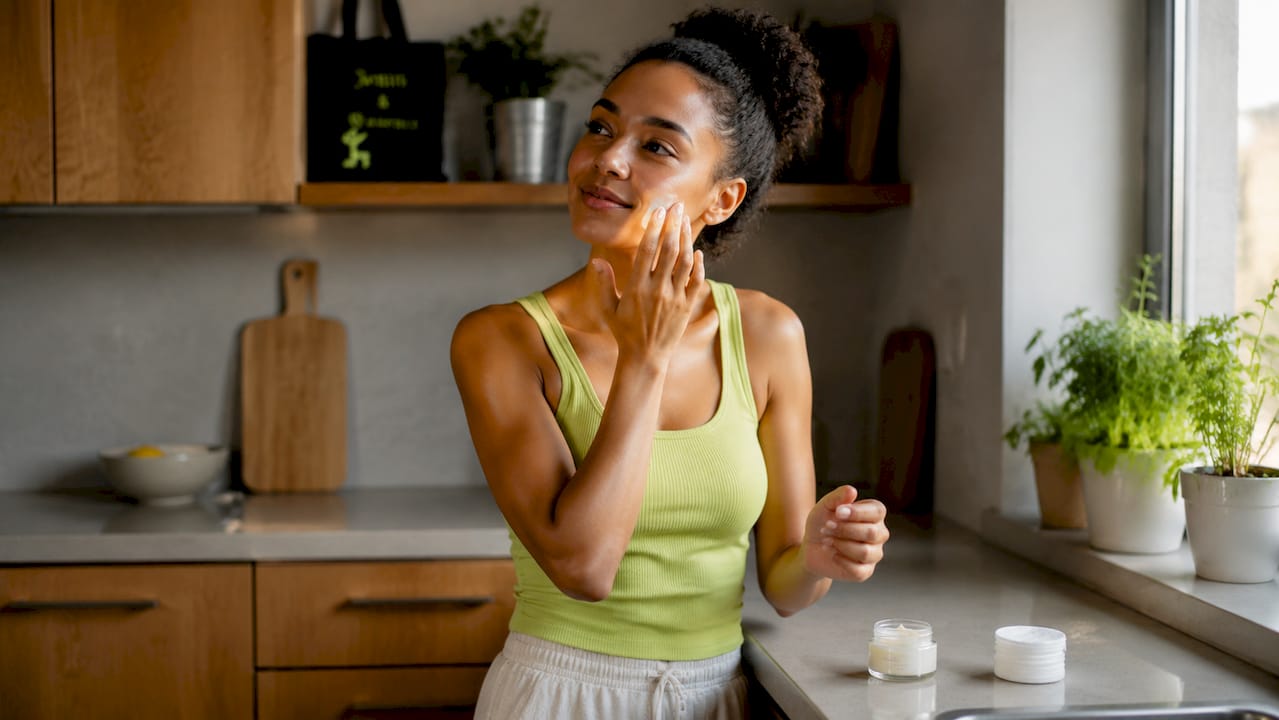
The difference shows up clearly when you read an ingredient list. Ingredient lists where “aqua” or “water” appear at the top signal a diluted formula with less active potency per application. A waterless face balm, by contrast, lists shea butter, jojoba oil, or a powdered vitamin C derivative first. Those ingredients do the actual work.
Water-based vs. waterless: a direct comparison
Characteristic | Water-based products | Waterless products |
Primary ingredient | Water (60–80% of formula) | Oils, butters, waxes, or powders |
Active concentration | Low to moderate | High |
Preservative need | High (prevents microbial growth) | Low to none |
Shelf life | Shorter without strong preservatives | Longer due to anhydrous stability |
Packaging size | Larger, heavier | Smaller, lighter |
Environmental footprint | Higher water use and shipping weight | Reduced water use and emissions |
The table makes one thing obvious: water-based products are not inherently bad, but they carry structural trade-offs. Waterless cosmetics sidestep those trade-offs by design.
What are the benefits of waterless beauty for skin health?
Removing water removes the filler that crowds out beneficial actives, resulting in more potency per application. A retinol balm formulated without water can deliver a higher effective concentration of retinol than a water-based serum at the same price point. That concentration difference is not marginal. It changes how quickly you see results.
The second major benefit targets sensitive skin directly. Waterless products reduce the need for strong preservatives that can disrupt the skin microbiome and cause irritation. Parabens, formaldehyde releasers, and certain phenoxyethanol concentrations are common in water-based formulas because water demands them. Anhydrous formulas do not carry that same microbial risk, so they can be preserved lightly or not at all.
Key benefits of water-free beauty formulations for skin health include:
Higher potency per drop. Active ingredients like niacinamide, peptides, and vitamin C are not diluted by water, so smaller amounts deliver stronger effects.
Microbiome protection. Fewer preservatives mean less disruption to the skin’s natural bacterial balance, which plays a direct role in barrier function.
Gentler on reactive skin. People with rosacea, eczema, or contact dermatitis often tolerate anhydrous formulas better because the irritant load is lower.
Longer usable life. Without water to trigger oxidation or microbial growth, products stay effective longer after opening.
Better for aging skin. Concentrated oils and butters support lipid replenishment, which aging skin loses over time. For more on this, aging skin care practices offer useful context on barrier support.
Pro Tip: Start with a patch test on your inner arm for 24 hours before applying any new waterless product to your face. Concentrated formulas are more potent, and that potency cuts both ways if your skin is reactive.
How do waterless formulations contribute to environmental sustainability?
Waterless beauty reduces water consumption, packaging weight, and shipping emissions across the full product lifecycle. That is not a marketing claim. It reflects real differences in how these products are made, packaged, and transported.
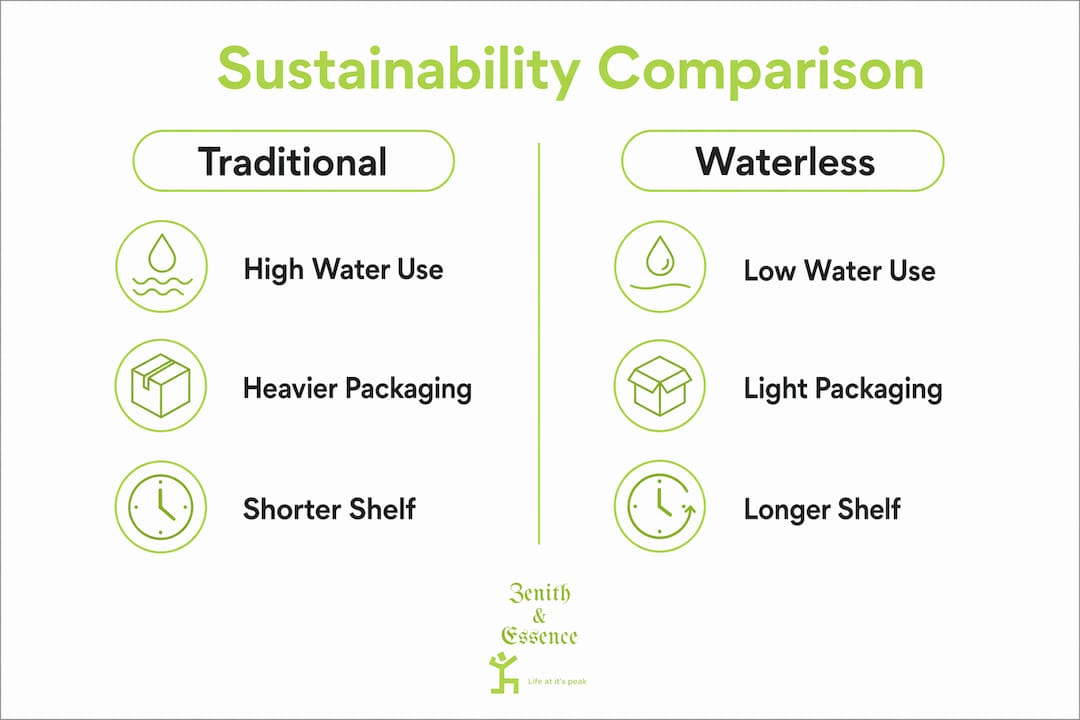
A conventional liquid moisturizer ships mostly water. A waterless balm of equivalent active potency ships in a fraction of the volume and weight. Lighter shipments mean lower fuel consumption per unit. Smaller containers mean less plastic per product. Both effects compound across millions of units sold annually.
Sustainability factor | Traditional water-based product | Waterless product |
Water used in production | High | Minimal to none |
Packaging size | Large (accommodates water volume) | Small and concentrated |
Shipping weight | Heavy | Light |
Preservative chemicals | High concentration | Low to none |
Product waste from spoilage | Higher (shorter shelf life) | Lower (longer shelf life) |
Longer shelf life also reduces waste at the consumer level. A waterless facial oil or solid serum does not expire in six months the way a water-based emulsion often does. You use more of what you buy. For a deeper look at how these principles connect to the broader movement, sustainable beauty explained covers the full picture.
How to use waterless beauty products effectively
The most common mistake with waterless skincare products is applying too much. A pea-sized amount is sufficient for the full face. Using more does not improve results. It wastes product and can leave skin feeling greasy or congested.
Application technique matters just as much as amount. Gentle pressing reduces irritation compared to rubbing, especially for sensitive or aging skin. Rubbing creates friction that can break down the skin barrier over time. Press the product in with your fingertips or palms instead.
Follow these steps to get the most from your waterless routine:
Cleanse first. Remove makeup and surface debris before applying any concentrated formula. A gentle cream cleanser works well as a non-stripping base step.
Apply on damp skin. Apply 3–5 drops of waterless serum on skin damp from cleansing for better bonding and absorption. Dry skin causes anhydrous serums to slide off rather than absorb.
Use a pea-sized amount. Start small. You can always add more, but over-application is the most common error with concentrated formulas.
Press, do not rub. Use gentle pressing motions from the center of the face outward. This technique works with the skin rather than against it.
Activate powder products correctly. Use approximately 2 grams of powder with 4–6 drops of warm water to create a paste, then apply immediately before the mixture changes consistency.
Introduce one product at a time. Add one waterless product to your routine and observe your skin for two weeks before adding another. Concentrated formulas can interact, and isolating variables helps you understand what works.
Pro Tip: If your waterless serum feels tacky after application, your skin was too dry. Mist your face lightly with a toner or thermal water before applying, and the texture will shift noticeably.
The biotechnology in beauty space is also producing new anhydrous delivery systems, including encapsulated actives that release on contact with skin. These formats make waterless formulas even more targeted than traditional options.
Key Takeaways
Waterless beauty formulations outperform conventional water-based products in potency, skin compatibility, and environmental impact because they replace water filler with concentrated active ingredients.
Point | Details |
Core definition | Waterless formulas contain no added water, using oils, butters, waxes, or powders as carriers instead. |
Higher potency | Removing water increases active ingredient concentration, delivering stronger results per application. |
Gentler on skin | Fewer preservatives protect the skin microbiome and reduce irritation for sensitive skin types. |
Environmental advantage | Smaller packaging, lighter shipping, and longer shelf life reduce waste and carbon output. |
Application rule | Use a pea-sized amount on damp skin and press gently rather than rub to maximize absorption. |
Why I think waterless beauty is the format most routines are missing
Most people I talk to about skincare are unknowingly paying for water. They buy a $60 serum, and the first ingredient is aqua. The active they paid for sits at 1% or 2% of the formula. That is not a scam exactly, but it is a structural inefficiency that waterless formulations solve completely.
The misconception I hear most often is that waterless means drying. It does not. Oils and butters are not drying. They are occlusive and emollient, meaning they seal moisture in and soften the skin surface. The confusion comes from conflating “water in the product” with “hydration for the skin,” and those are not the same thing.
My honest advice: do not overhaul your entire routine at once. Pick one step, your moisturizer or your facial oil, and swap it for a waterless equivalent. Give it four weeks. The difference in how your skin looks and feels is usually enough to convert even the most skeptical person. Waterless beauty aligns with where conscious skincare is heading in 2026, toward fewer ingredients, higher quality, and less waste.
— Norman
Explore Essencezenith’s natural and waterless beauty products
Essencezenith curates products built on the same principles that make waterless formulations work: concentrated ingredients, sustainable sourcing, and real transparency about what goes on your skin.

Their natural vegetable deodorant is a strong example of this philosophy applied to a daily-use product. It skips the synthetic fillers and relies on plant-derived actives instead. For those who prefer a scent option, the lavender natural deodorant and lemongrass natural deodorant bring the same skin-friendly approach with a fragrance twist. Every purchase at Essencezenith comes with a 30-day satisfaction guarantee, so you can try these formulas without risk.
FAQ
What is a waterless beauty formulation?
A waterless beauty formulation is a skincare or cosmetic product made without added water, using concentrated carriers like oils, butters, waxes, or powders instead. This increases active ingredient concentration and reduces the need for preservatives.
Are waterless skincare products effective for all skin types?
Waterless skincare products work well for most skin types, including sensitive, aging, and reactive skin, because they carry fewer irritating preservatives. People with very oily skin should choose lighter anhydrous formats like serums or powders rather than heavy balms.
How do I know if a product is truly waterless?
Check the ingredient list. If “aqua” or “water” does not appear, the product is anhydrous. Ingredient lists with water at the top indicate a diluted formula with lower active potency.
Do water-free beauty formulations expire faster?
Waterless formulas typically last longer than water-based products because water is the primary trigger for microbial growth and oxidation. Without water, the formula stays stable for a longer period after opening.
Is waterless beauty better for the environment?
Yes. Waterless beauty reduces water use, packaging size, and shipping weight, which lowers carbon emissions across the product lifecycle. Longer shelf life also means less product waste at the consumer level.
Recommended
Comments