
Hair Beauty Care: Build Your Best Routine Today
- Norman Church
- Aug 12
- 18 min read

For most people, a weekly deep-conditioning treatment combined with type-specific cleansing delivers the best balance of shine, strength, and manageability. Start there, and everything else falls into place.
Here’s what to do today:
Cleanse by hair type: Wash several times per week for normal to oily hair; once a week or less for dry, coily, or color-treated strands.
Condition every wash: Apply conditioner from mid-length to ends only, never the scalp.
Add one weekly treatment: A mask or deep conditioner on your most vulnerable lengths.
Protect before heat: Apply a heat protectant to damp hair before any blow-dryer or flat iron.
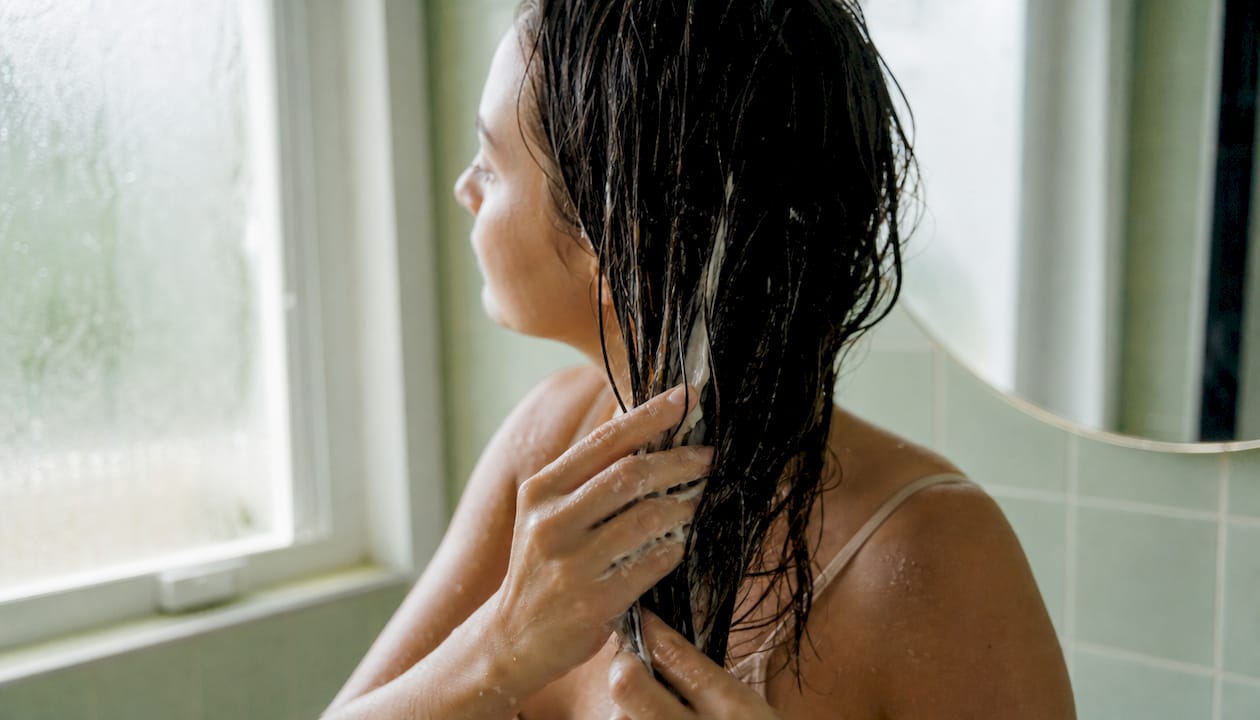
Detangle gently: Use a wide-tooth comb in the shower while conditioner is still in your hair.
Pro Tip: Wet hair is significantly more fragile than dry hair. Detangling in the shower with conditioner as a slip agent cuts mechanical breakage significantly compared with brushing after toweling off.
Essencezenith curates sustainably formulated hair products matched to every hair type, backed by a 30-day satisfaction guarantee so you can try a new routine without risk.
Key Takeaways
Matching your routine to your hair type and reading ingredient labels carefully are the two highest-leverage moves in any hair beauty care practice.
Point | Details |
Match routine to hair type | Wash frequency, conditioner weight, and treatment intensity should reflect your hair type and porosity, not a universal schedule. |
Detangle safely | Use a wide-tooth comb in the shower while conditioner is in your hair; wet hair is significantly more fragile than dry hair. |
Prioritize key ingredients | Look for keratin, panthenol, hyaluronic acid, and ceramides high on the label for structural repair and lasting hydration. |
See a dermatologist for red flags | Patchy thinning, scalp pain, scarring, or accelerating shedding over two to three months warrant medical evaluation, not a product change. |
Essencezenith’s guarantee | Essencezenith offers a 30-day satisfaction guarantee on curated, sustainably formulated hair products so you can trial a new routine without financial risk. |
Table of Contents
What does a good hair care routine look like for your hair type?
What does each hair product actually do, and when should you use it?
Which ingredients should you look for, and which should you avoid?
Why does scalp health matter, and what does your diet have to do with it?
When should you see a dermatologist or a professional stylist?
How do you adjust your routine when you change your hair length or style?
Which hair tools should you use, and how do you use them correctly?
Why ingredient-forward hair care is a smarter long-term investment
Essencezenith’s curated kits make starting your routine straightforward
What does a good hair care routine look like for your hair type?
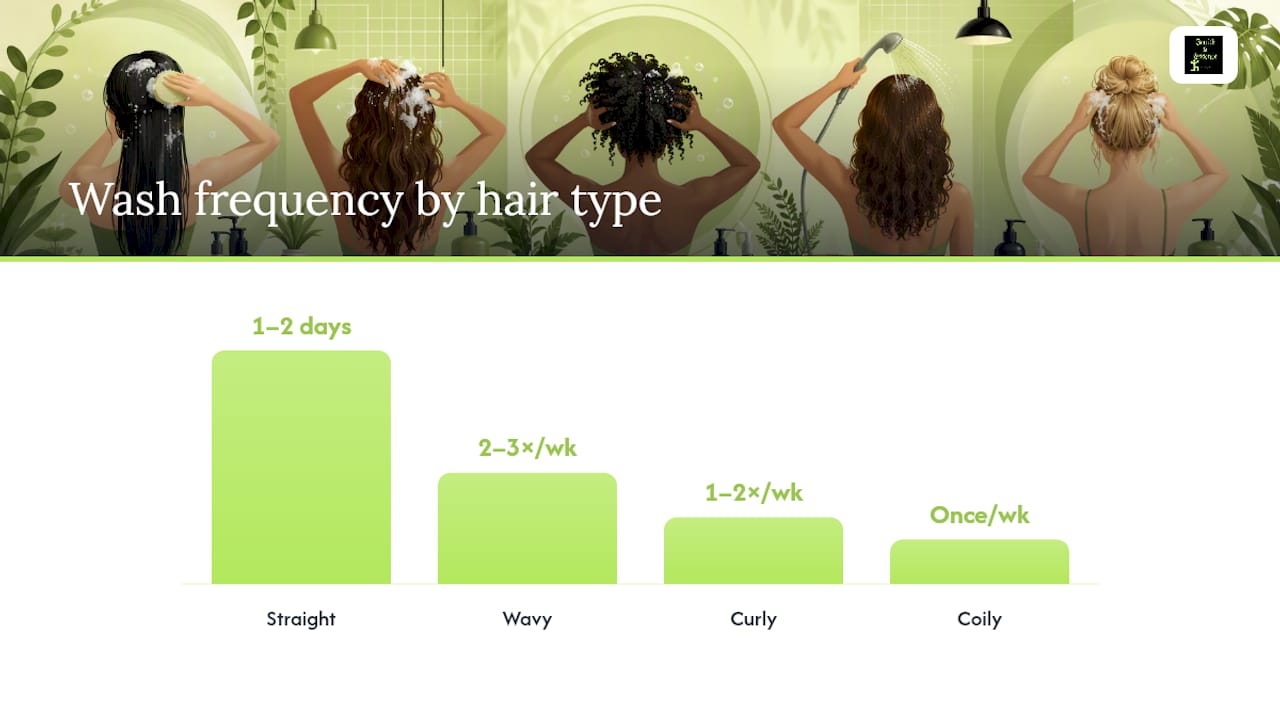
The most effective routine isn’t about the trendiest products. It’s about matching wash frequency, conditioner weight, and treatment intensity to your actual hair type. Board-certified dermatologists confirm that adjusting these variables by hair type, rather than following a one-size-fits-all schedule, is what separates a routine that works from one that doesn’t.
Hair Type | Wash Frequency | Conditioner Weight | Weekly Treatment | Heat Allowance |
Straight | Every 1–2 days | Light, volumizing | Optional clarifying mask | Moderate; use protectant |
Wavy | 2–3x per week | Medium, frizz-control | Hydrating mask 1x/week | Low to moderate |
Curly | 1–2x per week | Rich, moisturizing | Deep conditioner 1x/week | Minimal; diffuse only |
Coily | Once a week or less | Heavy, butter or cream | Intensive mask 1–2x/week | Avoid; protective styles |
Porosity matters too. Low-porosity hair (water beads on the surface) needs lighter, water-based products that won’t sit on top of the strand. High-porosity hair (absorbs water fast but loses it just as fast) benefits from heavier creams and sealants like shea butter or castor oil. A quick test: drop a clean strand into a glass of water. If it sinks within two minutes, porosity is high; if it floats, it’s low.
For wavy and curly types, frizz is almost always a moisture issue. Swap a clarifying shampoo for a sulfate-free formula on regular wash days and save the clarifying shampoo for every two to four weeks to remove buildup without stripping natural oils.
Pro Tip: Apply conditioner starting at the ends and work upward toward mid-length. The ends are the oldest, most damaged part of the strand and need the most product. The scalp produces its own sebum and rarely needs conditioner.
What does each hair product actually do, and when should you use it?
Misusing products is one of the most common reasons a routine stops working. Here’s a clear breakdown of each category and its purpose:
Shampoo: Cleanses the scalp and removes oil, product buildup, and environmental debris. Apply to the scalp and let it rinse through the lengths.
Conditioner: Smooths the cuticle, adds slip for detangling, and seals in moisture. Use after every shampoo, mid-length to ends.
Deep conditioner / mask: Delivers intensive repair and hydration to the cortex. Use once a week on dry, damaged, or chemically treated hair; every two weeks for healthier strands.
Leave-in conditioner: A lighter, no-rinse formula that provides ongoing moisture and detangling support between washes. Apply to damp hair before styling.
Hair oil: Seals the cuticle and adds shine. Argan, jojoba, and marula oils work well on dry or frizzy hair. Apply a few drops to dry or damp ends; avoid the scalp if you’re prone to oiliness.
Serum: Silicone-based serums coat the strand for smoothness and heat protection. Unlike oils, they don’t penetrate the cortex. Best for finishing, not treatment.
Heat protectant: Creates a thermal barrier between the strand and styling tools. Apply to damp hair before blow-drying or to dry hair before flat-ironing.
Styling products (gels, creams, mousses): Define texture, control frizz, or add volume. Apply to damp hair for best hold and distribution.
The biggest layering mistake is applying rich treatments to the scalp. Dermatologist guidance is consistent here: concentrate masks and heavier conditioners from mid-length to ends, where strands are oldest and most prone to dryness and split ends. Scalp buildup from heavy products can clog follicles and dull roots.
Product | When to Use | Where to Apply |
Shampoo | Every wash day | Scalp primarily |
Conditioner | Every wash day | Mid-length to ends |
Mask / deep conditioner | Weekly or biweekly | Mid-length to ends |
Leave-in | After every wash | Damp hair, mid-length to ends |
Oil | As needed | Dry or damp ends |
Heat protectant | Before any heat tool | Damp or dry lengths |
How do you choose the right hair products for your hair?
Shopping for hair products without a framework leads to a cabinet full of half-used bottles. A simple decision process saves money and gets results faster.
Identify your hair type and porosity first. Use the float test described above. This single step narrows your formula choices by half.
Read the first five ingredients. Cosmetic formulas list ingredients in descending order of concentration. If water, a beneficial oil, or a protein is in the top five, the formula delivers on its promise. If the first ingredient is a drying alcohol or a heavy silicone, reconsider.
Match texture to need. Fine hair needs lightweight liquids or foams. Thick, coarse, or coily hair handles creams and butters without going limp.
Look for sulfate-free on color-treated or sensitive scalps. Sulfate-free shampoos clean effectively with less stripping, making them the better default for most people.
Check for certifications if sustainability matters to you. USDA Organic, EWG Verified, and Leaping Bunny are the most meaningful third-party signals. Essencezenith’s guide to organic certification explains what each label actually guarantees.
Use the ‘pick this if’ shortcut:
Volume: Look for “volumizing,” panthenol, and rice protein in the formula.
Hydration: Hyaluronic acid, glycerin, and aloe vera are your signals.
Color care: Sulfate-free, UV filters, and antioxidants like vitamin E.
Damage repair: Keratin, ceramides, and hydrolyzed proteins.
Pro Tip: Before committing to a full-size product, look for sample sizes or starter kits. A two-week trial tells you far more than any ingredient list alone.
Which ingredients should you look for, and which should you avoid?
Ingredient labels are where marketing claims meet reality. Knowing the difference between a genuinely beneficial ingredient and a filler takes about five minutes to learn and saves years of frustration.
Ingredients worth seeking out
Keratin: A structural protein that fills gaps in damaged cuticles and reduces frizz. Look for “hydrolyzed keratin” for better penetration.
Panthenol (Pro-Vitamin B5): Attracts and retains moisture, adds softness, and supports elasticity. One of the most well-supported ingredients in hair formulas.
Hyaluronic acid: A humectant that draws water into the strand. Particularly effective in humid climates or for low-porosity hair that needs lightweight hydration.
Ceramides: Lipids that reinforce the cuticle layer and reduce moisture loss. Especially useful after chemical treatments or heat damage.
Argan oil: Rich in oleic acid and vitamin E; smooths the cuticle and adds shine without heaviness. Works across most hair types.
Biotin: Supports keratin infrastructure; most effective when applied topically in combination with other strengthening ingredients.
Dermatologists specifically recommend keratin, panthenol, hyaluronic acid, and ceramides when the goal is structural repair or lasting hydration.
Ingredients to use cautiously or avoid
Sodium lauryl sulfate (SLS): A harsh surfactant that strips natural oils. Fine for occasional clarifying; too aggressive for daily use, especially on color-treated or dry hair.
Drying alcohols (SD alcohol, denatured alcohol): Evaporate quickly and can leave strands brittle with repeated use. Fatty alcohols like cetyl or stearyl alcohol are different and are actually conditioning.
Formaldehyde releasers (DMDM hydantoin, quaternium-15): Preservatives that slowly release formaldehyde; linked to scalp irritation and sensitization with long-term exposure.
Excessive silicones (dimethicone, cyclopentasiloxane): Not harmful in moderation, but heavy silicones build up on the strand over time and block moisture absorption. If you use them, a clarifying shampoo every two to four weeks keeps buildup in check.
One thing worth knowing: a product’s marketing claim (“strengthening,” “repairing”) tells you nothing about concentration. A formula with keratin listed tenth on the label delivers far less than one where it appears in the top five. Read the label, not the front of the bottle.
How often should you wash, detangle, and protect your hair?
Washing too often strips natural oils; washing too rarely lets buildup accumulate and can irritate the scalp. The right frequency depends on your hair type, scalp activity, and lifestyle.
Oily scalp or fine hair: Daily or every other day is fine. Fine hair gets weighed down by sebum faster.
Normal scalp, straight to wavy hair: 2–3 times per week is the sweet spot for most people.
Dry, curly, or coily hair: Once a week or less. Natural oils travel slowly down tightly coiled strands, so frequent washing removes moisture the hair needs.
Active lifestyle (daily workouts, swimming): Rinse with water between full washes. Co-washing (conditioner-only washing) is a practical option for curly and coily types who exercise frequently.
Detangling and towel-drying
Wet hair is at its most fragile. The safest approach is to detangle in the shower with a wide-tooth comb while conditioner is still coating the strand, working from ends upward. Brushing wet hair with a fine-tooth brush or paddle brush causes significantly more breakage. After washing, blot hair with a microfiber towel or a soft cotton T-shirt rather than rubbing vigorously with a terry cloth towel.
Daily protection habits
Sleep on a silk or satin pillowcase to reduce friction and frizz overnight.
Apply a UV-protective spray or wear a hat in direct sun for extended periods.
Rinse hair with fresh water before swimming in chlorinated or saltwater pools.
Avoid tight elastic bands; use fabric-covered ties or scrunchies instead.
Pro Tip: Loosely braid or twist hair before bed. It reduces tangling, minimizes friction against the pillow, and cuts morning detangling time in half.
Why does scalp health matter, and what does your diet have to do with it?
The scalp is living skin, not just a base for hair. It has follicles, sebaceous glands, and a microbiome that directly influence how well hair grows and how healthy it looks. Neglecting scalp health while focusing only on the lengths is like watering a plant’s leaves instead of its roots.
What to eat for healthier hair
Protein is the structural foundation of every strand. Adequate intake supports the keratin matrix that gives hair its strength and elasticity. Zinc plays a role in follicle function, and research links zinc deficiency to increased shedding. Omega-3 fatty acids, found in fatty fish, walnuts, and flaxseed, support scalp hydration and reduce inflammation that can impair follicle health. Vitamin D deficiency has also been associated with hair thinning in some studies.
Practical targets: include a protein source at every meal (eggs, legumes, lean meat, Greek yogurt), eat fatty fish two to three times per week, and consider a blood panel if you suspect deficiencies before reaching for supplements.
When to see a dermatologist
Seasonal shedding of 50–100 strands per day is normal. Beyond that, the following signs warrant a medical appointment rather than a product switch:
Sudden or patchy thinning not explained by a recent illness or stress event
Scalp pain, tenderness, or burning
Persistent flaking that doesn’t respond to dandruff shampoo within four weeks
Scarring or smooth bald patches
Shedding that accelerates over several months
The connection between lifestyle and hair health is real. Stress, poor sleep, and nutritional gaps all show up on the scalp before they show up anywhere else. Treating the routine and the diet as complementary, rather than separate, is what produces lasting results.
How do you protect hair from heat and styling damage?
Heat damage is cumulative. A single blow-dry at high heat won’t ruin your hair, but repeated high-heat styling without protection adds up to brittle, porous strands that break before they grow long. Dermatologists recommend limiting heat styling overall and using medium to low heat settings when you do style.
Flat irons and curling wands: Fine hair handles 300–350°F; medium hair 350–375°F; thick or coarse hair up to 400°F. Going higher rarely improves results and always increases damage.
Blow-dryers: Use the cool or warm setting for the final few minutes to close the cuticle. Keep the nozzle moving; holding it in one spot concentrates heat.
Heat protectants: Apply to damp hair before blow-drying or to dry hair before flat-ironing. A product with silicones or panthenol creates a thermal barrier that slows heat transfer to the cortex.
Layering: A leave-in conditioner applied first, followed by a heat protectant, gives both moisture and protection. Don’t skip the leave-in thinking the protectant covers both jobs.
Mechanical protection
Use a boar-bristle or wide-paddle brush on dry hair; never on wet.
Detangle with a wide-tooth comb or a wet brush specifically designed for wet hair.
Microfiber towels or cotton T-shirts absorb water without the friction that terry cloth creates.
Protective hairstyles (braids, twists, buns) reduce daily manipulation and exposure for curly and coily types.
Starting on soaking-wet hair extends heat exposure time significantly and does more damage than finishing with a dryer on a mostly-dry strand.*
Which Essencezenith products fit into these routines?
Vegan Shampoo (BYMANYC New York): A sulfate-free daily cleanser formulated for all hair types. Best for normal to wavy hair on regular wash days; gentle enough for color-treated strands.
Onion & Biotin Shampoo Bar: A solid, low-waste shampoo with biotin and onion extract to support scalp circulation and strengthen the strand. Fits into the weekly clarifying step for oily scalps.
Hydrating conditioner: Lightweight formula with panthenol and glycerin. Use after every wash, mid-length to ends, for straight to wavy hair.
Intensive repair mask: Ceramide and keratin-rich formula for dry, damaged, or chemically treated hair. Apply once a week, leave on for 10–15 minutes, rinse thoroughly.
Leave-in cream: Humectant-forward with hyaluronic acid. Apply to damp curly or coily hair before styling to lock in moisture between washes.
Argan oil serum: A few drops on dry ends to seal the cuticle and add shine. Works across all hair types; use sparingly on fine hair.
Heat protectant spray: Silicone and panthenol base. Apply to damp hair before blow-drying; reapply lightly before flat-ironing dry hair.
Scalp treatment oil: Lightweight blend with zinc-supporting botanicals. Massage into the scalp once a week before washing to support follicle health and reduce flaking.
Pro Tip: Start with a shampoo, conditioner, and one treatment product. Adding everything at once makes it impossible to know what’s working. Give a three-product routine four to six weeks before adding anything new.
Product Role | Essencezenith Pick | Best For |
Daily cleanser | Vegan Shampoo (BYMANYC) | Normal to wavy, color-treated |
Low-waste cleanser | Onion & Biotin Shampoo Bar | Oily scalp, eco-conscious |
Weekly repair | Intensive repair mask | Dry, damaged, chemically treated |
Daily moisture | Leave-in cream | Curly, coily, dry hair |
Heat defense | Heat protectant spray | All types before heat styling |
All Essencezenith products come with full ingredient lists published on the product page, so you can verify every formula before buying.
How do you shop smart and use the 30-day guarantee?
Buying hair products online carries a real risk: what works for someone else’s hair type may do nothing for yours. A few habits before checkout reduce that risk significantly.
Confirm the ingredient match. Cross-reference the top five ingredients against your hair type and porosity needs before adding to cart.
Check the hair-type notes. Essencezenith product pages include hair-type guidance. If the product is listed for fine hair and yours is coarse, keep looking.
Look for starter kits or sample sizes. A smaller size lets you test a formula for two to three weeks without committing to a full bottle.
Read recent customer reviews. Filter for reviews from people with a similar hair type. A product with strong reviews from curly-hair customers tells you more than a five-star average across all types.
Using the 30-day satisfaction guarantee
If a product doesn’t work for your hair after a fair trial, Essencezenith’s 30-day satisfaction guarantee covers unused items. The process is straightforward: contact customer support within 30 days of purchase, explain the issue, and return the unused portion. No complicated hoops.
Give the routine a real trial period. Most hair changes take four to six weeks to show up. Switching products after two washes doesn’t give the formula a fair chance.
Track what changes. Note wash frequency, products used, and any visible differences (frizz, breakage, shine) in a simple phone note. This makes it easier to identify what’s working and what to return.
For guidance on buying ethically and verifying certifications before checkout, Essencezenith’s ethical beauty shopping guide covers exactly what to look for.
When should you see a dermatologist or a professional stylist?
Most hair concerns respond to routine adjustments. Some don’t, and knowing the difference saves months of trial-and-error with products that can’t fix a medical issue.
Red flags that need a dermatologist
Sudden or patchy hair loss, especially in defined circular areas
Scalp pain, tenderness, or a burning sensation
Visible scarring or smooth, shiny bald patches (possible scarring alopecia)
Bleeding or open sores on the scalp
Severe, persistent itching that doesn’t respond to dandruff shampoo
Shedding that accelerates noticeably over two to three months
What to document before your appointment
Bring a timeline of when symptoms started, a list of every product you’ve used in the past six months, any medications or supplements, and notes on recent diet changes or high-stress events. A dermatologist will often order a blood panel to check iron, zinc, vitamin D, and thyroid function before diagnosing a hair loss condition.
Dermatologist vs. stylist
A dermatologist handles medical conditions: alopecia, seborrheic dermatitis, scalp psoriasis, fungal infections. A professional stylist handles structural damage from heat, chemical treatments, or mechanical stress. If your hair is breaking at the ends and feels dry, a stylist can assess the damage and recommend a treatment plan. If your scalp hurts or you’re losing hair in patches, that’s a dermatologist visit.
Pro Tip: Take photos of your scalp and hairline every month if you’re monitoring shedding. A visual record is far more useful to a dermatologist than a general description of “more hair in the drain.”
How should your hair care routine change with the seasons?
Hair responds to seasonal shifts more than most people expect. In winter, low humidity and indoor heating pull moisture from the strand, making dryness and static more pronounced. Switching to a richer conditioner and adding a weekly mask during the colder months addresses this directly. A humidifier in the bedroom also helps, particularly for curly and coily types.
Summer brings the opposite challenge: humidity causes the cuticle to swell and absorb atmospheric moisture unevenly, which is the mechanical cause of frizz. Anti-humidity serums and leave-ins with humectants like glycerin work best in moderate humidity. In very high humidity, heavy humectants can actually pull too much moisture into the strand and worsen frizz; a light silicone serum over a leave-in works better in those conditions.
Fall often brings a temporary increase in shedding as the hair growth cycle shifts. This is normal and typically self-corrects within six to eight weeks. If shedding continues beyond that, it’s worth investigating nutritional status or stress levels rather than changing products.
Spring is a good time to do a full routine reset: clarify with a deep-cleansing shampoo to remove winter product buildup, reassess your conditioner weight, and trim split ends before the warmer months.
How do sun, pollution, and humidity affect your hair?
Environmental stressors do real, measurable damage to hair over time. UV radiation degrades the melanin in the cortex (which causes color fading in both natural and dyed hair) and breaks down the disulfide bonds that give hair its strength. A UV-protective leave-in or a hat during extended sun exposure is the simplest defense.
Pollution particles, particularly fine particulate matter in urban air, settle on the scalp and strand and can trigger inflammation and oxidative stress at the follicle level. Antioxidant-rich formulas with vitamin E or green tea extract help neutralize this effect. Clarifying shampoo used every two to four weeks removes accumulated particles that a regular shampoo may leave behind.
Humidity’s effect on hair depends entirely on porosity. High-porosity hair absorbs atmospheric moisture rapidly and unevenly, causing the cuticle to lift and frizz. Low-porosity hair resists moisture uptake but can feel sticky in high humidity when heavy products sit on the surface. The fix in both cases is sealing the cuticle: a light oil or silicone serum applied after styling locks the cuticle down and slows moisture exchange with the air.
The connection between environment and beauty outcomes extends beyond hair to skin and overall wellness, which is why ingredient-forward products with antioxidant protection are worth the investment in polluted or high-UV environments.
How do you adjust your routine when you change your hair length or style?
Cutting hair short doesn’t mean the routine gets simpler. It means the priorities shift. Short hair grows out faster at the roots, so scalp health and oil management become more important. Longer hair puts more mechanical stress on the ends, so moisture and split-end prevention take priority.
When going from long to short: your conditioner weight will likely need to drop. Heavy creams that worked on long, dry ends can weigh down a short cut and make it look flat. Switch to a lighter conditioner and skip the mask for a few weeks while you assess how the shorter length behaves.
When growing out a cut or transitioning from a chemical treatment (relaxer to natural, for example): the line of demarcation where two textures meet is the most fragile point on the strand. Deep conditioning that section specifically, handling it gently, and trimming regularly to remove the weaker texture as it grows out prevents breakage at that junction.
Changing from straight to curly styling (using diffusers, curl creams, and plopping instead of blow-drying straight) requires a product overhaul. The routine that worked for sleek, straight results will likely leave curls crunchy or undefined. Start with a curl-specific leave-in and a light gel, and adjust from there.
Which hair tools should you use, and how do you use them correctly?
The right tool used correctly causes less damage than the wrong tool used carefully. Here’s what actually matters:
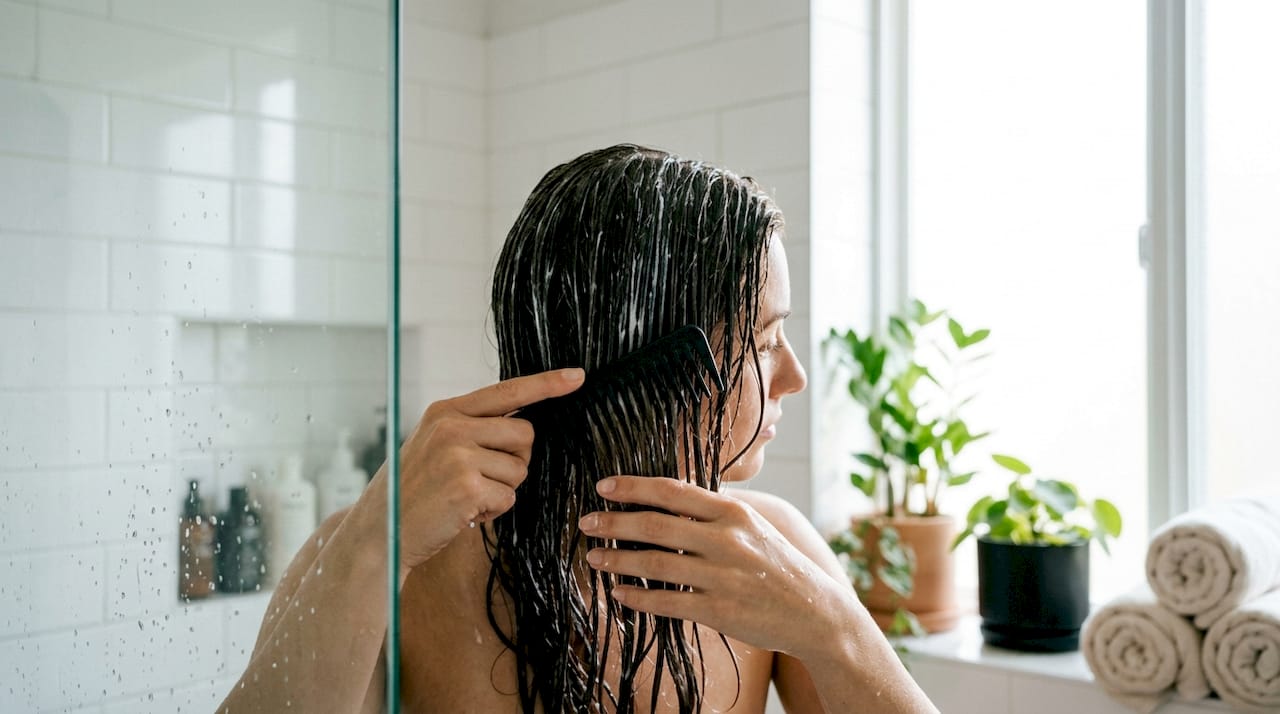
Wide-tooth comb: The safest tool for detangling wet hair. Start at the ends and work upward in sections. Never drag from root to tip on wet hair.
Boar-bristle brush: Best for distributing natural oils from scalp to ends on dry hair. Ideal for straight and wavy types; less useful for curly and coily hair where it can disrupt the curl pattern.
Wet brush or detangling brush: Designed with flexible bristles that bend rather than break the strand. A practical upgrade from a wide-tooth comb for thick or very tangled hair.
Blow-dryer with a concentrator nozzle: The nozzle directs airflow along the cuticle rather than against it, which reduces frizz and speeds drying time. A diffuser attachment is the better choice for curly and wavy hair; it distributes heat evenly without disrupting the curl pattern.
Flat iron and curling wand: Titanium plates heat evenly and hold temperature consistently. Ceramic plates are gentler and better for fine or damaged hair. Always use a heat protectant, and never use either tool on soaking-wet hair.
For a deeper look at how tools fit into a complete routine, Essencezenith’s guide to beauty tools covers scalp massage techniques and application tips that most product guides skip.
Why ingredient-forward hair care is a smarter long-term investment
The smarter approach is to understand what a handful of well-studied ingredients actually do at effective concentrations, and then buy products where those ingredients appear high on the label. Keratin, panthenol, ceramides, and hyaluronic acid have decades of research behind them. They’re not exciting, but they work. A product that leads with water, glycerin, and hydrolyzed keratin in the first five ingredients will outperform a product that markets a trendy botanical extract listed tenth.
Sustainable sourcing matters for a different reason than most people think. It’s not just an ethical preference. Sustainably sourced ingredients are more likely to be processed without harsh solvents that degrade their efficacy. Green chemistry principles in beauty formulation reduce the use of reactive chemicals that can irritate the scalp and compromise ingredient stability.
The transition from mainstream products to ingredient-forward alternatives doesn’t have to be abrupt. Swap one product at a time, starting with your shampoo. Give it four to six weeks. Then reassess your conditioner. Gradual transitions let you isolate what’s actually making a difference.
Essencezenith’s curated kits make starting your routine straightforward
The hardest part of building a new hair care routine is knowing where to start. Essencezenith removes that friction with curated product selections matched to hair type, all formulated with transparent ingredient lists and sustainable sourcing standards.

Every kit maps directly to the routines covered in this article: a cleanser, a conditioner, a weekly treatment, and a leave-in or finishing product. The 30-day satisfaction guarantee means you can commit to a four-to-six-week trial, the minimum time needed to see real results, without the risk of being stuck with something that doesn’t work for your hair. If it’s not right, return the unused portion within 30 days, no complicated process required.
Shop Essencezenith’s hair care collection and find the right routine for your hair type today.
Sources
FAQ
What is the best hair care routine for healthy hair?
Dermatologists recommend applying shampoo mainly to the scalp and detangling wet hair in the shower with a wide-tooth comb.
What are the most important ingredients to look for in hair products?
Keratin, panthenol, hyaluronic acid, and ceramides are the most well-supported ingredients for structural repair and hydration. Avoid sodium lauryl sulfate for daily use, drying alcohols, and formaldehyde-releasing preservatives.
How do you make hair look and feel healthier faster?
Start with a weekly deep-conditioning mask, switch to a sulfate-free shampoo, and stop brushing wet hair. Nutritional gaps in protein, zinc, and omega-3s also affect hair quality, so diet is worth addressing alongside your product routine.
When should you see a dermatologist about hair loss?
See a dermatologist if you notice patchy thinning, scalp pain, scarring, or shedding that accelerates over two to three months. These are medical issues that products cannot resolve, and a blood panel can identify underlying deficiencies or conditions.
Does Essencezenith offer a return policy if a product doesn’t work?
Yes. Essencezenith’s 30-day satisfaction guarantee covers unused items. If a product doesn’t suit your hair after a fair trial, contact customer support within 30 days of purchase to initiate a return.
Recommended
Comments