
How to Identify Quality Beauty Ingredients Effectively

TL;DR:
Knowing how to identify quality beauty ingredients helps distinguish effective products from those that only look good. Reading ingredient lists and understanding the role of key actives ensures you choose skincare with proven efficacy.
Quality beauty ingredients are defined as compounds with clinically proven efficacy, established safety profiles, and dermatologist-endorsed concentration ranges. Knowing how to identify quality beauty ingredients separates products that genuinely improve your skin from those that only look good on a shelf. The foundation of this skill is ingredient literacy: reading INCI (International Nomenclature of Cosmetic Ingredients) lists, recognizing cornerstone actives like retinoids, Vitamin C, and niacinamide, and understanding the 1% phenoxyethanol threshold that divides meaningful concentrations from trace amounts.
Which skincare ingredients are clinically proven and recommended by experts?
The most credible way to evaluate skincare actives is to look at dermatological consensus, not marketing copy. Over 96% of dermatologists endorse retinoids for anti-aging, 96.8% endorse mineral sunscreens for preventing fine lines, and 88.7% endorse Vitamin C for reducing fine lines. Those numbers reflect decades of randomized clinical trials, not brand-sponsored surveys.
Retinoids stimulate collagen production and accelerate epidermal cell turnover. Daily sunscreen use measurably slows wrinkle formation, while Vitamin C neutralizes oxidative damage and brightens uneven skin tone. These three ingredients form the backbone of any evidence-based anti-aging routine.
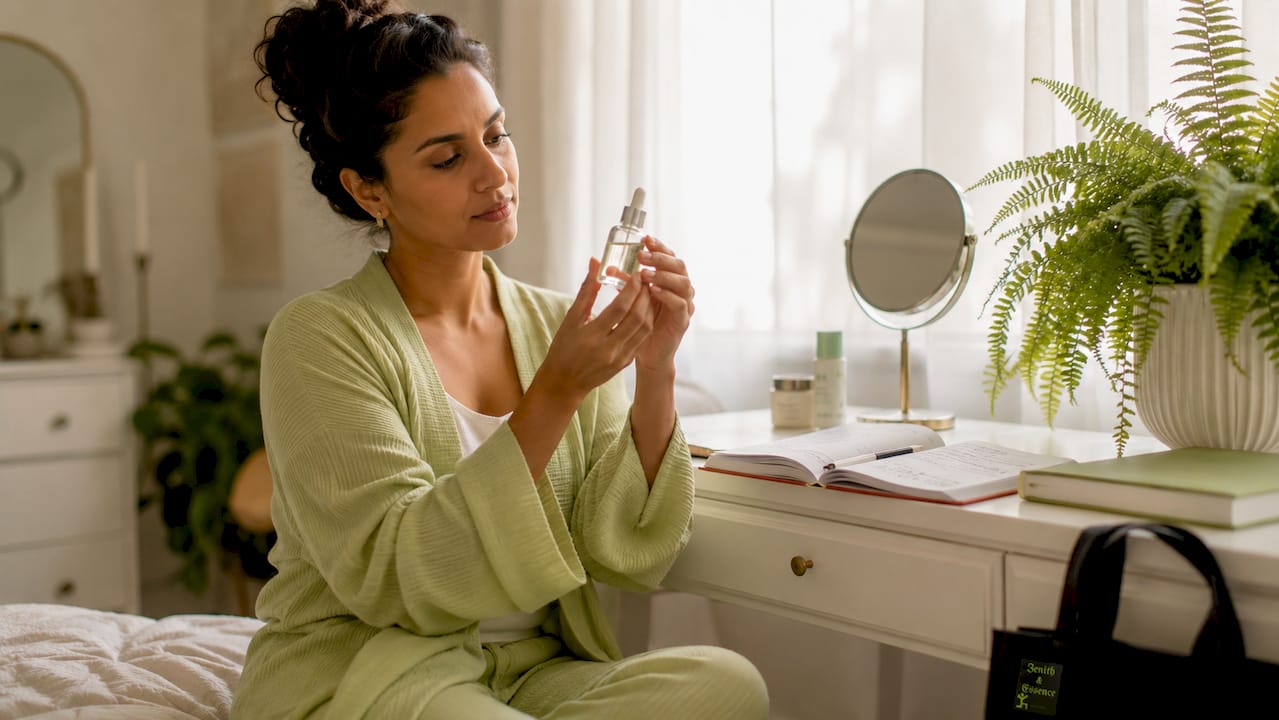
Niacinamide and salicylic acid round out the list of best beauty ingredients with broad clinical support. Niacinamide reduces redness, strengthens the skin barrier, and minimizes pore appearance. Salicylic acid penetrates oil-filled pores, making it the standard choice for acne-prone skin. Neither ingredient requires a prescription, and both are widely available at accessible price points.
Ceramides and hyaluronic acid serve a different but equally critical role. Experts emphasize that ceramides and hyaluronic acid build skin resilience, which allows your skin to tolerate stronger actives like retinoids without barrier breakdown. Think of them as the foundation that makes everything else work.
Pro Tip: Before adding any new active to your routine, confirm it has peer-reviewed clinical data behind it, not just a brand white paper.
Ingredient | Primary benefit | Expert endorsement level |
Retinoids | Collagen stimulation, cell turnover | Very high (96%+) |
Mineral sunscreen | UV protection, wrinkle prevention | Very high (96.8%) |
Vitamin C | Antioxidant protection, brightening | High (88.7%) |
Niacinamide | Barrier support, pore minimizing | High |
Salicylic acid | Pore clearing, acne treatment | High |
Ceramides | Skin barrier repair | High |
Hyaluronic acid | Hydration, plumping | High |
How do you read a skincare ingredient list (INCI)?
INCI is the standardized naming system used globally for cosmetic ingredients. Regulations require brands to list ingredients in descending order of concentration down to 1%. Every ingredient present at 1% or below can appear in any order after that threshold. This single rule changes how you read every label.
Phenoxyethanol is the most reliable 1% marker. It is a preservative regulated at a maximum of 1% in the EU and typically used between 0.5% and 1%. Any ingredient listed after phenoxyethanol is almost certainly present at 1% or less. This is the single most useful shortcut for evaluating whether an active is present at a meaningful level.
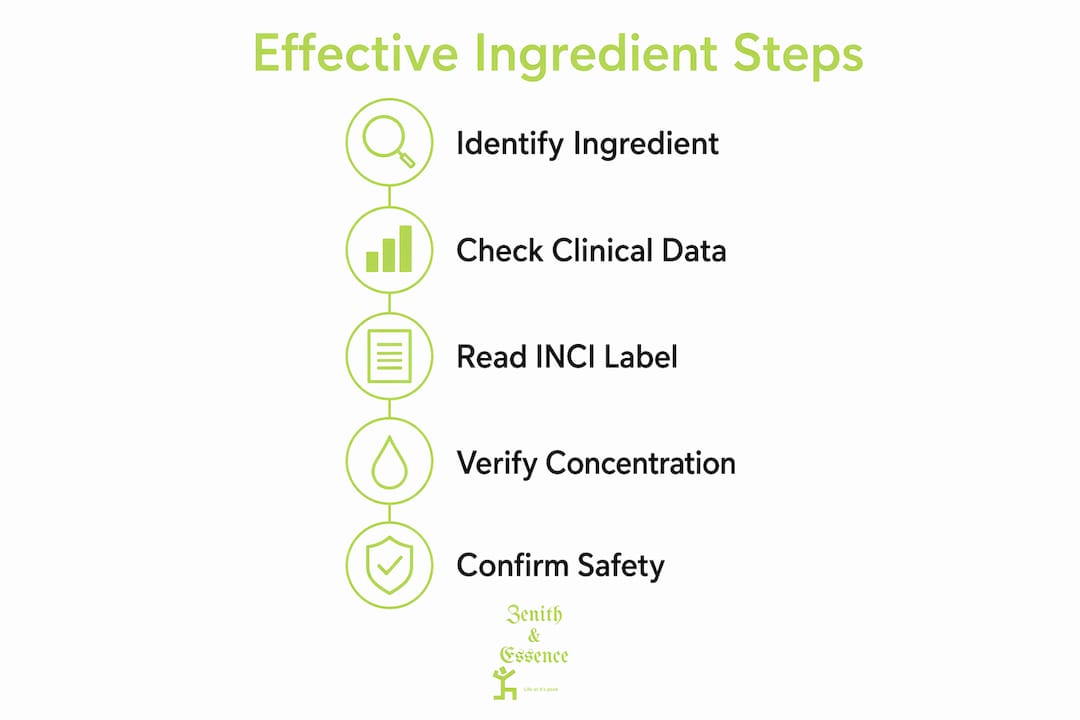
Here is a practical process for reading any ingredient list with confidence:
Find the water base. Aqua (water) or aloe vera juice usually appears first, confirming the product is water-based. This sets the stage for everything that follows.
Identify the top five ingredients. These make up the bulk of the formula. If a beneficial active appears here, it is likely at a functional concentration.
Locate phenoxyethanol. Everything before it is present at more than 1%. Everything after it is at 1% or less.
Check where key actives fall. If niacinamide or Vitamin C appears after phenoxyethanol, the product likely contains a token amount.
Watch for fragrance placement. Fragrance listed high in the formula signals a high concentration, which raises irritation risk, especially for sensitive skin.
Cross-reference with known effective ranges. Use established concentration benchmarks (covered in the next section) to judge whether the position of an active makes clinical sense.
Pro Tip: Ingredient lists on brand websites are sometimes more detailed than physical packaging. Check both before buying, especially for online beauty purchases.
Understanding INCI is a learnable skill. Most people can read a label confidently after practicing on five to ten products. The payoff is significant: you stop paying for products where the hero ingredient is present at a fraction of a percent.
What concentration ranges make a skincare ingredient effective?
Effective concentration ranges are established benchmarks, not guesses. Niacinamide requires 2–5%, salicylic acid 0.5–2%, Vitamin C 8–20%, and retinol 0.025–1% to deliver visible skin benefits. A product containing 0.1% Vitamin C will not brighten your skin, regardless of how prominently it is featured on the packaging.
Ingredients listed after phenoxyethanol are nearly always present at concentrations too low to have meaningful active effects. This is the core problem with “token ingredients,” which are actives added at trace levels purely for marketing purposes. Brands know that consumers scan labels for recognizable names, and a trace amount of retinol still lets them print “with retinol” on the box.
Active ingredient | Effective concentration range | Token (likely ineffective) |
Niacinamide | 2–5% | Below 1% |
Vitamin C (ascorbic acid) | 8–20% | Below 5% |
Retinol | 0.025–1% | Below 0.01% |
Salicylic acid | 0.5–2% | Below 0.3% |
Hyaluronic acid | 0.1–2% | Below 0.05% |
Position in the ingredient list is your best proxy for concentration when the brand does not disclose exact percentages. Most brands do not publish exact percentages. If a key active appears in the last quarter of the list, after phenoxyethanol and after fragrance, treat it as decorative rather than functional.
Learning to spot concentrated beauty formulas versus diluted ones is one of the most practical skills you can develop as a skincare buyer. It directly determines whether a product is worth its price.
What else should you check to evaluate ingredient safety and quality?
Third-party certifications provide an objective check that goes beyond reading labels yourself. Labels like EWG Verified and NSF/ANSI organic standards help screen for concerning chemicals such as phthalates and formaldehyde-releasing preservatives, which appear in cosmetics despite documented health concerns. A certification does not guarantee a product works, but it confirms the formula has been reviewed for safety by an independent body.
Fragrance is the ingredient category most likely to cause problems for sensitive skin. Strong synthetic fragrances and high concentrations of denatured alcohol (listed as “alcohol denat.”) both disrupt the skin barrier over time. Neither is necessary for a product to perform well. Checking a trustworthy beauty brand checklist before buying helps you filter out brands that routinely rely on these fillers.
Practical considerations for choosing safe, effective beauty products:
Patch test every new active. Apply a small amount to your inner arm for 48 hours before full-face use.
Introduce one new product at a time. Spacing new additions 4–8 weeks apart lets you identify what is helping or causing irritation.
Prioritize barrier ingredients first. Ceramides and hyaluronic acid should be stable in your routine before you add retinoids or acids.
Check for EWG Verified or NSF/ANSI labels on products you use daily, especially leave-on treatments.
Avoid overloading actives. Overloading skin with conflicting actives disrupts the skin barrier and reduces the effectiveness of every product in your routine.
Read the full ingredient list, not just the front label. Marketing claims on packaging are not regulated the same way ingredient lists are.
Consistency matters more than complexity. A simple routine with two or three well-formulated products outperforms a ten-step routine built around token ingredients and trendy actives.
Key takeaways
Identifying quality beauty ingredients requires reading INCI lists, confirming actives appear above the 1% phenoxyethanol threshold, and matching their position to established effective concentration ranges.
Point | Details |
Dermatologist-endorsed actives | Retinoids, mineral sunscreen, and Vitamin C have the strongest clinical backing for anti-aging. |
The 1% phenoxyethanol rule | Ingredients listed after phenoxyethanol are present at 1% or less, often too low to be effective. |
Effective concentration ranges | Niacinamide needs 2–5%, Vitamin C needs 8–20%, and retinol needs 0.025–1% to deliver results. |
Third-party certifications | EWG Verified and NSF/ANSI labels provide independent safety screening beyond brand claims. |
Routine consistency | Introducing one active at a time over 4–8 weeks prevents barrier disruption and identifies what works. |
Why ingredient literacy matters more than ingredient trends
The most common mistake I see is chasing whatever ingredient went viral last month. Bakuchiol, snow mushroom, and “blue tansy” all had their moments. Some have real merit. Many are present in products at concentrations so low they cannot possibly do what the marketing promises.
What actually moves the needle is understanding the basics: a solid barrier built on ceramides and hyaluronic acid, a proven active like retinol or Vitamin C at a functional concentration, and a mineral sunscreen used every single day. That combination, applied consistently, outperforms any ten-step routine built around trendy ingredients. I have seen this play out repeatedly when people strip their routines back to fundamentals and suddenly find their skin is calmer, clearer, and more responsive.
The other thing worth saying plainly: ingredient literacy is not about becoming a cosmetic chemist. It is about knowing enough to ask the right questions. Where does the active appear on the list? Is there a third-party certification? Does the brand publish concentration percentages? Those three questions alone will filter out the majority of overpriced, underperforming products. The skincare market rewards consumers who do not read labels. Stop being that consumer.
— Norman
Essencezenith makes finding quality skincare straightforward
Finding products with genuinely effective ingredients should not require a chemistry degree. Essencezenith curates premium skincare products with transparent ingredient standards, featuring clinically supported actives at functional concentrations. Every product in the catalog is selected with the same criteria covered in this guide: proven efficacy, sustainable sourcing, and honest formulation.

Essencezenith backs every purchase with a 30-day satisfaction guarantee. If a product does not perform as expected, you can return any unused items, no questions asked. For skincare buyers who want evidence-backed products without spending hours decoding labels, Essencezenith offers a curated starting point built on the same standards dermatologists recommend.
FAQ
What are the best beauty ingredients for anti-aging?
Retinoids, mineral sunscreen, and Vitamin C are the top three anti-aging ingredients with the strongest dermatological endorsement. Over 96% of dermatologists recommend retinoids, and 96.8% endorse mineral sunscreens for preventing fine lines.
How do I know if an ingredient is at an effective concentration?
Locate phenoxyethanol on the ingredient list. Any active listed before it is present at more than 1%, and any active listed after it is likely present at 1% or less, which is often below the effective threshold for most actives.
What does INCI mean on a skincare label?
INCI stands for International Nomenclature of Cosmetic Ingredients. It is the standardized system used globally to name cosmetic ingredients, and products are legally required to list them in descending order of concentration down to 1%.
Are third-party certifications worth checking?
Yes. Labels like EWG Verified and NSF/ANSI organic standards screen for harmful chemicals such as phthalates and formaldehyde-releasing preservatives that are otherwise difficult to identify from an ingredient list alone.
How quickly should I introduce new skincare actives?
Introduce one new active at a time and wait 4–8 weeks before adding another. This spacing prevents barrier disruption and lets you identify which ingredient is causing a reaction if one occurs.
Recommended
Comments