
Keratosis Pilaris Skincare: Reduce Bumps and Texture

The most effective keratosis pilaris skincare routine is a simple three-step daily plan: cleanse gently, apply a chemical exfoliant (lactic acid, urea, or salicylic acid), then lock in moisture while your skin is still damp. Do that consistently, and most people see real texture improvement within 8–12 weeks.
Quick product picks to start with:
Essencezenith AHA Peeling Concentrate for chemical exfoliation (AHA-based, 3–4 nights per week)
Essencezenith Niacinamide Gel Moisturiser with Ceramides for daily barrier support
Apply your active exfoliant 3–4 evenings per week, follow immediately with a urea or lactic acid moisturizer, and use a broad-spectrum SPF 30+ on exposed areas every morning.
Key Takeaways
Consistent use of a chemical exfoliant plus a barrier moisturizer, applied in the right order and at the right frequency, produces visible KP improvement in most people within 8–12 weeks of daily maintenance.
Point | Details |
Start with one active | Introduce lactic acid or urea first; ramp up from 2 to 4–5 nights per week over four weeks. |
Moisturizer is half the routine | Apply a urea or ceramide moisturizer immediately after your exfoliant, every single night. |
Expect 8–12 weeks | Early softening appears around 4 weeks; visible bump reduction takes 8–12 weeks of consistent use. |
Avoid physical scrubs | Chemical exfoliation reduces keratin plugs without the follicular irritation that scrubbing causes. |
Essencezenith for KP products | The AHA Peeling Concentrate and Niacinamide Gel Moisturiser with Ceramides cover both routine steps, backed by a 30-day satisfaction guarantee. |
This article is general information, not a substitute for advice from a qualified doctor. Consult a qualified healthcare professional about your own circumstances before acting on anything here.
Table of Contents
What is keratosis pilaris, and what can you realistically expect?
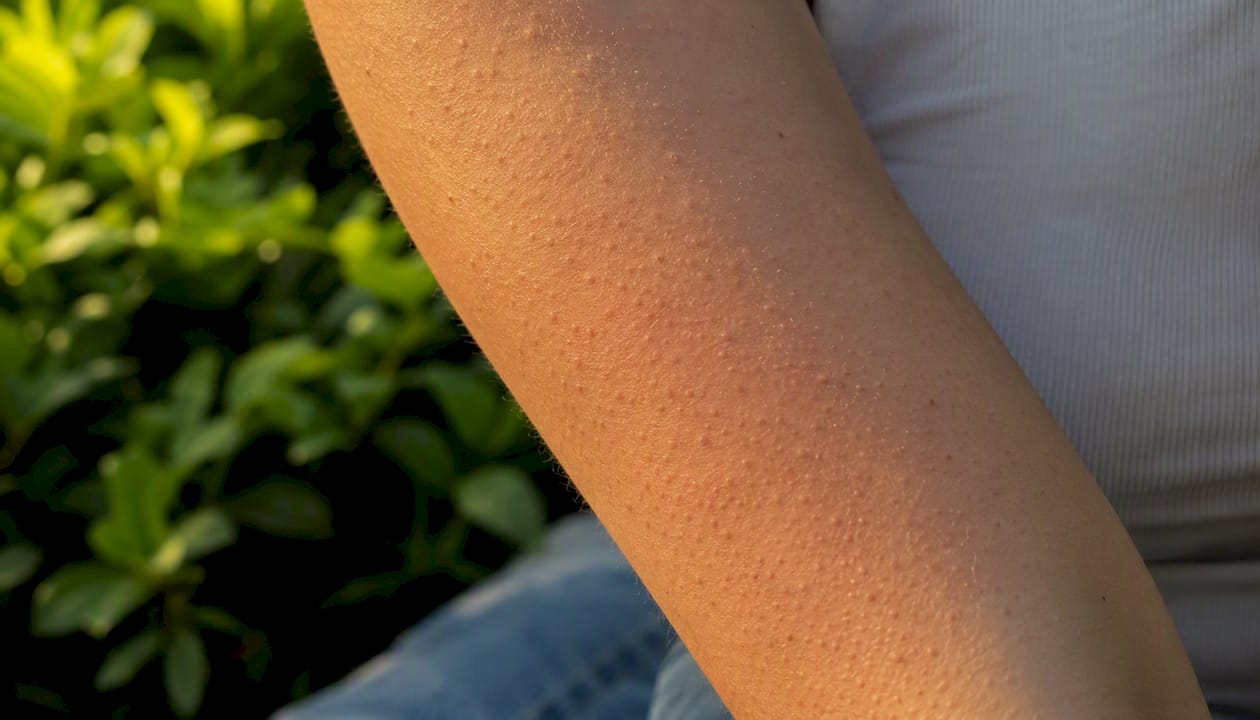
Keratosis pilaris (KP) is a common, benign skin condition caused by excess keratin building up inside hair follicles. That buildup forms small, rough plugs that give skin a sandpaper texture, most often on the upper arms, thighs, cheeks, and buttocks. The bumps are typically skin-colored, though they can appear red or brown, and they’re often accompanied by mild redness around each follicle.
It’s worth being direct about what treatment can and cannot do. KP has no cure. The goal is symptom control: smoother texture, fewer visible plugs, less redness, and more comfortable skin. Harvard Health notes that KP affects an estimated 50–80% of teens and about 40% of adults, and that improvements take weeks of consistent effort. Many people see their KP improve naturally with age, but for those who want to act now, keratolytic exfoliants and daily moisturizing are the evidence-backed starting point.
The American Academy of Dermatology recommends a practical three-step home plan: gentle exfoliation, a keratolytic product, and daily moisturizing. That framework is where every effective KP routine begins.
How to build a keratosis pilaris skincare routine
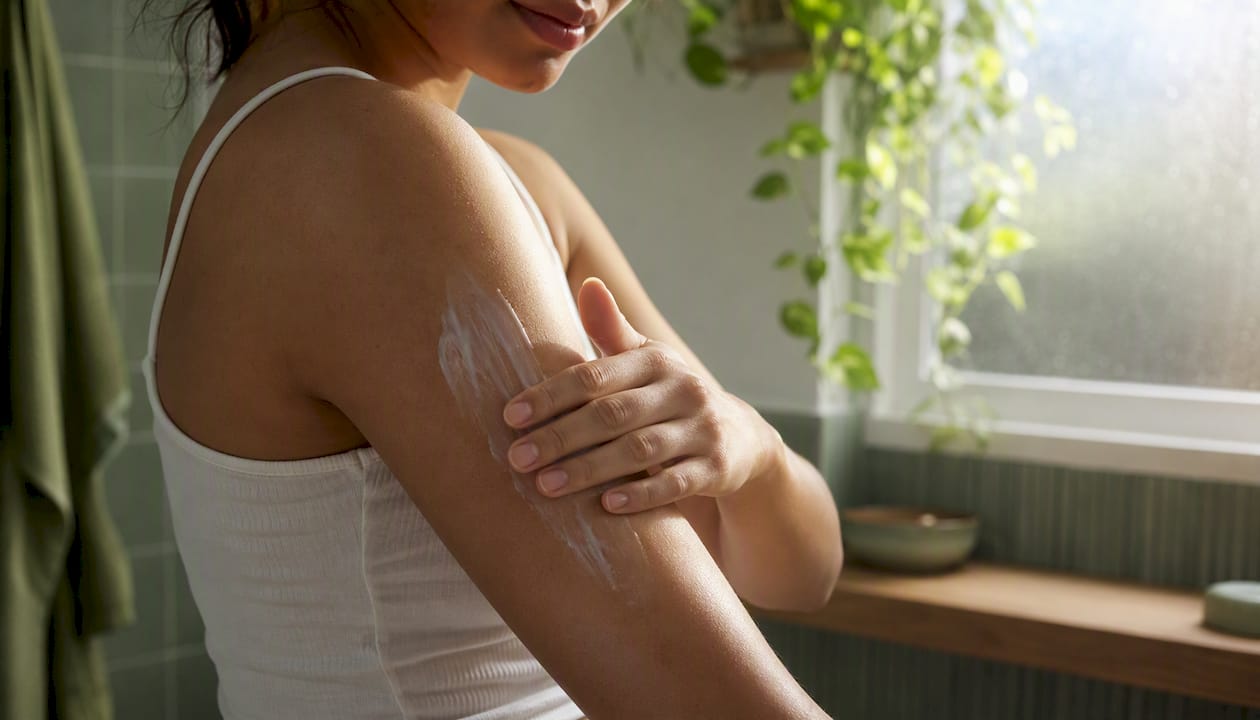
A consistent, ordered routine matters more than any single product. Here’s a daily and weekly structure that dermatologists broadly support.
Daily routine (morning and evening)
Cleanse with a gentle, fragrance-free body wash or bar. Avoid anything with sulfates or physical beads. The Oatmeal Milk and Honey Soap from Essencezenith works well here — it cleans without stripping the skin barrier.
Pat skin damp, not dry. Applying actives and moisturizers to slightly damp skin improves absorption and reduces irritation.
Apply your chemical exfoliant (evenings only, 3–4 times per week). Smooth a thin layer over affected areas. Do not rub.
Moisturize immediately after. Use a urea or lactic acid moisturizer to reinforce the barrier while the active is working.
Morning: apply SPF 30+ on exposed areas. AHAs increase photosensitivity. Sun protection is non-optional if you’re using them on arms or shoulders.
Four-week ramp-up schedule
Starting at full frequency is the fastest route to irritation. Ramp up instead:
Week 1: Active exfoliant 2 nights per week, moisturizer every night.
Week 2: Active 3 nights per week if no redness or stinging.
Week 3–4: Active 4 nights per week if skin is tolerating well.
Ongoing: Maintain at 3–5 nights per week depending on skin response.
Pro Tip: Patch-test any new keratolytic on a 2x2 inch area for 3–5 days before applying broadly. Watch for redness, stinging, or blistering — delayed reactions are common with higher-concentration AHAs and urea formulas.
Adjusting by body area and season
Face KP needs a lighter touch than arm or thigh KP. Thighs and buttocks tend to tolerate higher concentrations better than arms.
Seasonally, winter calls for richer moisturizers and slightly less frequent exfoliation, since cold air and indoor heating strip the barrier faster. In summer, you can often increase exfoliation frequency slightly, but switch to a lighter, non-comedogenic moisturizer to avoid congestion. If you sweat heavily, rinse affected areas with cool water after exercise and reapply moisturizer.
Which active ingredients actually work for KP?
The four ingredient classes with the most clinical support are AHAs, BHAs, urea, and topical retinoids. Each works differently, and the right choice depends on your skin’s tolerance and primary concern.
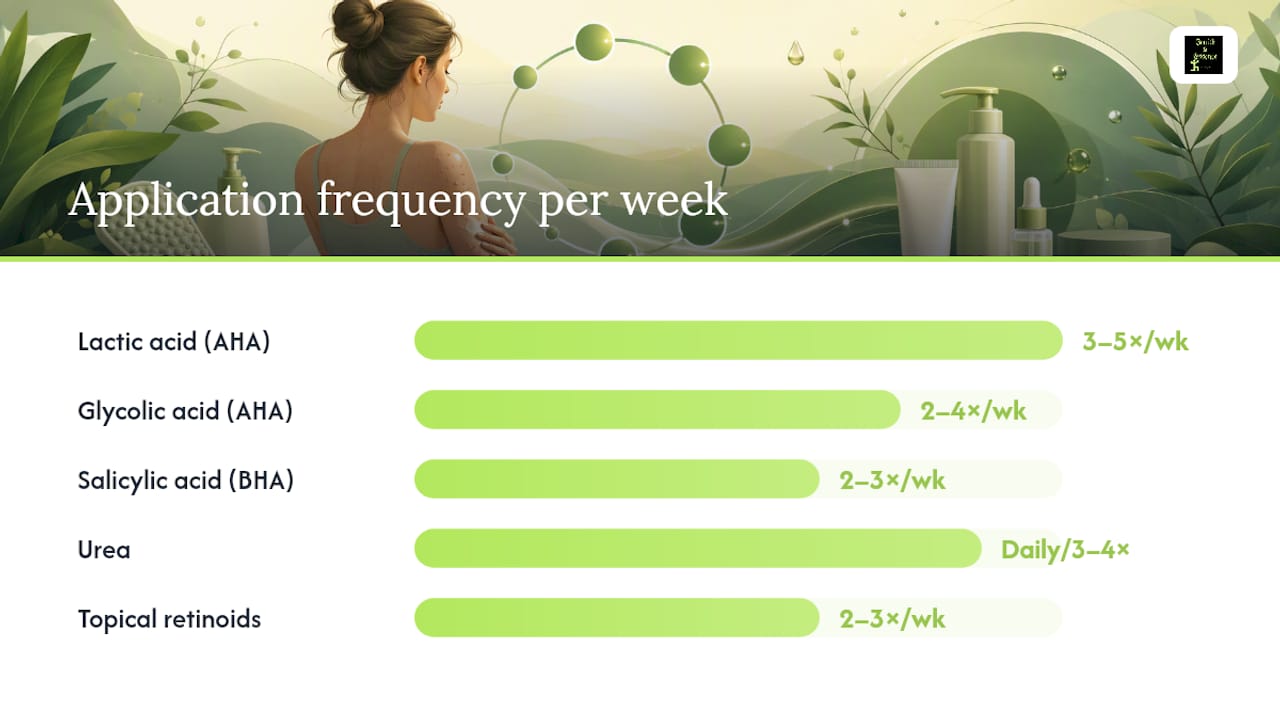
Ingredient | How it works | Effective concentration | Frequency | Best for | Cautions |
Lactic acid (AHA) | Loosens keratin bonds at the follicle surface; also hydrates | 5–12% OTC; up to 20% clinical | 3–5x per week | Dry or sensitive skin; darker tones (gentler than glycolic) | Photosensitivity; avoid on broken skin |
Glycolic acid (AHA) | Smaller molecule; deeper exfoliation than lactic | 5–10% OTC | 2–4x per week | Tolerant skin; stubborn texture | Higher irritation risk; not ideal for sensitive skin |
Salicylic acid (BHA) | Oil-soluble; penetrates follicle; anti-inflammatory | ~2% OTC body formulas | 2–3x per week | Redness-prone or inflamed KP | Drying; avoid in pregnancy |
Urea | Humectant at ≤10%; keratolytic at >10% | 10–20% for KP | Daily (moisturizer) or 3–4x (keratolytic) | Dry, rough, or eczema-prone skin | Mild stinging on cracked skin |
Topical retinoids | Normalizes follicular keratinization; reduces plugging | Prescription strength (tazarotene, tretinoin, adapalene) | 2–3x per week, evenings | Persistent KP unresponsive to keratolytics | Significant irritation; not for pregnancy |
A PMC literature review confirms that AHAs, BHAs, and urea are reasonable first-line options for KP treatment, though the evidence is limited by small trials and short follow-up periods. Lactic acid and urea show the most consistent benefit across studies; salicylic acid has theoretical follicular advantages but fewer high-quality KP-specific trials behind it.
Urea’s dual role deserves particular attention. A JDDonline study of a 20% urea cream found statistically significant improvement in skin smoothness and participant satisfaction after just four weeks, with good tolerability in a small sample of 30 participants.
On layering actives: don’t stack AHAs and retinoids on the same night. Alternate nights instead to limit cumulative irritation.
Recommended products for different skin types and concerns
Product choice should follow your skin type and primary goal, not just ingredient availability.
For sensitive or eczema-prone skin: Start with a 5–10% lactic acid formula or a urea moisturizer at 10% or below. The Essencezenith Niacinamide Gel Moisturiser with Ceramides pairs well here — niacinamide calms redness and ceramides rebuild the barrier without adding exfoliating actives that could tip sensitive skin into irritation. AmLactin (ammonium lactate 12%) is a widely used OTC lactic acid option in this category, though start with 2–3 nights per week and monitor closely.
For dry skin or winter flare-ups: A richer urea cream (10–20%) used as your primary moisturizer addresses both hydration and keratolysis in one step. The Essencezenith Herbal Magic Moisturizing Cream suits this slot for those who want a deeply nourishing base. Eucerin’s UreaRepair line (with 5% or 10% urea) is a well-known OTC reference in this category.
For tolerant skin focused on texture: A 10–12% lactic acid or glycolic acid body product applied 4 nights per week, followed by a barrier moisturizer, tends to produce the clearest texture improvement. The Essencezenith AHA Peeling Concentrate fits this routine. CeraVe’s SA (salicylic acid) body formulas are a widely available OTC option for this goal, particularly for those with inflamed or redness-prone bumps.
For darker skin tones: Lactic acid is generally preferred over glycolic acid because its larger molecular size means slower penetration and a lower risk of post-inflammatory hyperpigmentation. First Aid Beauty’s KP Bump Eraser (AHA body scrub) is a frequently cited OTC option, though use it as a chemical exfoliant, not a physical scrub — the physical component should be minimal.
Always patch-test a new product on a small area for 3–5 days before full application. If irritation appears, stop use and let the skin recover for a week before trying a lower concentration.
What makes KP worse? Common triggers to avoid
Some of the most common KP management mistakes come from doing too much, not too little.
Physical scrubs are the biggest offender. Vigorous rubbing with loofahs, exfoliating mitts, or grainy scrubs mechanically irritates hair follicles and can worsen redness and inflammation. Chemical exfoliation does the same job without the friction.
Hot, prolonged showers strip the skin’s lipid barrier, leaving KP-prone skin drier and more reactive. Mayo Clinic guidance specifically recommends short, warm showers rather than hot ones, and moisturizing while skin is still damp.
Tight, abrasive clothing over affected areas creates constant friction that keeps follicles irritated. Breathable, loose-fitting fabrics make a real difference, especially on the upper arms and thighs.
Shaving and waxing over KP-affected areas can inflame follicles and worsen the appearance of bumps. The AAD recommends laser hair removal as a less inflammatory alternative for people who want to remove hair from KP-affected areas.
Self-tanners are a specific problem: the DHA in self-tanning products tends to collect inside keratin plugs, making bumps appear darker and more visible rather than camouflaged.
Pro Tip: If you use self-tanner on KP-affected areas, exfoliate thoroughly 24 hours before application and apply the tanner in thin, even layers. Better yet, skip it on those areas entirely until your KP is well-controlled.
When should you escalate to prescription or in-office treatment?
Give a consistent topical routine at least 8–12 weeks before deciding it isn’t working. Most people who “fail” OTC treatment haven’t used it consistently enough or at the right concentration.
If 8–12 weeks of daily moisturizing plus 3–5 nights per week of a keratolytic haven’t produced visible improvement, these are the next options:
Topical retinoids (prescription): Tazarotene, tretinoin, and adapalene normalize follicular keratinization and reduce plugging. They’re more irritating than AHAs, so start at the lowest available strength and use no more than 2–3 nights per week. StatPearls clinical guidance lists retinoids as a second-line option after emollients and keratolytics.
Higher-strength keratolytic preparations: Prescription-strength lactic acid or glycolic acid formulations go beyond OTC concentrations and may be compounded by a dermatologist.
Topical anti-inflammatories: If redness and itching are prominent, a short course of a mild topical steroid (used sparingly, as Mayo Clinic notes) can reduce inflammation before resuming keratolytic treatment.
In-office chemical peels: Glycolic or lactic acid peels at clinical concentrations can accelerate texture improvement, though multiple sessions are typically needed.
Laser treatments: Pulsed dye laser targets redness; fractional and Nd:YAG lasers address texture. Evidence for laser in KP is promising but still limited to small case series. Expect 3–6 sessions for meaningful results.
See a dermatologist promptly if KP worsens rapidly, shows signs of infection (warmth, swelling, pus), or is accompanied by severe inflammation that doesn’t respond to gentle care.
How long before you see real improvement?
Most people notice the skin feeling softer within 2–4 weeks of consistent use. Visible reduction in bump count and redness typically takes 8–12 weeks. Significant texture improvement, where the skin looks and feels genuinely different, usually requires 3–6 months of maintenance.
The reason KP returns when treatment stops is structural: the condition reflects a genetic tendency toward excess keratin production. Keratolytics and moisturizers manage the output, but they don’t change the underlying process. That means ongoing maintenance, not a fixed treatment course.
Seasonal timing matters. In winter, cold air and low humidity accelerate barrier breakdown, so richer moisturizers and slightly reduced exfoliation frequency (3 nights per week instead of 5) help prevent over-stripping. In summer, heat and sweat can make heavier creams feel uncomfortable; a lighter urea lotion or gel-based moisturizer keeps the routine sustainable without sacrificing hydration.
The clinical reality: Consistent use of lactic acid or urea for 8–12 weeks produces measurable improvement in most people with KP, but long-term maintenance data remain limited. The PMC review notes that most trials are small, outcomes are heterogeneous, and few randomized head-to-head comparisons exist between ingredient classes. Treat the evidence as directional, not definitive, and adjust your routine based on your own skin’s response every 8–12 weeks.
What does the clinical evidence actually say?
The honest answer is that the evidence base for KP treatment is real but modest. Lactic acid and urea have the strongest practical support across the available literature. The JDDonline study showing significant improvement with 20% urea over four weeks is one of the cleaner data points, but 30 participants is a small sample. Salicylic acid’s follicular penetration makes theoretical sense for KP, but high-quality KP-specific trials are sparse.
The PMC review is the most useful synthesis available: it confirms AHAs, BHAs, and urea as reasonable first-line options while being transparent about the limitations. Small sample sizes, short follow-up periods, and inconsistent outcome measures make it hard to rank one ingredient definitively above another.
What that means practically: choose your active based on tolerability and skin type, not on a hierarchy that the evidence doesn’t fully support. Document your skin’s response at 4 weeks and again at 8–12 weeks. If one ingredient class isn’t working after a full trial, switch rather than add. For guidance on interpreting clinical claims in beauty, the Essencezenith clinical studies guide is a useful reference.
What most KP advice gets wrong
The conventional guidance on KP tends to focus on the ingredient list and skip the harder conversation: consistency and realistic expectations matter more than finding the “right” product. People cycle through AmLactin, CeraVe SA, and every AHA body lotion they can find, switching after two weeks when they don’t see results. That’s the wrong approach. Any of those products can work. The variable is whether you use them consistently for long enough.
The second thing most guides understate is the moisturizer’s role. Chemical exfoliation gets all the attention, but a barrier-supporting moisturizer applied immediately after is what determines whether the skin responds or just gets irritated. Lactic acid applied to a stripped, dry barrier is a recipe for stinging and redness, not smoother skin. The exfoliant and the moisturizer are a system.
There’s also a tendency to recommend physical scrubs alongside chemical exfoliants, as if more exfoliation is always better. It isn’t. Mechanical friction on KP-affected follicles drives inflammation. Chemical exfoliation alone, done consistently, outperforms the combination in most cases.
Finally, darker skin tones are underserved by most KP content. The risk of post-inflammatory hyperpigmentation from over-exfoliation is real and underemphasized. Lactic acid’s gentler penetration profile makes it the smarter starting point for anyone with medium to deep skin tones, and the ramp-up schedule matters even more in that context.
Essencezenith makes it easier to build a KP routine that actually sticks
Managing KP long-term comes down to having the right products on hand, consistently. Essencezenith curates a focused selection of barrier-supporting and exfoliating formulas, all with transparent ingredient lists and real customer reviews so you know what you’re getting before it arrives.

The AHA Peeling Concentrate handles the chemical exfoliation step. The Niacinamide Gel Moisturiser with Ceramides covers barrier repair. And if the routine doesn’t work for you within 30 days, Essencezenith’s satisfaction guarantee means you can return any unused items, no friction. Fast shipping, a straightforward checkout, and products chosen for efficacy rather than marketing appeal. Browse the full range at Essencezenith and build your KP routine from there.
Sources
FAQ
What is the best skincare routine for keratosis pilaris?
Apply SPF 30+ on exposed areas each morning. The AAD and Mayo Clinic both support this three-step framework as the standard starting point.
Is AmLactin or CeraVe better for keratosis pilaris?
They target different parts of the routine. For dry or sensitive skin, AmLactin’s lactic acid tends to be gentler. For redness-prone or inflamed KP, CeraVe SA’s anti-inflammatory salicylic acid may be the better fit. Both are reasonable OTC options; the right choice depends on your skin type and primary concern.
What commonly makes keratosis pilaris worse?
Hot prolonged showers, vigorous physical scrubbing, tight abrasive clothing, shaving or waxing over affected areas, and self-tanners that collect inside keratin plugs all tend to worsen KP. The AAD specifically flags harsh scrubbing and irritating hair-removal methods as triggers to avoid.
How long does it take for KP treatments to work?
Skin typically feels softer within 2–4 weeks of consistent use. Visible improvement in bump count and redness usually takes 8–12 weeks. Harvard Health notes that improvements require patience and ongoing maintenance, since KP returns when treatment stops.
Does urea or AHA work better for KP?
Both work, and they complement each other. AHAs like lactic acid dissolve the bonds between dead skin cells at the follicle surface. A JDDonline study found 20% urea cream produced significant improvement in four weeks. For tolerant skin focused on texture, an AHA may produce faster visible results; for sensitive or very dry skin, urea is often the gentler starting point.
Recommended
Comments