
Is Mica in Makeup Safe? What to Know Before You Buy

Cosmetic-grade mica is safe for topical use in the vast majority of formulated products, including eyeshadow, highlighter, and foundation. The two real concerns are inhaling loose, fine mica dust and the ethics of how some raw mica gets mined. FDA lists mica as a color additive exempt from certification, and it’s approved for use around the eyes and on lips. The Environmental Working Group’s Skin Deep database generally rates mica low on its hazard scale for skin contact, though it flags inhalation as a data gap worth watching.
That’s the short version. Here’s what to actually do with it:
Patch test any new mica-heavy product on your inner arm for 24 hours before applying it to your face.
Skip loose powders if you have asthma, are pregnant, or apply makeup near young kids. Pressed compacts and cream formulas shed far less airborne dust.
Check the label for “Mica” or “CI 77019” (natural) versus “Synthetic Fluorphlogopite” (lab-made). Neither is inherently dangerous, but if sourcing matters to you, the distinction does.
Look for a sourcing statement. Brands serious about ethical mica usually say so on the product page, not just in a footnote.
Quick fact: Mica shows up in more than 7,100 cosmetic products worldwide, which makes it one of the most common shimmer ingredients on the shelf, right behind talc and synthetic pearl pigments in sheer prevalence.
Key Takeaways
Cosmetic-grade mica is safe for topical use in properly formulated products, while loose powders and unverified mining sources are where real caution belongs.
Point | Details |
Topical safety is well established | Mica carries a low dermal hazard rating and is FDA-approved for lip and eye-area use. |
Inhalation risk is formulation-specific | Loose powders carry more airborne dust than pressed or cream products; choose non-respirable grades. |
Sourcing is a separate issue from safety | Some raw mica mining involves documented child labor, unrelated to the mineral’s skin safety. |
Mica is not a microplastic | It’s a naturally occurring silicate mineral, chemically distinct from plastic glitter. |
Essencezenith curates with transparency in mind | The catalog favors formulations with clear sourcing and ships with a 30-day satisfaction guarantee. |
Table of Contents
What Is Mica in Makeup, Chemically Speaking?
Mica isn’t one substance. It’s a group of hydrous aluminum silicate minerals that form in thin, flat sheets, which is exactly why it behaves the way it does in a compact. The two types cosmetics chemists reach for most are muscovite (the sparkly, silvery variety common in eyeshadow) and phlogopite (a golden-toned mica often used for warmer shimmer tones).
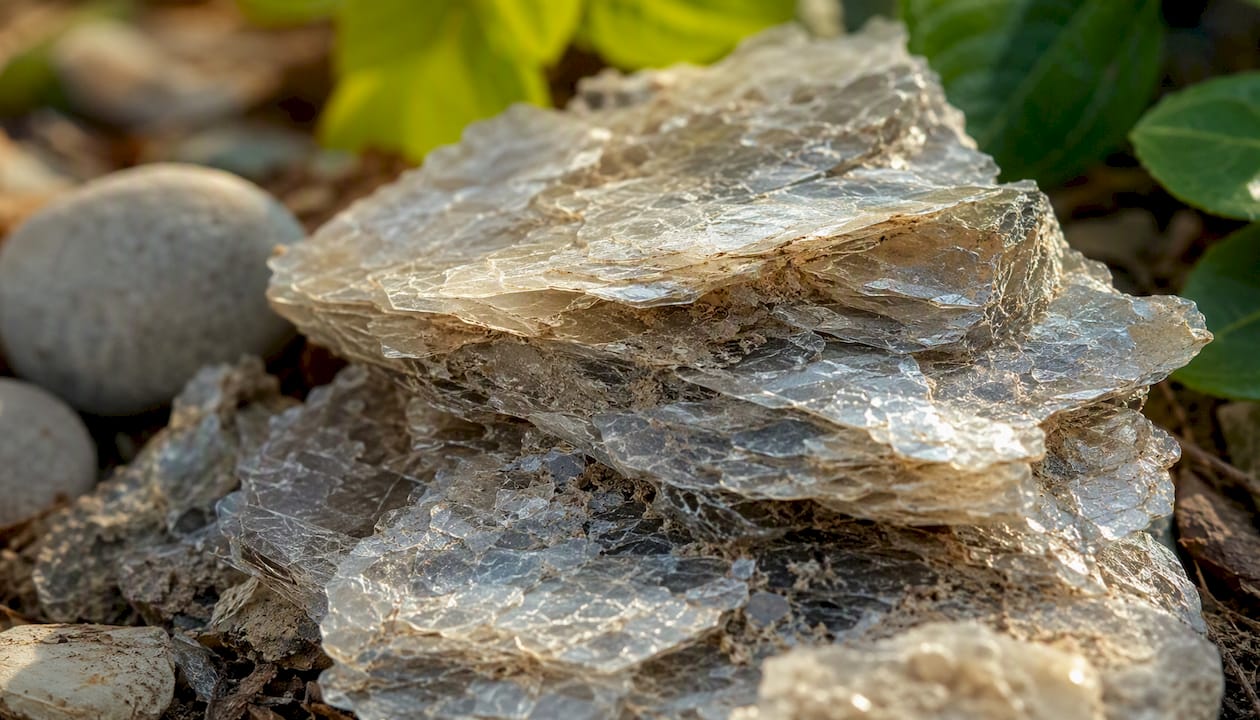
On an ingredient list, natural mica appears simply as Mica, with the color index designation CI 77019 sometimes listed alongside it in the U.S. and EU. That five-digit number is a colorant classification, not a warning label. It’s the same kind of coding system used for iron oxides and titanium dioxide.
Synthetic mica is a different animal. It’s manufactured under controlled conditions rather than mined, and it’s labeled Synthetic Fluorphlogopite on ingredient panels. Cosmetics chemists note that natural mica can carry trace elements that require regulatory monitoring, while the synthetic version is engineered for consistent purity from the start.
Type | Source | Label Name | Typical Use |
Muscovite mica | Mined mineral | Mica / CI 77019 | Silvery shimmer, eyeshadow base |
Phlogopite mica | Mined mineral | Mica / CI 77019 | Warm-toned highlighter, bronzer |
Synthetic mica | Lab-manufactured | Synthetic Fluorphlogopite | Controlled-purity shimmer, sensitive-skin formulas |
Both natural and synthetic versions get coated with other pigments before they ever reach your makeup bag, which is where the actual color comes from.
How Does Mica Create Shimmer in Makeup?
Mica’s sparkle comes down to geometry, not magic. Each mica particle is a flat platelet with a high aspect ratio, meaning it’s wide and thin rather than round and chunky. When light hits a pile of these flat platelets, it reflects off them in a coordinated way instead of scattering randomly, and that coordinated reflection is what your eye reads as shimmer.
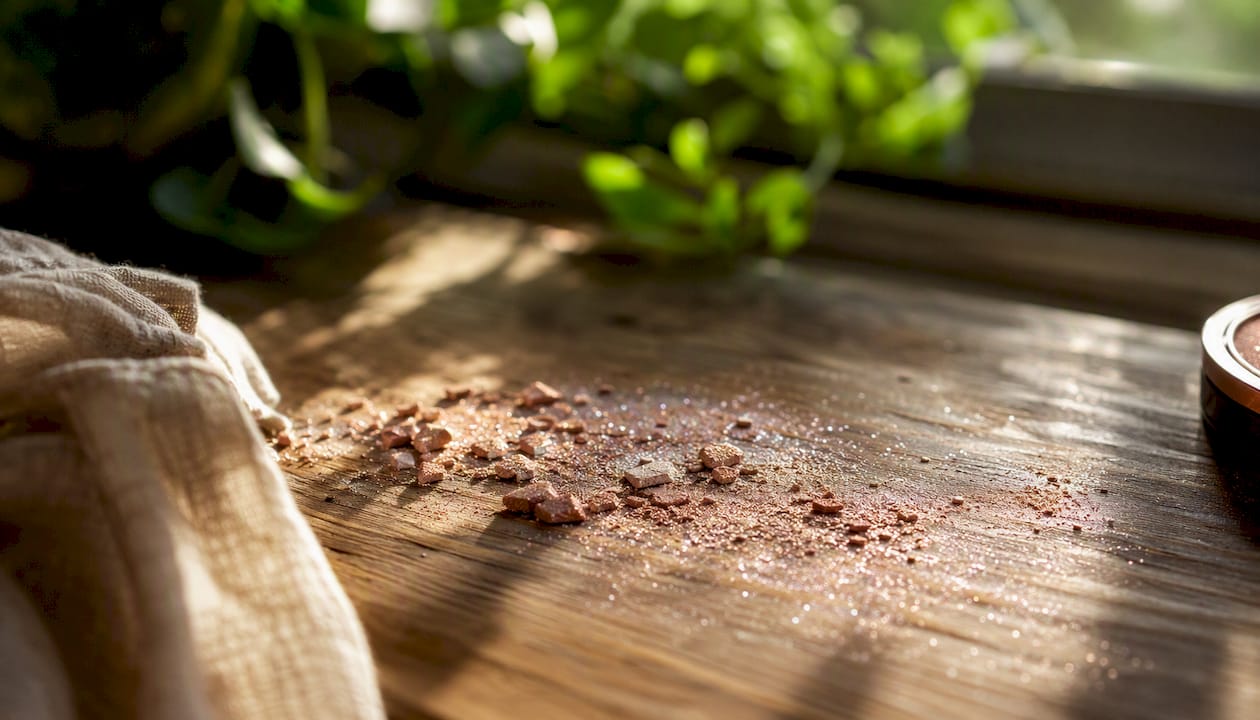
The manufacturing process matters more than the raw mineral itself. Wet grinding and delamination, the standard steps that turn a rock into cosmetic-grade powder, produce smooth, thin platelets. Skip that process and grind mica dry instead, and you get a coarse, scratchy powder with none of the light-reflecting properties formulators want.
Color is a separate layer, literally. Most shimmer and color-shift effects come from coating those mica platelets with metal oxides, most often titanium dioxide. The thickness and number of oxide layers determine whether a product reads as a soft champagne or a bold duochrome green-to-purple flip. Mica is the structural base; the oxide coating is the paint job.
That dual role explains why you’ll find mica doing two different jobs depending on the product:
Highlighter and eyeshadow: mica’s optical properties dominate, delivering the reflective glow or metallic finish.
Foundation and bronzer: mica works more as a texture agent, smoothing application and helping the product grip skin evenly.
Setting powder: finely milled mica adds soft-focus blur without heavy shimmer.
Mica also improves adhesion and wear time across all three categories, which is part of why it’s hard to find a shimmer product that doesn’t use it in some form.
Is Mica Safe for Skin and Eyes?
For topical application, yes. Mica carries a low hazard rating for dermal use, and its approval for lip and eye-area products reflects decades of use without a strong pattern of allergic reaction or irritation. If you’ve worn shimmery eyeshadow for years without a problem, that’s consistent with the safety data, not despite it.
Inhalation is where the conversation gets more nuanced. Fine mineral dust, mica included, can irritate airways if you breathe in enough of it, which is why occupational health agencies treat mica dust as a workplace hazard in mining and processing settings. CDC and NIOSH guidance on mineral dust focuses primarily on industrial exposure, factory air, mine dust, not a few swipes of blush.
That said, the same physics apply at a smaller scale in your bathroom. Loose setting powders and shimmer pigments that puff into the air when you tap the jar carry more airborne, breathable particles than pressed compacts or cream formulas. Reputable formulators mitigate this by specifying “non-respirable” mica grades for consumer powders, meaning the particle size is engineered to be too large to travel deep into the lungs.
Fast facts on mica safety:
Topical dermal risk: low, per EWG’s ingredient assessments and standard hazard databases.
Inhalation risk: mainly relevant for loose, airborne powders and industrial settings, not pressed products.
Who should be extra cautious: people with asthma or other respiratory sensitivities, and anyone applying makeup around infants or young children.
What actually reduces risk: choosing pressed powders, cream formulas, or brands that state their mica is non-respirable grade.
If you want a simple rule, apply loose shimmer powders with your mouth closed, in a well-ventilated space, and avoid tapping the applicator directly over your face.
Where Does Mica Come From, and Is It Ethically Sourced?
This is the part of the mica conversation that has almost nothing to do with your skin and everything to do with the supply chain behind the jar. A significant share of the world’s cosmetic mica is mined in India, often in small, informal operations where reporting has documented child labor and unsafe working conditions. This is frequently referred to in consumer press as “blood mica,” and it’s a real, well-documented problem, distinct from any safety concern about wearing the finished product.
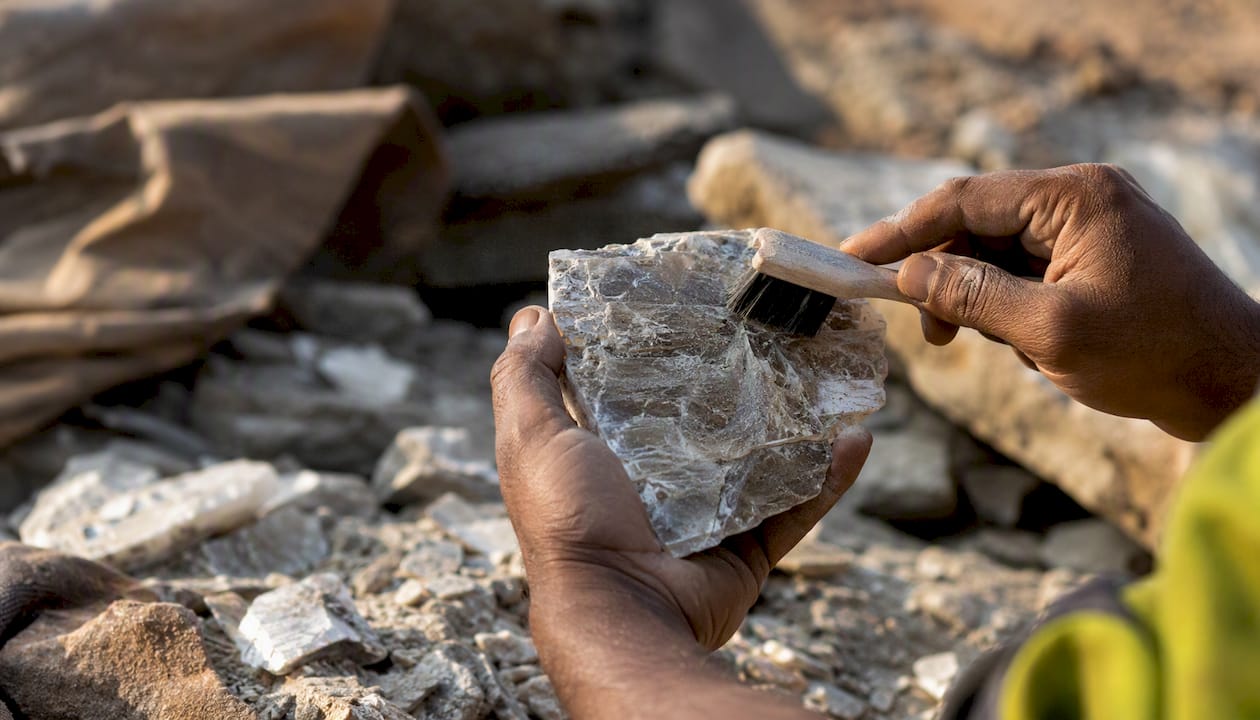
The mineral itself isn’t the issue. How it gets out of the ground sometimes is.
The industry’s primary response is the Responsible Mica Initiative, a multi-brand coalition working to audit mines, formalize labor practices, and improve traceability across mica supply chains. Separately, some cosmetics brands have shifted toward synthetic mica specifically to sidestep sourcing concerns, since Synthetic Fluorphlogopite requires no mining at all.
Brand responses vary quite a bit. Lush has publicly moved away from natural mica in parts of its lineup, favoring synthetic alternatives and other effect pigments.
Pro Tip: Look past the marketing copy on the front of the package. A real sourcing commitment usually includes specifics: a named mine region, a third-party auditor, or membership in a program like the Responsible Mica Initiative. Vague phrases like “responsibly sourced” with no further detail are a soft signal, not proof. You can cross-check broader sourcing claims against resources like the role of fair trade in beauty to understand what real verification looks like.
How Do You Spot Mica on an Ingredient Label?
Reading a label takes about ten seconds once you know what you’re looking for. Natural mica will list as Mica, sometimes with CI 77019 next to it. Synthetic mica lists as Synthetic Fluorphlogopite, occasionally shortened on smaller packaging, but the full INCI name is the standard.
A short checklist for the label and the product page together:
Scan the ingredient list for “Mica” or “Synthetic Fluorphlogopite” near the top or middle of the list, higher placement generally means a higher concentration.
Check whether the brand states a “non-respirable grade” claim for loose powders, this is a good sign of formulation-level care.
Look for a sourcing or supply-chain statement, ideally naming a program or certification rather than a generic promise.
See if the brand publishes third-party verification, such as EWG VERIFIED status or a published corporate responsibility report.
If none of that information is available, email the brand directly. A simple script works: “Can you confirm whether the mica in this product is natural or synthetic, and if natural, how it’s sourced?” A brand with nothing to hide will usually answer within a few days.
Brands with strong transparency practices tend to make this information easy to find without digging, which itself is a useful signal. For a broader framework on vetting beauty brands generally, a trustworthy beauty brand checklist covers criteria beyond mica specifically.
Who Should Avoid Mica, and What Are the Alternatives?
Most people don’t need to avoid mica at all. But a few situations make it worth reconsidering:
Respiratory sensitivity. If you have asthma or another lung condition, loose mica powders are worth skipping in favor of pressed or cream formulas.
Heavy eye-area use. If you apply shimmer liberally around the eyes daily, a lower-dust formula reduces any incidental exposure.
Ethical priorities. If sourcing concerns matter to you regardless of the safety profile, a mica-free or fully synthetic-mica product sidesteps the mining question entirely.
The most direct substitute is Synthetic Fluorphlogopite, which delivers a comparable shimmer with tighter control over particle size and purity since it’s manufactured rather than dug up. Beyond that, formulators use mica-free effect pigments, including certain synthetic pearls and coated glass-based shimmers, though these vary more in finish quality than mica does.
Concern | Best Alternative | Trade-off |
Inhalation sensitivity | Pressed or cream formulas with non-respirable mica | Slightly less airy application |
Ethical sourcing | Synthetic Fluorphlogopite | Marginally different light reflection in some formulas |
Full mica avoidance | Mica-free effect pigments | Fewer color and finish options currently available |
If you’re switching products, test the substitute on the back of your hand next to your current shade first. Synthetic mica and mica-free pigments can shift slightly warmer or cooler than natural mica under the same lighting, and you’ll want to know that before you commit to a full face.
Common Myths About Mica, Corrected
A few misconceptions about mica keep circulating, so here they are, addressed directly and briefly.
“Mica is a microplastic.” False. Mica is a naturally occurring inorganic silicate mineral, not a plastic, and it doesn’t meet any technical definition used in microplastic pollution research. Glitter made from plastic film is a completely different material that sometimes gets confused with mica shimmer.
“Mica is radioactive.” Not in any meaningful sense for cosmetic use. Trace naturally occurring elements exist in some raw minerals, which is part of why regulators monitor natural mica sourcing, but cosmetic-grade mica poses no radiation risk to consumers.
“If it sparkles, it’s plastic.” Not necessarily. Shimmer in makeup comes from several sources, mica, synthetic mica, mineral-based pearls, and yes, sometimes plastic glitter. The ingredient list, not the sparkle itself, tells you which one you’re wearing. For a deeper look at how plastic glitter differs from mineral shimmer, why microplastics in beauty products are harmful breaks down the distinction.
“Mica on skin equals mica in lungs.” These are separate exposure routes with separate risk profiles. Wearing shimmer on your cheeks is not equivalent to breathing loose powder into your airways.
Where We Stand on Mica in Makeup
Mica gets an unfair reputation in some corners of the internet, lumped in with talc scares and glitter panic when the actual evidence doesn’t support treating it as a skin hazard. The real story is more boring and more useful: cosmetic-grade mica is safe on skin, the inhalation risk is real but manageable with formulation choices, and the sourcing question deserves more attention than either of the other two.
What frustrates me about a lot of mica coverage is that it treats “safe” and “ethically sourced” as the same question. They’re not. A product can be perfectly safe to wear and still come from a supply chain with real labor problems. Conflating the two lets brands off the hook on sourcing by pointing to safety data, and it makes safety-conscious shoppers worry about the wrong thing. The honest answer requires holding both facts at once: your skin is probably fine, and the mining question still matters.
We think the fix isn’t blanket avoidance. It’s informed selection, favoring pressed formulas over loose powder when inhalation is a concern, favoring brands that name their sourcing programs instead of gesturing at them, and treating synthetic mica as a legitimate solution rather than a downgrade. Essencezenith curates around exactly that standard, prioritizing formulations with real transparency behind them rather than marketing claims with nothing underneath.
Shop Mica-Conscious Makeup With Confidence
Essencezenith exists for exactly the shopper this article is written for: someone who wants shimmer that performs without gambling on what’s behind the label. Every product in the Essencezenith catalog is curated with ingredient transparency and sourcing in mind, not bolted on as an afterthought.

That curation extends past mica specifically. If you’re rethinking your full routine around cleaner sourcing, the best natural beauty brands for eco-conscious shoppers is a good next stop, and our ethical online shopping guide walks through the same vetting standards applied here. Every order comes with fast shipping and a 30-day satisfaction guarantee, so if a shimmer shade doesn’t perform the way you expected, you can return it unused, no interrogation required. Browse the curated collection at Essencezenith and build a routine you don’t have to second-guess.
Sources
This article is general information, not a substitute for advice from a qualified doctor. Consult a qualified healthcare professional about your own circumstances before acting on anything here.
FAQ
Is mica in makeup safe?
Yes, for topical use. Cosmetic-grade mica has a low dermal hazard rating and is approved for lip and eye-area products; the main caution is inhaling loose, airborne mica dust rather than wearing it on skin.
Is mica powder a microplastic?
No. Mica is a naturally occurring inorganic silicate mineral, not a plastic, and it doesn’t meet the technical criteria used to define microplastic pollution.
Which makeup brands do not use mica?
Omiana markets a fully mica-free lineup, while brands like Lush have shifted parts of their range toward synthetic mica or other effect pigments instead of natural mica.
Is mica a hazardous material?
Not in its cosmetic-grade, formulated form for skin contact. The hazard concern is specific to inhaling fine, respirable mica dust, which is why formulators use non-respirable grades in consumer powders.
How is mica used in makeup?
Mica adds shimmer through its flat, light-reflecting platelet structure, and it also improves texture, smoothness, and adhesion in products like foundation, bronzer, and eyeshadow.
Recommended
Comments