
2 to 3 Week Barrier First Reset for Perioral Dermatitis Skincare

Stop any steroid cream on your face today, switch to a lukewarm water rinse or a fragrance-free non-foaming cleanser, and use a minimal, non-occlusive moisturizer only if your skin actually feels tight or cracked. That combination, sustained for a few weeks, is the foundation of nearly every dermatologist-backed perioral dermatitis skincare plan. If the rash spreads, reaches near your eyes, becomes very painful, or isn’t improving after a minimal routine sustained for several weeks, call a dermatologist rather than trying another product.
TL;DR:
A three-week steroid-free reset with gentle cleansing and minimal moisturizer can significantly reduce perioral dermatitis symptoms before reintroducing products.
Topical steroids, occlusive ointments, retinoids, and strong acids should be avoided until the skin fully heals to prevent prolonging or worsening the rash.
Ingredients such as azelaic acid, sulfur, ceramides, glycerin, squalane, and niacinamide support healing and barrier restoration during recovery.
Reintroduce skincare products gradually, waiting five to seven days between each new item and monitor for signs of irritation or relapse.
Persistent or spreading cases, especially involving the eyes or severe pain, require prompt professional evaluation and targeted treatment from a dermatologist.
Table of Contents
What Is the Best Perioral Dermatitis Skincare Reset Routine?
Perioral dermatitis shows up as small red bumps or pustules clustered around the mouth, sometimes creeping toward the nose and eyes. It’s often mistaken for acne, but there are no blackheads or whiteheads involved, and treating it like acne with drying, active-laden products usually backfires. The StatPearls clinical overview notes the condition disproportionately affects women of childbearing age and is closely tied to topical steroid use, which is exactly why the fix starts with subtraction, not addition.
A 2 to 3 week reset gives inflamed skin room to calm down before you add anything back. Here’s the daily structure worth following:
Morning: rinse with lukewarm water or a mild, fragrance-free, non-foaming cleanser. Pat dry, don’t rub.
Moisturize only if needed: if skin feels tight, cracked, or flaky, apply a thin layer of a bland, non-occlusive moisturizer. If it doesn’t feel tight, skip this step entirely.
No makeup over the rash for the duration of the reset. Covering it traps heat and product residue against already irritated skin.
Evening: repeat the same gentle cleanse. Apply any dermatologist-prescribed medication exactly as directed, at the frequency prescribed, not more.
Do not reach for hydrocortisone or any other steroid cream to calm the itching, even if you have some left in the medicine cabinet. This is the single most common reason perioral dermatitis drags on for months instead of weeks.
The hardest part of this routine isn’t the simplicity. It’s the first one to two weeks after you stop steroids, when skin frequently looks and feels worse before it gets better. This is a documented steroid withdrawal phenomenon, not a sign the reset isn’t working. Clinicians flag this rebound specifically so patients don’t panic and reach for the tube again, which only restarts the cycle. Expect the worst of it in week one or two, with real improvement typically becoming visible somewhere between four and eight weeks of consistent, steroid-free care, according to treatment timeline data from The Skin Doctor.
Pro Tip: Keep a small notebook or phone note logging what you put on your face each day and how skin looks the next morning. When you’re two weeks into a rebound flare, this record is the only thing that will remind you the plan is working, even when the mirror says otherwise.
If your dermatologist has prescribed a topical antibiotic or a steroid-sparing cream, that stays in the routine. Everything else, including your usual serums, exfoliants, and heavier creams, comes out until the flare settles.
What Causes Perioral Dermatitis and What Triggers It?
Topical corticosteroids, including over-the-counter hydrocortisone used for something unrelated like an insect bite near the mouth, are the leading reversible trigger clinicians see. Cleveland Clinic’s patient guidance on perioral dermatitis lists several other common culprits worth reviewing against your own routine:
Heavy, occlusive moisturizers and thick balms applied around the mouth and chin
Fragranced cosmetics, including tinted lip products and heavy foundation
Certain chemical sunscreens that irritate the perioral area specifically
Fluorinated toothpaste, which some patients react to at the corners of the mouth
Habitual gum chewing, which keeps saliva and friction concentrated in the exact area affected
Dental materials or recent dental work, in cases that don’t respond to the usual triggers
If you’ve eliminated the obvious suspects and the rash persists, it’s worth reviewing any inhaled steroids for asthma with your clinician. Facial contact from an inhaler mouthpiece is an underrecognized source of steroid exposure. Patch testing can help isolate a specific cosmetic ingredient when the cause isn’t obvious from a simple review of your routine.
What Should You Not Put on a Perioral Rash?
The fastest way to prolong a flare is treating it like acne or dry skin instead of what it actually is: an inflammatory reaction that occlusion and active ingredients make worse. Skip these until the rash has fully cleared:
Any topical steroid on the face, including low-potency OTC hydrocortisone, even for “just a few days”
Thick, occlusive ointments and balms, including petroleum-heavy products marketed for barrier repair
Retinoids, retinol, and vitamin A derivatives while the area is actively inflamed
Physical scrubs, exfoliating brushes, or washcloths over the affected skin
Benzoyl peroxide and high-strength acids (glycolic, salicylic) applied directly to the rash
Switching products every few days looking for relief, which layers new irritants faster than skin can adjust
That last habit deserves a second look. Frequent product switching feels proactive, but it means you never give any single change enough time to work, and you keep reintroducing occlusion right as the barrier starts to recover. The Cleveland Clinic and Harvard Health both point to the same underlying principle: fewer products, applied consistently, beat a rotating cast of “gentle” formulas that never get a fair trial.
Which OTC Ingredients Actually Help Perioral Dermatitis Heal?
Once the reset routine has calmed the worst of the flare, a short list of ingredients has real support for helping skin recover rather than just tolerating it passively. Azelaic acid and sulfur preparations stand out here. Harvard Health specifically notes both have shown benefit for reducing inflammation and lesion count in perioral dermatitis, and azelaic acid in particular tends to be well tolerated by reactive, sensitized skin compared to harsher acne actives.
Beyond active ingredients, texture and supporting compounds matter just as much:
Ceramides help rebuild the lipid barrier that steroid use and inflammation have worn down.
Glycerin draws in moisture without the heaviness of an occlusive balm.
Squalane offers a lightweight, non-comedogenic way to ease tightness without trapping heat against the skin.
Niacinamide can support barrier function and calm redness, though it’s worth patch testing first since some reactive skin finds it stinging early in a flare.
Lightweight lotions, gels, or fluid creams are almost always the better call than thick creams or balms while skin is actively healing.
Pro Tip: If a dermatologist recommends a short course of low-dose hydrocortisone to break a severe flare, that’s a different situation from self-treating with leftover steroid cream. Use it exactly as long as prescribed and not a day longer, since stopping abruptly after unsupervised use is what triggers the rebound in the first place.
When Should You See a Dermatologist for Perioral Dermatitis?
Book an appointment if the rash spreads beyond a small area, involves the skin around your eyes, causes significant pain or burning, or shows no improvement after two to three weeks of a genuinely minimal routine. Also seek prompt care if the affected person is a child, if you’re pregnant, or if swelling develops alongside the bumps.
Dermatologists have several treatment options with real track records, and the choice usually depends on how extensive the rash is and whether you’ve had prior steroid exposure:
Topical metronidazole or clindamycin, applied as directed, often as a first step for mild to moderate cases
Erythromycin topical formulations, sometimes used as an alternative
Pimecrolimus or tacrolimus, steroid-sparing options that calm inflammation without the rebound risk
Topical sulfur or azelaic acid, sometimes prescribed at higher concentrations than OTC versions
Oral doxycycline or minocycline, typically for four to twelve weeks in more extensive or stubborn cases, per Merck Manuals
Oral erythromycin, occasionally used when tetracycline-class antibiotics aren’t appropriate
Set your expectations around weeks, not days. StatPearls and Merck Manuals both frame perioral dermatitis as a condition that resolves over weeks to months with consistent treatment, not overnight. Patience is part of the protocol, not a failure of it.
How Do You Safely Reintroduce Products Without Triggering a Relapse?
Once your skin has been calm for at least a week or two, bring products back one at a time, waiting five to seven days between each addition before judging whether it’s safe to keep. Rushing this step is how a lot of people end up back where they started.
Cleanser first. If you were using plain water, introduce your gentle, fragrance-free cleanser and watch for a week.
Moisturizer second. Add a light, non-occlusive formula and give it the same five to seven days before judging it.
Mineral sunscreen third. This is often the step people skip, but sun protection matters even during recovery.
Minimal makeup fourth, only after the above have proven stable, and only in light, non-comedogenic formulas.
One active ingredient last, whether that’s azelaic acid, a niacinamide serum, or anything else, introduced strictly on its own.
At each step, watch for stinging, new bumps, or spreading redness, and stop that product immediately if any appear. Harvard Health’s staged reintroduction approach exists precisely to catch a trigger before it undoes weeks of progress. Once you’ve rebuilt a stable routine, resist the urge to keep adding new products just because they’re trending. A minimal, unchanging regimen is what keeps a resolved flare from becoming a recurring one.
Can You Wear Sunscreen and Makeup While Healing?
Sun protection isn’t optional, but the format matters more than usual right now. Physical mineral sunscreens in a light fluid or gel base tend to sit better on inflamed skin than chemical formulas, which some patients find stinging or irritating during a flare. If even a mineral formula stings during the worst of it, lean on a wide-brimmed hat and shade for a few days rather than skipping protection entirely.
For makeup, once the reset phase has calmed things down:
Choose mineral powder or light-coverage formulas labeled non-comedogenic and fragrance-free.
Apply with clean fingers or a soft brush rather than pressing product in with a dense sponge.
Remove it gently at night with the same mild cleanser you’re already using, not a separate makeup remover that adds another product into the mix.
Layering multiple products, primer, foundation, and powder sets you up for the same occlusion problem that got skin into trouble in the first place. Bringing sunscreen and makeup back through the correct layering order matters as much as which products you choose.
A Reader’s Note on Patience During Steroid Withdrawal
Perioral dermatitis is genuinely upsetting, especially when it shows up on your face and every instinct says to fix it fast. The honest, uncomfortable truth is that stopping steroids often makes things look worse before they get better. That’s not your routine failing. It’s the expected pattern.
Keep a simple log of what touches your skin each day. When week two of a rebound has you doubting everything, that record, and a dermatologist’s input if the flare won’t quit, will matter more than any new product you’re tempted to try.
— Norman
Zenith’s Gentle-Skin Picks for a Reactive Routine
If you’d rather not guess your way through ingredient lists while your skin is already irritated, Essencezenith curates its beauty catalog around exactly the criteria this article has been building toward: short ingredient lists, no unnecessary occlusives, and formulas that support a compromised barrier instead of fighting it.

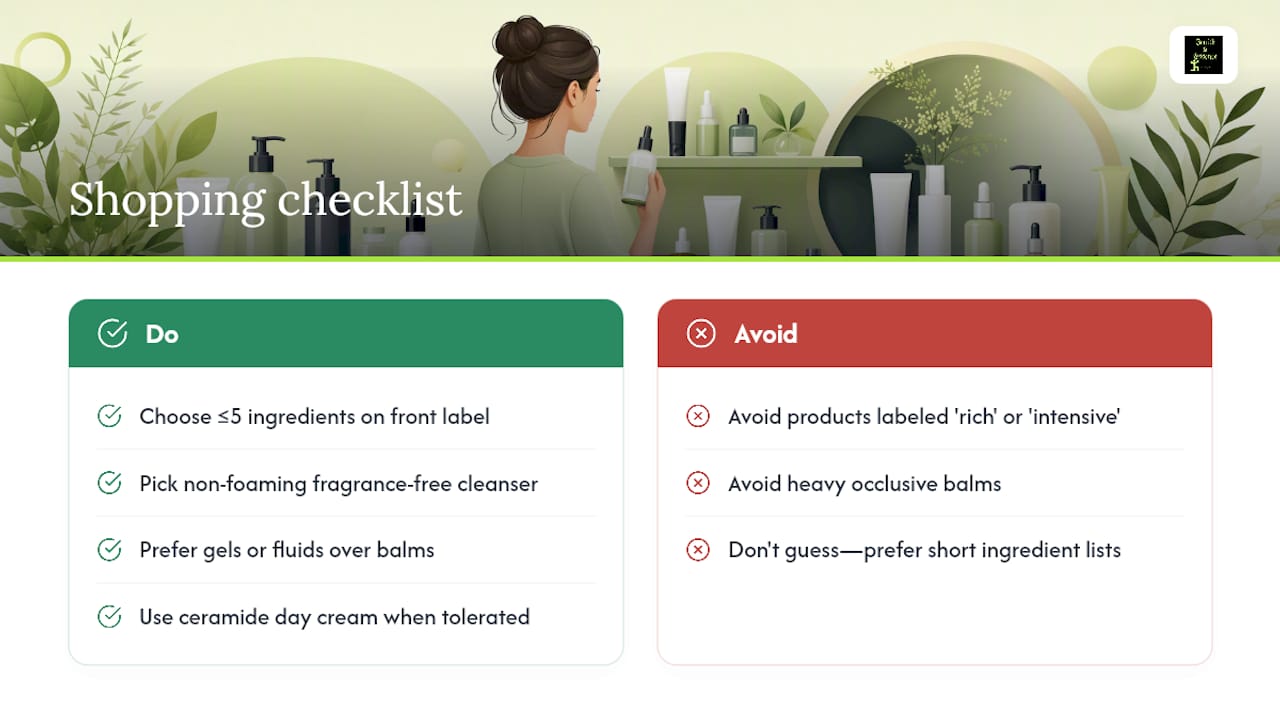
Start with a gentle cream cleanser built as a non-foaming, fragrance-free option, exactly the texture recommended for the reset phase, then move to a lightweight, ceramide-forward option like the Manhattan Premium Opulence moisturizing day cream once your skin can tolerate a step beyond bare minimalism. When you’re shopping on your own, a quick checklist helps: look for five ingredients or fewer on the front label claims, avoid anything marketed as “rich” or “intensive” during an active flare, and choose gels or fluids over balms until your skin has settled.
Every order carries Zenith’s 30-day satisfaction guarantee, so if a formula doesn’t agree with your skin, you can return it unused rather than getting stuck with a product sitting unused in a drawer. Shipping details are outlined in the shipping policy, and the full return process is spelled out in the refund policy. Browse the gentle-skin edit and start with just one product this week.
This article is general information, not a substitute for advice from a qualified doctor. Consult a qualified healthcare professional about your own circumstances before acting on anything here.
Sources
The core guidance here, stop the steroid, simplify, reintroduce slowly, reflects consistent consensus across StatPearls, Cleveland Clinic, Harvard Health, and Merck Manuals. None of these sources disagree on the fundamentals, which is rare enough in dermatology to be worth noting on its own.
This article was written for Essencezenith, where product curation follows the same barrier-first logic: fewer ingredients, no unnecessary occlusives, and formulas selected for how reactive skin actually responds. That said, over-the-counter care has real limits. Persistent, spreading, or painful cases need a dermatologist’s eyes, not another product swap.
FAQ
What Is the Best Skincare for Perioral Dermatitis?
A minimal routine of a fragrance-free non-foaming cleanser and a lightweight, non-occlusive moisturizer used only when needed, with no topical steroids, is the best-supported approach. Ingredients like azelaic acid and sulfur can be added once the worst of the flare has settled.
What Is the Best Skincare Regimen for Perioral Dermatitis?
Follow a two-phase pattern: a 2 to 3 week reset using only a gentle cleanser and minimal moisturizer, then a staged reintroduction of one product every five to seven days. This mirrors the reintroduction approach outlined by Harvard Health.
Should You Moisturize or Dry Out Perioral Dermatitis?
Neither extreme helps. Skip moisturizer if skin doesn’t feel tight, but apply a thin, non-occlusive layer if it does. Deliberately drying out the rash irritates the barrier further and can prolong the flare.
What Should You Not Put on Perioral Dermatitis?
Avoid topical steroids, thick occlusive ointments, retinoids, physical scrubs, and strong acids like glycolic or salicylic acid directly on the affected area. These either worsen inflammation or trigger the steroid withdrawal rebound described by research on facial steroid withdrawal.
Recommended
Comments