
Shop Ethical Beauty Online: Your 2026 Practical Guide
- Norman Church
- Jul 12
- 8 min read

TL;DR:
Ethical beauty products meet verified standards for ingredient transparency, cruelty-free practices, and sustainable packaging. Certifications like ISO 16128, COSMOS, Ecocert, and Leaping Bunny help consumers verify genuine ethical claims. Refillable, biodegradable, and recycled packaging options reduce environmental impact without sacrificing product performance.
Ethical beauty is defined as a category of personal care products that meet verified standards for ingredient transparency, cruelty-free production, sustainable packaging, and organic content. When you shop ethical beauty online, you are choosing products held to measurable criteria, not vague marketing language. Industry standards like ISO 16128 and third-party certifications such as COSMOS and Ecocert give those criteria real teeth. Essencezenith curates products that meet these standards, so you spend less time decoding labels and more time finding what actually works for your skin.
What certifications and ingredient standards identify truly ethical beauty products?
Certifications are the fastest way to cut through greenwashing. The word “natural” carries no legal definition in the United States, which means any brand can print it on a label without consequence. Third-party certifications change that equation entirely.
ISO 16128 provides a scientific framework for calculating the exact percentage of natural ingredients in a formula. That percentage gives you a real number to evaluate, not a feeling. Brands that disclose their ISO 16128 score are signaling a commitment to transparency that most competitors skip.
COSMOS and Ecocert certifications go further by setting minimum thresholds for organic content. The standard minimum sits at 20% organic content, but the best brands treat that as a floor, not a target. Some formulas reach 98.5% organic content, which shows what is possible when a brand prioritizes ingredients over cost-cutting. That gap between 20% and 98.5% is where greenwashing hides.
The Leaping Bunny certification is the gold standard for cruelty-free status. It requires brands to audit their entire supply chain, not just finished products. A brand can claim “cruelty-free” without Leaping Bunny and still source ingredients tested on animals elsewhere in the chain.
Here is what to look for on any product page when you buy sustainable beauty products online:
ISO 16128 disclosure: A listed percentage of natural or organic ingredients
COSMOS or Ecocert logo: Confirms third-party verification of organic content
Leaping Bunny seal: Confirms no animal testing at any supply chain stage
Full ingredient list: Displayed prominently, not buried in a PDF
Wildcrafted or farm-sourced disclosures: Signals ingredient quality beyond the label
Pro Tip: Search the COSMOS and Leaping Bunny databases directly. Both maintain public registries where you can verify a brand’s certification status before you purchase.
Understanding organic certification in beauty takes about 10 minutes of reading. That investment protects you from paying premium prices for products that only perform at a basic standard.
How to evaluate packaging and sustainability practices when shopping ethical beauty online
Sustainable packaging is the second pillar of ethical beauty, and it is where many brands fall short of their own marketing. Post-consumer recycled (PCR) content is the clearest metric to evaluate.
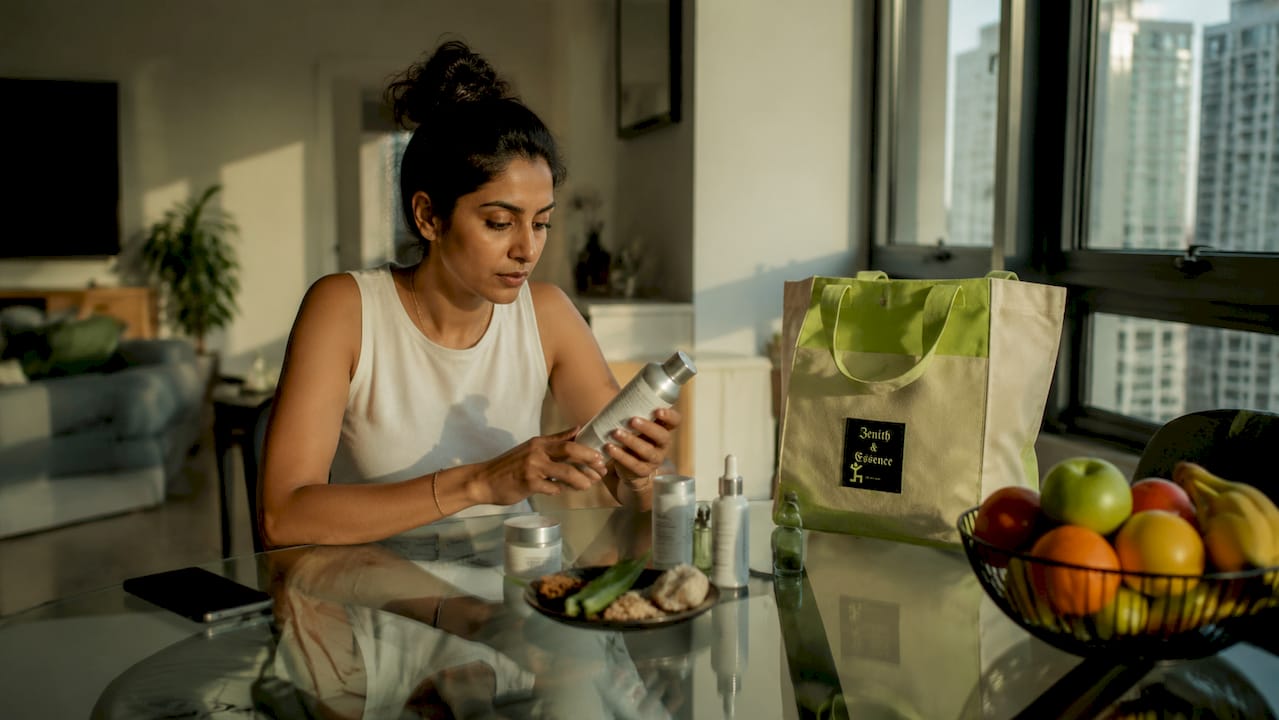
PCR packaging uses plastic that has already been through the consumer waste stream, cleaned, and reprocessed. Leading brands use up to 94% PCR content in their packaging, which dramatically reduces demand for virgin plastic. That number matters because virgin plastic production is one of the most carbon-intensive manufacturing processes in consumer goods.
Packaging Type | Environmental Benefit | What to Look For |
Post-consumer recycled (PCR) | Reduces virgin plastic demand | PCR percentage listed on packaging |
Biodegradable materials | Breaks down without toxic residue | Certified compostable label |
Refillable systems | Cuts long-term plastic waste | Refill pod availability on brand site |
Bio-fiber materials | Replaces plastic with plant-based alternatives | Material composition disclosed |
Refillable systems deserve special attention. Brands using refillable packaging allow you to keep a durable outer case and replace only the product inside. Over a year of regular use, that model eliminates several full units of packaging waste per product. The upfront cost is often higher, but the long-term cost per use drops significantly.
Biodegradable and bio-fiber materials are the next frontier. Some brands now replace traditional plastic tubes with materials derived from sugarcane or bamboo. These break down without leaving microplastics in soil or water systems.
Pro Tip: Before purchasing, check whether a brand sells refill pods separately. If they do not, the “sustainable packaging” claim is likely a one-time gesture rather than a systemic commitment.
How to verify brand transparency and authenticity before you buy ethical beauty products online
Brand transparency is not a feeling. It is a set of specific, verifiable disclosures that either exist or do not. When you verify brand credibility before purchasing, you protect yourself from deceptive marketing and wasted money.
Full ingredient disclosure is the baseline. Every ingredient should appear on the product page in INCI (International Nomenclature of Cosmetic Ingredients) format, in descending order of concentration. If a brand lists only “key ingredients” and hides the rest, that omission is a red flag.
Performance claims require evidence, not just assertions. Sun care products, for example, should disclose water resistance duration and confirm reef-safe mineral SPF ingredients. Water-resistant sunscreens tested to 80 minutes with reef-safe mineral filters demonstrate that ethical formulation does not require sacrificing performance. That kind of specific, testable claim is what separates credible brands from marketing copy.
“Non-toxic living education is a vital companion to ethical beauty buying. The focus belongs on ingredient quality and sourcing, not on marketing buzzwords that sound good but measure nothing. Fewer, better ingredients sourced from small farms or wildcrafted sources consistently outperform complex formulas built around cheap fillers.”
Third-party consumer reviews add a layer of verification that brand-owned content cannot. Look for reviews that mention specific performance outcomes, skin reactions, or packaging quality. Generic five-star reviews with no detail are not useful signals.
Here is a transparency checklist for any brand you are considering:
Full INCI ingredient list on the product page
Third-party certifications with verifiable registry links
Water resistance or performance testing data for relevant products
Sourcing disclosures (farm names, wildcrafted origins, or supplier certifications)
Clear return and satisfaction policy
Understanding what non-toxic beauty means for your skin gives you the vocabulary to read these disclosures critically, not just accept them at face value.
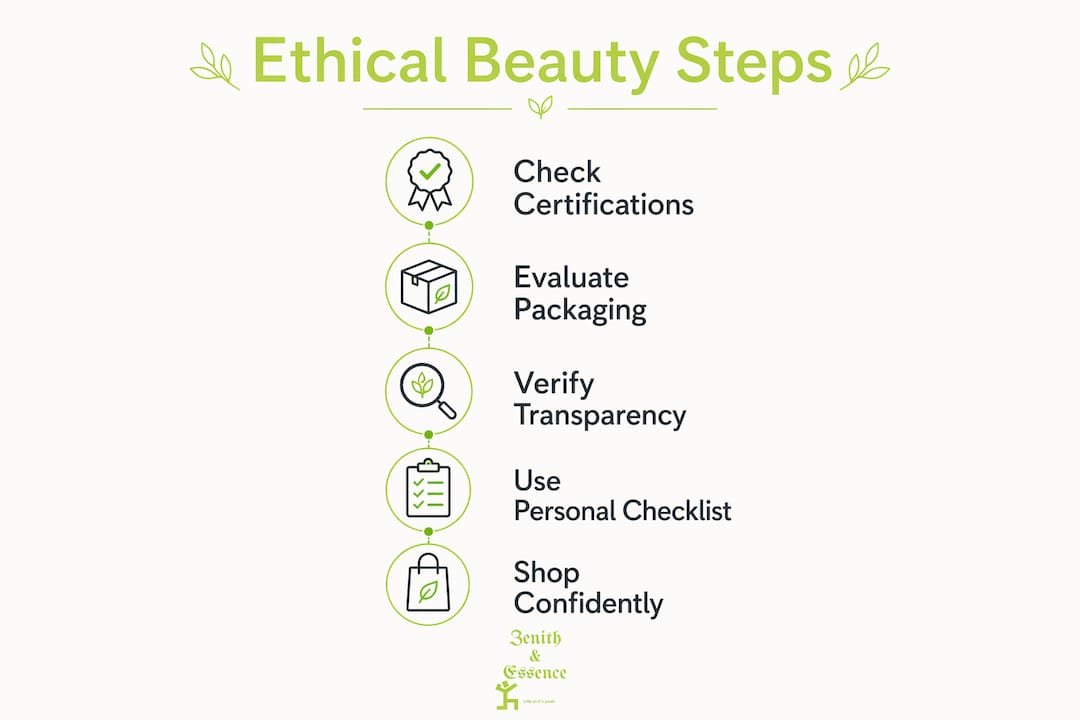
What practical steps should consumers follow to shop ethical beauty online with confidence?
Confident ethical beauty shopping follows a repeatable process. Skipping steps is where most consumers lose money on products that do not deliver on their ethical or performance claims.
Define your priorities. Decide which criteria matter most to you: cruelty-free status, organic content percentage, packaging sustainability, or ingredient sourcing. You cannot evaluate everything equally on every purchase, so rank your criteria before you start.
Research certifications first. Before reading product descriptions, check for COSMOS, Ecocert, or Leaping Bunny logos. Cross-reference these against the public certification databases. A logo without a verifiable registry entry is meaningless.
Read the full ingredient list. Use the ISO 16128 percentage if disclosed. If a brand does not disclose it, look for the ratio of water-based to active ingredients. Products that list water as the first ingredient and follow with a long list of synthetic preservatives are not meaningfully “natural,” regardless of the label.
Evaluate packaging claims specifically. Ask whether the brand discloses PCR percentage, offers refills, or uses certified compostable materials. Vague claims like “eco-friendly packaging” without specifics are not verifiable.
Check performance evidence. Clean luxury beauty now delivers professional-level performance without ethical trade-offs. Demand the same standard. Look for water resistance data, wear-time testing, or dermatologist endorsements where relevant.
Review the return policy. A 30-day satisfaction guarantee, like the one Essencezenith offers, signals that a retailer stands behind the products it curates. Retailers without clear return policies shift all the risk onto you.
The most common mistake consumers make is trusting the word “natural” without verification. “Natural” carries no legal regulation in the United States, so it functions as marketing language, not a quality standard. Always require a certification to back it up.
Pro Tip: Build a short personal checklist using the criteria above and paste it into your browser notes before any ethical beauty purchase. Running through it takes under two minutes and prevents impulse buys that do not meet your standards.
A beauty purchase protection checklist gives you a structured format to apply these steps consistently across different brands and product categories.
Key Takeaways
Consumers who shop ethical beauty online with a certification-first approach consistently avoid greenwashing and find products that deliver on both performance and values.
Point | Details |
Certifications over claims | Require COSMOS, Ecocert, or Leaping Bunny verification before trusting any ethical label. |
ISO 16128 is your benchmark | Look for brands that disclose their natural ingredient percentage using this standard. |
Packaging specifics matter | Ask for PCR percentage, refill availability, or certified compostable materials. |
“Natural” is not regulated | The word carries no legal definition; only third-party certification provides a real guarantee. |
Performance and ethics coexist | Clean formulas with ethical sourcing now match conventional products in wear time and efficacy. |
What I have learned after years of watching the ethical beauty market evolve
The single biggest shift I have seen is the collapse of the old trade-off argument. For years, the beauty industry told consumers that ethical formulas meant weaker performance. That argument is gone. Vegan, cruelty-free formulas now compete directly with conventional products on wear time, pigmentation, and skin feel. The brands that still use the trade-off argument are the ones that have not invested in better ingredient science.
What I find more interesting is the education gap. Most consumers can name a certification they have heard of, but very few can explain what it actually verifies. That gap is where brands exploit vague language. The word “clean” has no regulatory definition. Neither does “green” or “conscious.” Knowing that changes how you read a product page.
Packaging innovation is the area I watch most closely right now. Refillable systems are not a niche trend. They are a structural shift in how ethical brands think about long-term customer relationships. A brand that sells you a refill pod is betting on your loyalty and reducing waste simultaneously. That alignment of incentives is rare in consumer goods and worth supporting.
My honest advice: stop reading ingredient lists as a list of things to avoid. Start reading them as a measure of what a brand is willing to invest in. Fewer, higher-quality ingredients sourced transparently tell you more about a brand’s values than any marketing headline. Demand specifics, reward transparency, and do not settle for vague assurances.
— Norman
Ethical beauty products, curated and ready to shop at Essencezenith
Essencezenith takes the research burden off your plate by curating products that already meet rigorous standards for ingredient transparency, sustainable packaging, and cruelty-free production.
Every product in the sustainable living essentials collection is selected for verified quality, not marketing appeal. You get fast shipping, genuine customer reviews, and a 30-day satisfaction guarantee on every order. If a product does not meet your expectations, returning it is straightforward. Browse the collection and find ethical beauty products that perform as well as they are made.
FAQ
What does “ethical beauty” actually mean?
Ethical beauty refers to products that meet verified standards for cruelty-free production, ingredient transparency, sustainable packaging, and organic content. The term covers both how a product is made and what it contains.
Is “natural” the same as certified organic in beauty products?
No. “Natural” has no legal definition in the United States, while certified organic labels like COSMOS and Ecocert require third-party verification of specific organic content thresholds. Always look for a certification logo, not just the word “natural.”
What is ISO 16128 and why does it matter for ethical beauty?
ISO 16128 is a standardized method for calculating the percentage of natural ingredients in a cosmetic formula. It gives consumers a verifiable number instead of vague claims, making it the clearest tool for comparing ingredient quality across brands.
How do refillable packaging systems reduce environmental impact?
Refillable systems let consumers reuse a durable outer container and purchase only the product inside as a minimal refill pack. Over time, this eliminates multiple full units of packaging waste per product category.
Does ethical beauty perform as well as conventional beauty products?
Yes. Clean formulas with ethical sourcing now match conventional products in performance categories including wear time, pigmentation, and water resistance. Brands that disclose water resistance testing data and third-party certifications demonstrate this directly.
Recommended
Comments