
What Does Limited Edition Mean in Beauty?

TL;DR:
Limited edition beauty products are defined by restrictions such as limited quantity, retail time, geographic availability, or unique formulas.
Understanding these factors helps consumers make informed purchasing decisions, emphasizing genuine rarity over hype.
Limited edition beauty products are defined by at least one of four restrictions: a fixed production quantity, a limited retail window, a geographic boundary, or a unique formula or configuration. That definition separates a true collector’s release from a standard seasonal product. Understanding what limited edition means in beauty helps you spend smarter, collect more intentionally, and avoid falling for hype dressed up as exclusivity. The beauty industry generated serious momentum around this concept in 2026, with 55% of consumers purchasing a beauty collectable or limited edition product in the past 12 months.
What does limited edition mean in beauty, exactly?
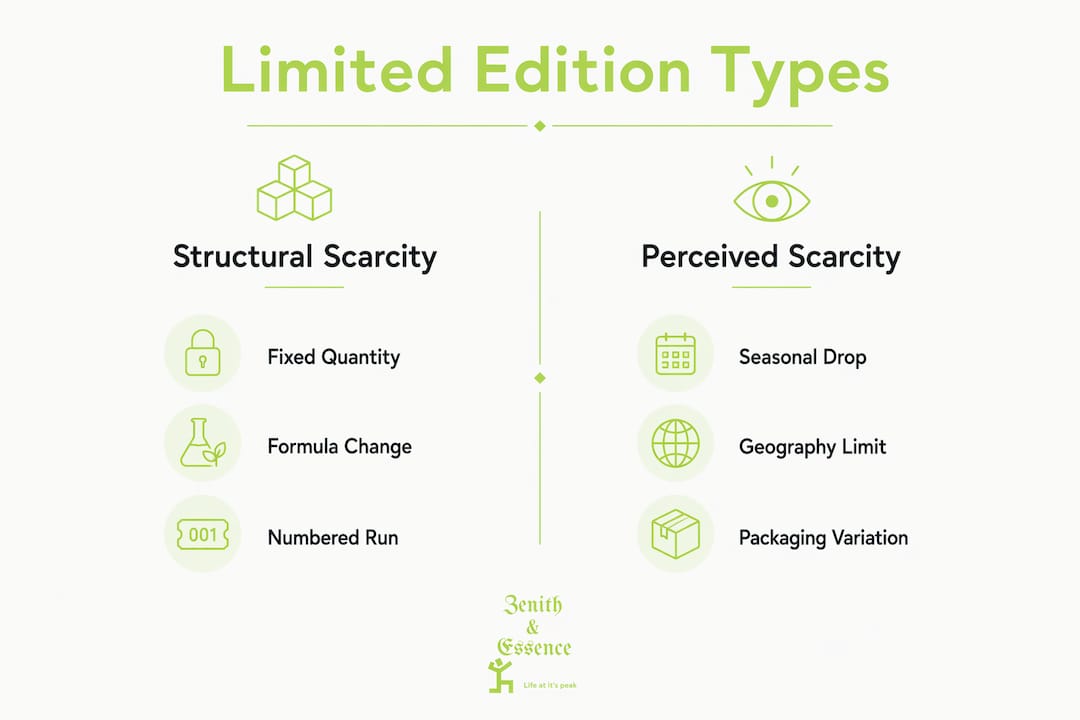
A limited edition beauty product carries at least one hard restriction on how it reaches you. According to industry standards, those restrictions fall into four categories: fixed production quantity, a defined retail window, geographic availability, or a unique product configuration. Each category creates a different kind of scarcity, and each affects how you should evaluate the product.
The most recognizable form is the numbered run. True collector pieces typically fall in the range of 100 to 1,000 units. Seasonal drops, by contrast, often exceed 10,000 units. That gap matters enormously. A bottle numbered 47 of 200 carries a fundamentally different value than a holiday palette sold at every major retailer from october through december.
Geographic restrictions add another layer. A product sold exclusively in Japan or only through a single European boutique is limited by access, not just quantity. That kind of scarcity is real, but it depends entirely on where you live and how connected you are to specialty retail networks.
Fixed quantity: A set number of units produced, often with numbered certificates
Time window: Available only during a specific retail period, such as a holiday season
Geographic limit: Sold in one country, region, or retailer exclusively
Unique configuration: A formula, concentration, or packaging that does not exist in the permanent line
Pro Tip: Before buying, ask the retailer directly: “Is this a numbered run or a seasonal drop?” That one question tells you more about true scarcity than any marketing copy.
How brands use limited editions as a marketing tool
Limited editions serve a clear marketing function. They create urgency, reward loyal customers, and generate cultural buzz that standard product launches rarely achieve. Brands use limited editions as cultural signals of creative momentum, connecting collectors emotionally and driving long-term brand loyalty.
The mechanics behind a drop are more deliberate than most shoppers realize. Distributors do not send limited stock to every retailer equally. Allocation favors premium accounts with strong collector communities, proven sell-through rates, and the ability to tell the brand’s story well. A boutique with a dedicated fragrance community will receive stock before a large chain with no curatorial identity.
This means the retailer you shop with directly affects your access to rare drops. Following specialized retailers, signing up for their newsletters, and building a relationship with knowledgeable staff are not optional steps for serious collectors. They are the actual mechanism of access.
Pro Tip: Sign up for email alerts at specialty beauty retailers, not just mass-market chains. Rare drops often sell out before they appear on major retail platforms.
The emotional goal of a limited edition launch is also worth naming plainly. Brands want you to feel something. Excitement, belonging, and the satisfaction of owning something few others have are all deliberate design outcomes. That emotional engineering is not inherently manipulative, but recognizing it helps you buy with intention rather than impulse.
Why consumers are drawn to limited edition beauty products
The appeal of limited edition beauty goes well beyond collecting. Consumer desire in 2026 centers on emotional uplift, playful sensory experiences, and products that function as both tools and keepsakes. The “Labubu effect,” named after the collectible toy phenomenon that swept global markets, describes this shift precisely: shoppers want objects that make them feel something every time they look at them.
“Beauty collectables serve as badges of identity and community participation for Gen Z and Gen Alpha. The value lies not just in rarity, but in what owning the piece says about who you are and what you care about.”
That identity dimension is significant. A limited edition lipstick from an artist collaboration is not just a cosmetic. It is a cultural artifact that signals taste, awareness, and belonging to a specific community. For Gen Z and Gen Alpha shoppers especially, beauty collectables function as social currency in both physical and digital spaces.
The most successful 2026 releases share a common trait. They are functional first. Shoppers want products that perform on skin, not just look good on a shelf. Intentional collectibles combine unique sensory experiences with genuine performance, making them worth using and worth displaying. A product that sits untouched in its box eventually loses its emotional charge.
The practical pull is also real. Knowing a product will disappear creates a genuine reason to act. That urgency is not always irrational. If a formula you love is only available for eight weeks, buying it is a reasonable decision, not just a marketing-driven one.
How to tell structural scarcity from perceived scarcity
Not all limited editions are equally rare. Structural scarcity describes small, numbered runs with documented provenance. Perceived scarcity describes large seasonal drops that use hype and time pressure to feel exclusive without being truly rare.
The table below shows the key differences between the two types.
Feature | Structural scarcity | Perceived scarcity |
Production quantity | 100–1,000 units | Often 10,000+ units |
Numbering | Individually numbered | No individual numbering |
Provenance documentation | Certificate of authenticity | Typically absent |
Formula change | Often includes new ingredients or concentration | Usually standard formula in new packaging |
Long-term collector value | Higher | Lower |
Formula changes are the clearest signal of genuine product innovation. True limited editions often feature new concentrations, first-use raw materials, or reformulated note pyramids. If the formula is identical to the permanent line and only the packaging has changed, the product is primarily a display item, not a functional collector’s piece.
Provenance documentation matters more than most shoppers expect. A numbered certificate, an artist’s signature, or a letter of authenticity from the brand adds verifiable history to the object. Small numbered runs with artist collaborations or known perfumers hold higher long-term value precisely because that documentation exists and can be verified.
Pro Tip: Check whether the product’s formula differs from the standard line before buying. A new bottle shape with the same formula inside is a packaging decision, not a product innovation.
Practical tips for buying and enjoying limited edition beauty
Buying limited edition beauty well requires a short checklist applied before you spend. These five questions cut through hype and help you decide whether a release is worth your money.
What is the edition size? Ask for the total number of units produced. Under 1,000 units signals genuine structural scarcity. Over 10,000 units means the “limited” label is primarily a marketing frame.
Does the formula differ from the permanent line? A new concentration, a first-use ingredient, or a reformulated structure adds real product value. Packaging alone does not.
Is provenance documented? Look for a numbered certificate, an artist’s signature, or official brand documentation. These details protect your investment and add long-term value.
Who is the creator or collaborator? Releases tied to a known perfumer, artist, or cultural figure carry stronger collector credentials than anonymous brand-internal projects.
Will you actually use it? The most honest question on the list. Wearing and enjoying a limited edition product adds personal value that display alone never provides.
The investment versus enjoyment question deserves direct attention. Most limited edition beauty products do not appreciate in value the way fine art or rare watches do. Buying a product purely for speculative resale is a gamble with poor odds unless you are operating in a very specific collector market with verified demand. Buying because you love the formula, the collaboration, or the story behind the release is a sound reason that holds its value regardless of market conditions.
Access to truly rare drops requires consistent effort. Follow specialty retailers on social media, subscribe to their newsletters, and check online beauty buying guides for retailer recommendations. Rare stock moves fast, and the shoppers who get it are almost always the ones who prepared in advance.
Pro Tip: Set a personal rule before every limited edition purchase: “Would I buy this if it were available permanently?” If the answer is yes, buy it. If the answer is no, the urgency is doing the work, not the product.
Key Takeaways
Limited edition beauty products are defined by real restrictions on quantity, time, geography, or formula, and understanding those distinctions protects your money and sharpens your taste.
Point | Details |
Four types of restriction | A true limited edition has at least one: fixed quantity, time window, geographic limit, or unique formula. |
Structural vs. perceived scarcity | Numbered runs under 1,000 units with provenance documentation signal genuine rarity; large seasonal drops do not. |
Formula change matters | A new concentration or ingredient adds real value; a new bottle with the same formula is a packaging decision. |
Distribution shapes access | Specialty retailers with collector communities receive rare stock first, so your retailer choice matters. |
Buy to use, not just to own | Products that are worn and enjoyed hold personal value that display-only collecting rarely delivers. |
My honest read on limited edition beauty
I have watched the limited edition beauty market shift from a niche collector’s hobby into a mainstream shopping behavior, and the change has been genuinely interesting to track. The products that hold up over time are almost never the ones with the loudest launches. They are the ones where a brand took a real creative risk, changed something meaningful in the formula, and partnered with someone whose perspective added something the permanent line could not.
The part that concerns me is the volume of releases now labeled “limited” that are, in practice, just seasonal inventory management. When a brand produces 50,000 units of a holiday palette and calls it limited, the word loses its meaning. Shoppers who do not know the difference end up paying a premium for urgency that was manufactured, not earned.
My advice is simple. Slow down before you buy. Read the product details carefully. Ask whether the formula is new. Check the edition size if the brand publishes it. And if you buy something, use it. A limited edition fragrance sitting sealed in a drawer is not a collection. It is a missed experience. The emotional and cultural value of these products lives in the wearing, not the owning.
— Norman
Exclusive beauty worth buying at Essencezenith
Essencezenith curates beauty products that meet a real standard: powerful ingredients, transparent sourcing, and results you can feel. The sustainable beauty collection brings together premium picks that combine genuine performance with responsible formulation, the same qualities that define the best limited edition releases.
Every order comes with fast shipping and a 30-day satisfaction guarantee on unused items, so you can shop with confidence rather than hesitation. If you want beauty products that deliver on their claims without the hype, Essencezenith is the place to shop with confidence and find what actually works for you.
FAQ
What does limited edition mean in beauty products?
A limited edition beauty product is defined by at least one restriction: fixed production quantity, a set retail window, geographic availability, or a unique formula. These four criteria separate true limited releases from standard seasonal inventory.
Are limited edition beauty products worth buying?
They are worth buying when the formula differs from the permanent line, the edition size is genuinely small, and provenance is documented. Collector value is highest in numbered runs tied to known artists or perfumers.
How can I tell if a limited edition is truly rare?
Look for a numbered certificate, an edition size under 1,000 units, and a formula change from the standard product. Large seasonal drops with no documentation are perceived scarcity, not structural scarcity.
Why do beauty brands release limited edition products?
Brands use limited editions to build emotional engagement, reward loyal customers, and signal creative momentum. Distribution strategies also help brands strengthen relationships with specialty retailers who serve dedicated collector communities.
Should I collect limited edition beauty products or use them?
Use them. Personal enjoyment adds value that display-only collecting does not. Most limited edition beauty products do not appreciate financially, so the real return comes from the experience of using a product you genuinely love.
Recommended
Comments