
Best Yanybeauty.co Alternatives for Clean Beauty Shoppers

TL;DR:
The best replacements for yanybeauty.co include curated clean-beauty boutiques, multi-brand retailers with ingredient filters, and AI-powered dupe platforms. Essencezenith stands out by combining curation, ingredient transparency, and personalization with fast U.S. shipping and satisfaction guarantees. Shoppers should prioritize ingredient transparency and trustworthiness, using INCI scans and reviews before switching retailers.
The most practical replacement for yanybeauty.co shoppers is a mix of curated clean-beauty boutiques, multi-brand retailers with ingredient filtering, and AI-powered dupe platforms — with Essencezenith standing out as a direct vetted option that mirrors Yany Beauty’s emphasis on clean ingredients, personalization, and transparency. Dupe-finding platforms like BeautyFlow report average savings of 70–90% when shoppers switch from luxury products to ingredient-matched alternatives, which makes the case for going beyond brand loyalty and shopping by formulation instead.
Here is a quick shortlist of swap options worth your time:
Curated clean-beauty boutiques (e.g., Credo Beauty, The Detox Market): Best for shoppers who want editorial curation and strict ingredient standards without doing the research themselves.
Large multi-brand retailers with ingredient filters (e.g., Sephora): Best for shade range, brand variety, and fast U.S. shipping, though ingredient filtering varies by product.
K-beauty marketplaces (e.g., Soko Glam, Peach & Lily, YesStyle): Best for affordable, science-backed skincare with detailed ingredient breakdowns and routine guidance.
AI-driven discovery and dupe platforms (e.g., AuraMatch, BeautyFlow, FindGlo): Best for finding ingredient-matched alternatives at lower price points, especially when leaving a trusted curated retailer.
Essencezenith: A direct alternative combining curated sustainable beauty, ingredient transparency, personalization, and a 30-day satisfaction guarantee for U.S. shoppers.
Table of Contents
How do these alternatives compare side by side?
Category | Best for | Standout features | Ingredient / clean filtering | Personalization tools | Price level | US shipping | Returns / guarantee | Loyalty perks |
Curated clean-beauty boutiques | Strict ingredient standards + editorial picks | Exclusive indie brands, EWG-verified products | Strong — COSMOS/EWG listings | Skin quizzes, staff picks | Mid–high | Standard (3–7 days) | Store credit or full refund | Points programs |
Large multi-brand retailers with ingredient filters | Shade range + brand variety | Prestige and indie brands, virtual shade match | Moderate — “clean” filter available | Virtual try-on, shade finder | Mid–high | Fast (1–3 days, often free) | 30–60 day returns | Tiered loyalty programs |
AI-driven discovery & dupe platforms | Budget-conscious shoppers seeking ingredient matches | Ingredient-overlap scoring, toxicity ratings | Strong — INCI-level analysis | AI skin profile, dupe finder | Budget–mid (average savings 70–90% on ingredient-matched alternatives) | Varies by linked retailer | Varies | None typically |
K-beauty marketplaces | Skincare routines + affordable actives | Korean indie and cult brands, routine builders | Moderate — brand-level transparency | Routine quizzes, skin type filters | Budget–mid | Standard (5–10 days) | Varies by seller | Points or cashback |
Essencezenith | Clean beauty + personalization + trust | Curated sustainable picks, clean ingredient focus | Strong — ingredient transparency built in | Personalized recommendations | Mid | Fast U.S. shipping | 30-day satisfaction guarantee | Personalized service |
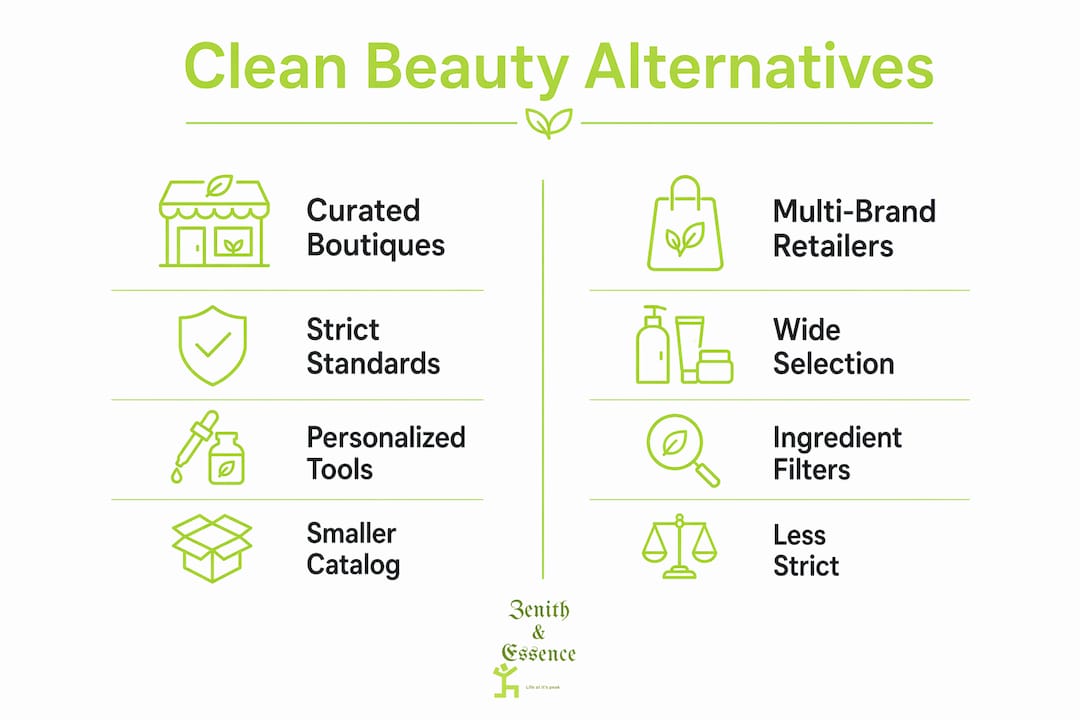
The category that most closely mirrors Yany Beauty’s strengths is curated clean-beauty boutiques, but Essencezenith matches on all three pillars: curation, ingredient transparency, and personalization.
How were these alternatives selected?
Picking a replacement for a boutique retailer is not just about finding something similar. It is about replicating a specific experience: knowing what is in your products, trusting the curation, and getting something that actually works for your skin. The criteria used here reflect that.
Ingredient transparency: Does the retailer publish full INCI lists? Do they surface EWG ratings or COSMOS certifications?
Authenticity guarantees: Are products sourced directly from brands or authorized distributors? Is there a gray-market risk?
Editorial curation: Does a human (or a well-trained algorithm) filter out low-quality products, or is it an open marketplace?
Personalization tools: Skin quizzes, shade matching, and “why this for you” explanations matter when you are used to boutique-level guidance.
U.S. shipping and returns: Reasonable delivery windows and a clear return policy reduce the risk of trying something new.
Pricing transparency: Are shipping fees, taxes, and membership costs disclosed upfront?
Verified reviews: Are reviews from confirmed purchasers, or can anyone post?
Ingredient transparency and personalization carry the most weight here because they are the hardest to replicate. A big retailer can match on price and shipping, but replicating the feeling that someone actually vetted what you are buying takes real editorial or algorithmic effort. Learning to identify quality beauty ingredients yourself is the fastest way to evaluate any new retailer.
Pro Tip: Search by active ingredient rather than product name. Typing “2% niacinamide serum” or “0.1% retinol moisturizer” surfaces true formulation matches and sidesteps brand-loyalty markup entirely, as FindGlo demonstrates with its INCI-based search.
What does each alternative category actually offer?
Curated clean-beauty boutiques (Credo Beauty, The Detox Market)
These retailers do the vetting for you. Credo Beauty enforces one of the strictest “Dirty List” standards in U.S. retail, banning a very large number of harmful ingredients. The Detox Market focuses on Canadian and U.S. indie brands with full ingredient transparency. Both carry exclusive brands you will not find at mass retailers, and both offer skin quizzes or staff-curated routines. Pricing skews mid-to-high, but you are paying for the curation. Returns policies are generally solid, and U.S. shipping is standard for most orders.

Large multi-brand retailers with ingredient filters (Sephora)
Sephora’s scale is its biggest advantage and its biggest limitation. The “Clean at Sephora” filter is useful, but the standard is less strict than Credo’s. Where Sephora wins: virtual shade matching, fast shipping, sometimes free with Beauty Insider membership, and a generous 30–60 day return window. The loyalty program is one of the most generous in beauty retail. If shade inclusivity is your top priority, this is the category to start with.
K-beauty marketplaces (Soko Glam, Peach & Lily, YesStyle)
Soko Glam and Peach & Lily both curate Korean skincare with detailed ingredient notes and routine-building tools. Soko Glam’s editorial team writes ingredient breakdowns for most products. Peach & Lily carries its own house line alongside curated Korean brands. YesStyle is broader, covering fashion and lifestyle alongside beauty, with a wider price range and a larger catalog. Shipping to the U.S. typically takes about a week or longer, and return policies vary by seller on YesStyle specifically.
AI-driven discovery and dupe platforms (AuraMatch, BeautyFlow, FindGlo)
This category is where the real ingredient-level work happens. AuraMatch lets shoppers upload a skin profile and receive AI-matched recommendations with “why this for you” explanations. BeautyFlow focuses on finding affordable dupes by comparing full ingredient lists. FindGlo ranks alternatives by ingredient quality, price efficiency, and review signals. None of these are retailers themselves, but they point you to where to buy. Use them to vet any product before purchasing from an unfamiliar site.
Essencezenith
Essencezenith curates sustainable beauty products with a focus on clean, powerful ingredients and ingredient transparency. U.S. shoppers get fast shipping and a 30-day satisfaction guarantee on unused items. The personalized approach means you are not scrolling through thousands of products hoping something works. It is the closest category match to Yany Beauty’s original promise.
How do you pick the right alternative for your needs?
Start with what matters most to you, then work down the list.
Questions to ask before committing to a new retailer:
Do they publish full INCI ingredient lists for every product?
Do they offer ingredient filtering, allergy scanning, or a clean-beauty certification filter?
What are the U.S. shipping times and costs? Is there a free shipping threshold?
What is the return window, and do they accept opened products?
Are loyalty perks (points, early access) worth the price premium over a dupe platform?
Decision flow:
If ingredient safety and clean standards are your top priority, go with a curated clean-beauty boutique or Essencezenith.
If shade range and brand variety matter most, a large multi-brand retailer with a clean filter is the better fit.
If budget is the main driver, run your current products through an AI dupe platform first, then buy from whichever retailer the platform recommends.
If K-beauty actives and skincare routines are what you are after, a dedicated K-beauty marketplace gives you the best editorial depth.
If you want all three (curation, transparency, personalization) without building your own system, Essencezenith is the direct swap.
Red flags to watch for:
No INCI list published on the product page
Reviews that cannot be filtered by verified purchasers
Vague return policy (“contact us for returns”) with no stated window
No disclosed sourcing or authenticity guarantee
“Clean” labeling with no defined ingredient standard behind it
A solid beauty purchase protection checklist covers most of these before you spend a dollar.
How AI and personalization tools replicate Yany Beauty’s curation
Yany Beauty’s appeal was never just the products. It was the feeling that someone had already done the hard work of checking ingredients, vetting brands, and matching products to your skin type. AI discovery tools now replicate that process at scale.
AuraMatch scans product labels for suspected toxic chemicals and cross-references user allergy profiles to flag parabens, phthalates, and harsh sulfates, assigning a toxicity score. That is the kind of ingredient-safety check that used to require a dermatologist or a lot of label-reading time. FindGlo goes further by combining ingredient-quality scoring with price efficiency and review signals, so you are not just finding a dupe — you are finding the best value dupe.
AI-powered beauty discovery lets shoppers upload a skin profile, try virtual shade matching, and receive ingredient-aware recommendations that mirror boutique curation — with “Why this for you” explanations built into the results. (AuraMatch)
The shift toward this kind of intelligent personalization is reshaping how shoppers find products without relying on a single retailer. Beauty quiz personalization tools, whether on a retailer’s site or a standalone platform, are now accurate enough to surface genuinely useful matches rather than generic bestsellers.
Essencezenith offers a satisfaction guarantee allowing returns of unused items within a reasonable timeframe. When you are trying a new retailer after leaving a familiar one, knowing you can return unused items without a fight removes the biggest friction point.
Pro Tip: Before switching retailers, run your top three current products through an INCI-comparison tool like BeautyFlow. If you can find ingredient-matched alternatives at a lower price point, you have already done the hard part of the transition.
How does customer service compare across these categories?
Customer service quality varies more by category than by individual retailer. Curated clean-beauty boutiques tend to offer the most attentive service because their model depends on repeat customers who trust the curation. Expect live chat, email support with knowledgeable staff, and proactive follow-up on orders. Large multi-brand retailers have the infrastructure for fast responses but can feel impersonal, especially for ingredient-specific questions. K-beauty marketplaces vary widely: dedicated curators like Soko Glam and Peach & Lily invest in editorial support and responsive customer service, while broader marketplaces may route you through a third-party seller. AI dupe platforms are typically self-serve with no direct customer support for purchases, since they link out to other retailers. Essencezenith’s personalized service model sits closest to the boutique end: direct, responsive, and focused on helping you find what actually works.
How do you evaluate user reviews and retailer reputation?
Reviews are only as useful as the verification behind them. A retailer with 10,000 reviews and no verified-purchaser filter is less trustworthy than one with 500 confirmed buyer reviews. When evaluating any yanybeauty.co replacement, check whether reviews are tied to confirmed purchases, whether negative reviews are visible and responded to, and whether the platform uses a third-party review aggregator like Trustpilot or Bazaarvoice.
For community-level reputation, Reddit’s r/AsianBeauty and r/SkincareAddiction are reliable sources for unsponsored opinions on both products and retailers. Large market players carry brand recognition, but as industry market reports note, name recognition does not guarantee ingredient transparency or authentic sourcing. A boutique with a smaller but verified review base often signals more genuine customer relationships than a mass retailer with inflated counts. Checking a trustworthy beauty brand checklist before committing to a new retailer takes about five minutes and catches most red flags.
What sourcing and authenticity guarantees should you expect?
Authenticity is the issue most shoppers underestimate when switching retailers. Gray-market products (genuine but not authorized for the U.S. market) can have different formulations, expired shelf lives, or missing FDA-required labeling. Counterfeit products are a real risk on open marketplaces with third-party sellers.
What to look for: direct brand partnerships or authorized distributor status, lot number traceability, and a clear statement about where products are sourced. Curated boutiques like Credo Beauty and The Detox Market source directly from brands, which is why their ingredient standards hold. Large multi-brand retailers with first-party inventory (not marketplace sellers) are generally safe. K-beauty marketplaces that curate their own catalog are more reliable than those that allow open third-party listings. For ethical beauty sourcing and supply chain transparency, boutique and curated retailers consistently outperform open platforms. Essencezenith’s curated model means every product has been selected with sourcing and ingredient integrity in mind, not just price or popularity.
Key Takeaways
The best yanybeauty.co alternatives combine ingredient transparency, editorial curation, and personalization tools — no single retailer does all three perfectly, but the right category match gets you close.
Point | Details |
Lead with ingredient analysis | Use INCI-based tools like FindGlo or BeautyFlow before switching retailers to confirm formulation matches. |
AI tools close the curation gap | Platforms like AuraMatch deliver skin-profile-matched recommendations with toxicity scoring, replicating boutique-level vetting. |
Savings potential is real | Ingredient-matched dupes can deliver average savings of 70–90% versus luxury originals, per BeautyFlow data. |
Red flags to avoid | No INCI list, unverified reviews, and vague return policies are the three most common signs of a retailer to skip. |
Essencezenith as a direct swap | Essencezenith offers curated clean beauty, ingredient transparency, fast U.S. shipping, and a 30-day satisfaction guarantee. |
The case for category-based shopping over brand loyalty
The conventional wisdom when a favorite retailer disappears is to find the closest brand match. That instinct is wrong, or at least incomplete. What made Yany Beauty worth using was not the brands it carried — it was the filter it applied to those brands. Ingredient standards, vegan and cruelty-free commitments, inclusive shade ranges: those are the things worth replicating, and they exist across multiple categories.
The trade-off is real, though. A curated boutique gives you the tightest ingredient standards but the smallest catalog. An AI dupe platform gives you the widest ingredient-matched options but no editorial voice. A large multi-brand retailer gives you convenience and speed but looser clean standards. Most shoppers end up using two of these in combination: one for discovery, one for purchase. That is not a failure of the alternatives. It is just how modern beauty shopping works when you care about what is actually in the bottle.
Essencezenith: a curated alternative worth your attention
If you want the Yany Beauty experience without rebuilding your entire shopping routine from scratch, Essencezenith delivers it directly. The focus is on sustainable, clean-ingredient beauty products curated for shoppers who want to know what they are putting on their skin — not just what the packaging says.

Fast U.S. shipping, a user-friendly interface backed by genuine customer reviews, and a 30-day satisfaction guarantee on unused items make the switch low-risk. The personalized approach means you get recommendations that fit your skin type and goals, not just the week’s bestsellers. For shoppers who want a single trusted source for sustainable beauty essentials, Essencezenith is the direct next step. Browse the curated collection and see what ingredient-first beauty shopping actually looks like.
Useful sources for further research
AuraMatch — AI-powered skin profile matching and ingredient-safety scoring with toxicity ratings.
BeautyFlow — Dupe-finding platform that compares full INCI lists and surfaces affordable ingredient-matched alternatives.
FindGlo — Ranks skincare alternatives by ingredient quality, price efficiency, and review signals.
YANY Beauty company profile — Market context for Yany Beauty’s position among boutique clean-beauty players.
Best practices for online beauty buying — How AI and expert analysis improve ingredient transparency for U.S. shoppers.
How to read beauty product labels — Step-by-step label-reading guide for decoding INCI lists.
Reliable beauty shopping platforms — Overview of vetted platforms with brand signals and selection criteria.
Shop luxury beauty online with confidence — Authenticity verification and buying tips for higher-ticket beauty items.
FAQ
What are the top clean-beauty alternatives to yanybeauty.co?
Credo Beauty, The Detox Market, and Essencezenith are the strongest clean-beauty alternatives, each enforcing strict ingredient standards and offering curated selections with full transparency.
What is comparable to Sephora for ingredient-conscious shoppers?
Credo Beauty applies stricter ingredient standards than Sephora’s “Clean” filter, banning a very large number of harmful ingredients. For shoppers who prioritize formulation over brand variety, curated boutiques are the closer match.
What is the best website to buy makeup with verified clean ingredients?
Curated clean-beauty retailers that publish full INCI lists and use third-party certifications (EWG Verified, COSMOS) are the most reliable. Essencezenith’s curated approach and ingredient transparency make it a strong option for U.S. shoppers.
What are the best international skincare brands available in the U.S.?
Korean brands carried by Soko Glam and Peach & Lily (such as COSRX, Innisfree, and Klairs) are widely available in the U.S. with strong ingredient transparency. European brands certified under COSMOS standards are also accessible through clean-beauty boutiques.
Recommended
Comments