
Best Beauty Hair Products for Every Hair Type in 2026
- Norman Church
- Aug 8
- 15 min read

Start with a shampoo and conditioner matched to your hair type, then add one targeted treatment for your biggest concern. That two-step foundation works for nearly every texture and budget, and it’s where editors at Byrdie and InStyle consistently land after testing hundreds of products each year. Scalp health has become the third pillar: a clean, balanced scalp is the single most overlooked factor in hair growth and shine.
Quick picks by hair type:
Curly/coily: A sulfate-free, moisture-rich shampoo paired with a deep conditioner; add a curl-defining cream for styling
Fine/thinning: A volumizing shampoo with lightweight conditioner applied mid-length to ends only; add a scalp serum
Color-treated: A color-safe, pH-balanced shampoo and a bond-repairing conditioner; add a weekly mask
Scalp-first: A gentle clarifying shampoo used monthly plus a scalp scrub or massager tool weekly
Essencezenith curates all four of these categories with sustainable, ingredient-transparent formulations and backs every purchase with a 30-day satisfaction guarantee.
Pro Tip: Before committing to a full-size bottle, buy a travel size and apply a small amount to the inside of your wrist or behind your ear. Wait 24 hours. If no redness or itching appears, you’re clear to use it on your scalp and hair.
Table of Contents
Which beauty hair products match your hair type?
The fastest way to shop is to match the product to the texture first, then layer in your top concern. Generic “for all hair types” formulas exist, but they tend to underperform on both ends of the texture spectrum.
Curly and coily hair
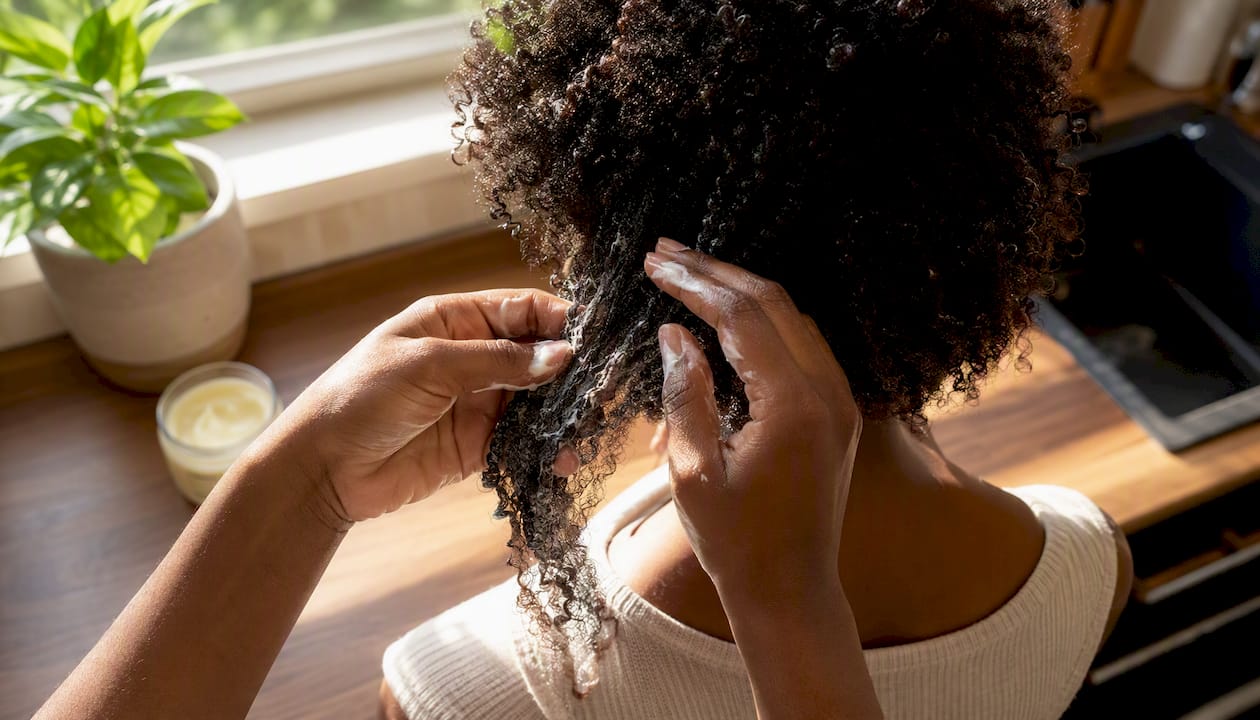
Curly and coily textures lose moisture faster because the natural oils from the scalp have a harder time traveling down a spiral strand. Cosmopolitan’s curl-shampoo guidance points consistently to sulfate-free formulas with humectants like glycerin and aloe vera. Pair that with a rich conditioner containing shea butter or mango butter, and follow with a leave-in cream or gel for definition. Use the deep conditioner weekly; the leave-in every wash.
Wavy hair
Wavy hair sits between straight and curly, so it benefits from lightweight moisture without heavy oils that flatten the wave. A gentle sulfate-free shampoo and a medium-weight conditioner work well. Add a curl-enhancing mousse or light cream on damp hair to encourage wave pattern without crunch.
Straight and fine hair
Fine, straight hair shows buildup fast. A volumizing shampoo with panthenol or biotin adds body without weight. Keep conditioner away from the roots entirely, and skip heavy masks unless your ends are visibly dry. A weekly scalp scrub keeps follicles clear and product residue from dulling the hair.
Thick and coarse hair
Thick hair can handle richer formulas. Look for shampoos with amino acids and conditioners with argan oil or avocado oil. A monthly deep mask with ceramides helps smooth the cuticle and reduce frizz in humid weather.
Color-treated hair
Color-treated hair needs two things: pH balance and bond repair. A color-safe shampoo with a slightly acidic pH (around 4.5–5.5) keeps the cuticle sealed so pigment doesn’t fade. A bond-repairing conditioner with ingredients like bis-aminopropyl diglycol dimaleate or hydrolyzed keratin rebuilds the structure bleach breaks down. Use a mask once a week.
Damaged and bleached hair
Bleached hair is structurally compromised, not just dry. Protein treatments (hydrolyzed wheat protein, keratin) rebuild tensile strength; follow with a moisture treatment to prevent brittleness from protein overload. Alternate protein and moisture masks every two weeks.
Scalp-sensitive hair
Fragrance-free, dye-free formulas are the baseline. Look for calming actives like niacinamide, zinc pyrithione (for dandruff), or salicylic acid (for flaking). Avoid sodium lauryl sulfate, which strips the scalp barrier faster than sodium laureth sulfate.

Comparison table: pick by primary concern
Concern | Product set label | Key ingredient to look for | Frequency |
Moisture/frizz | Hydrating set | Glycerin, shea butter, aloe | Daily shampoo, weekly mask |
Volume/thinning | Strengthening set | Biotin, panthenol, niacinamide | Daily shampoo, 2x/week scalp serum |
Color fade | Color-care set | Keratin, UV filters, pH-balanced base | Every 2–3 days shampoo, weekly mask |
Scalp buildup | Clarifying set | Salicylic acid, zinc, tea tree | Monthly clarifying, weekly scrub |
Breakage/damage | Repair set | Ceramides, hydrolyzed protein, bond builders | 2x/week shampoo, biweekly mask |
Essencezenith’s curated collection includes a vegan shampoo from BYMANYC New York that fits the hydrating and scalp-sensitive categories well, with transparent ingredient labeling and no hidden fragrances.
Pro Tip: If you use a salon-strength mask (one with high protein or bond-building actives), apply it after shampooing on towel-dried hair, cover with a shower cap for 10–15 minutes with heat, then condition lightly. The heat opens the cuticle so actives penetrate deeper, and the light conditioner seals them in.
What does each hair product category actually do?
Knowing the category prevents the most common shopping mistake: buying two products that do the same job while missing the one you actually need.
Category | Purpose | When to use | Frequency |
Clarifying shampoo | Removes mineral and product buildup | After heavy styling or hard water exposure | Monthly (or as needed) |
Hydrating shampoo | Cleanses while preserving moisture | Regular wash days | 2–3x per week |
Conditioner | Smooths cuticle, adds slip for detangling | After every shampoo | Every wash |
Leave-in conditioner | Lightweight moisture that stays in | On damp hair post-wash | Every wash |
Deep mask | Intensive repair or moisture infusion | After shampoo, before conditioner | Weekly or biweekly |
Scalp scrub | Physical exfoliation of dead skin and buildup | On wet scalp before shampoo | 1–2x per month |
Growth/scalp serum | Delivers actives (caffeine, peptides) to follicles | On dry or damp scalp | Daily or as directed |
Heat protectant | Forms a barrier against thermal damage | Before any heat tool use | Every heat-styling session |
Styling cream | Defines texture, controls frizz | On damp hair before drying | As needed |
Hair oil/serum | Adds shine, seals cuticle, reduces frizz | On dry hair as a finish | As needed |
Ingredient signposts by category:
Clarifying shampoos often contain sulfates (sodium lauryl sulfate or sodium laureth sulfate) to cut through buildup. Fine for occasional use; too harsh for daily washing.
Repair masks rely on ceramides and keratin to rebuild the lipid layer of the hair shaft.
Moisture products use humectants (glycerin, hyaluronic acid, panthenol) to draw water into the strand.
Scalp serums deliver caffeine, minoxidil (in OTC growth products), or peptides directly to the follicle.
Pro Tip: Don’t layer a protein mask and a protein leave-in in the same session. Protein overload makes hair feel stiff and snaps easily. Alternate: protein mask one week, moisture mask the next.
Label signals worth trusting
Ingredient list in descending order of concentration (required by the FDA for cosmetics sold in the U.S.)
Third-party certifications: USDA Organic, Leaping Bunny (cruelty-free), COSMOS (organic standard), NSF/ANSI 305
Clear usage instructions with frequency guidance
Clinically tested claims with disclosed methodology (e.g., “tested on 50 participants over 8 weeks”)
Red flags to skip
“Proprietary complex” with no named actives
“Fragrance” listed without disclosure of individual components (a common allergen trigger)
Claims like “repairs 100% of damage” without a mechanism or study citation
No ingredient list at all (required by law for U.S. retail cosmetics)
Price and size expectations
Budget shampoos ($6–$15) typically use simpler surfactant blends and lower concentrations of actives. Mid-range ($15–$35) is where most editorial winners land, because brands can afford higher active concentrations without the premium markup. Luxury formulas ($35 and up) often deliver on texture and fragrance experience, and some carry genuinely higher active loads, but price alone is not a proxy for performance.
Travel and trial sizes are the lowest-risk entry point. Pair that with Essencezenith’s 30-day satisfaction guarantee on unused items, and the risk of a bad purchase drops significantly. For more on how guarantees work across beauty categories, this breakdown of beauty product guarantees is worth a read before you buy.
Trust signals that actually matter:
Editorial awards from Byrdie, InStyle, Elle, or Cosmopolitan (based on multi-tester trials)
Verified customer reviews with photos or detailed texture notes
Ingredient transparency (full INCI list visible before purchase)
A clear return or satisfaction policy
What do “natural,” “organic,” and “clean” labels actually mean?
These terms are not interchangeable, and in the U.S., most of them are not legally regulated for cosmetics.
Natural: No standard legal definition for cosmetics in the U.S. A product can call itself “natural” while containing synthetic preservatives.
Organic: Meaningful only when backed by a third-party certification like USDA Organic or COSMOS Organic, which require a minimum percentage of certified organic ingredients.
Vegan: No animal-derived ingredients. Not the same as cruelty-free.
Cruelty-free: No animal testing at any stage. Leaping Bunny is the most rigorous certification; PETA’s Beauty Without Bunnies is self-reported.
Refillable packaging: The brand offers a refill system that reuses the original container, cutting single-use plastic per wash.
Post-consumer recycled (PCR) plastic: The bottle is made from previously used plastic, reducing virgin plastic demand.
Sustainable options are easiest to find in shampoos and conditioners, where the category has the most certified brands. Masks and treatments lag slightly because active ingredients often require synthetic stabilizers to stay effective.
InStyle’s 2026 hair-care roundup notes that scalp care and targeted treatments are among the fastest-growing editorial categories this year, with ingredient-focused formulas (peptides, ceramides, plant-derived actives) dominating the winners.
Choosing sustainable without sacrificing results:
Prioritize certified labels (COSMOS, Leaping Bunny) over marketing language
Solid shampoo bars use less water in production and eliminate plastic bottles entirely; Essencezenith carries an Onion & Biotin Shampoo Bar that fits this category
Concentrated formulas (a small amount diluted per wash) reduce cost-per-wash and packaging waste simultaneously
Refillable systems save money after the first purchase and cut plastic use by roughly the weight of the original bottle per refill cycle
Which styling tools are worth buying, and how do they change your product choices?
The tool you use changes which products you need. That’s the part most shoppers miss.
A diffuser attachment on a blow dryer distributes heat evenly around a curl rather than blasting it straight. If you diffuse regularly, you need a curl cream or mousse with humidity resistance, not a smoothing serum. If you use a flat iron or straightening brush, a heat protectant rated to at least 450°F is non-negotiable before every pass.
Tools worth the investment:
Ionic blow dryer: Negative ions break down water molecules faster, cutting drying time and reducing heat exposure. Worth it for anyone who blow-dries more than twice a week.
Diffuser attachment: Preserves curl pattern and reduces frizz. Works with any standard dryer nozzle.
Low-heat or infrared straightener: Infrared heat penetrates the shaft more evenly than conventional ceramic plates, causing less surface damage at lower temperatures.
Wide-tooth comb: Detangles wet hair without snapping strands. Use before any brush on curly or coily textures.
Detangling brush: Flexible bristles that flex around knots rather than pulling through them.
Scalp massager: Increases circulation at the follicle level and helps distribute scalp serums. Wellthious covers the top scalp massager alternatives for anyone comparing tool options.
For extension wearers or those with specialized accessory needs, Minx Hair Extensions’ accessories page lists professional-grade tools designed to work with added hair without causing tension or slippage.
Accessories that protect hair health:
Silk or satin bonnets and pillowcases reduce friction overnight, cutting split ends and frizz
Spiral hair ties and fabric scrunchies cause less mechanical breakage than standard elastics
Protective clips (duckbill or claw) hold sections without creasing during styling
The heat protectant rule: Check the product’s stated temperature range before you buy. A protectant rated to 350°F won’t protect hair from a flat iron set to 430°F. Match the rating to your tool’s maximum temperature, and always apply to damp or dry hair before heat touches it — never after.
Pro Tip: Match your dryer’s wattage to your hair density. Fine hair does well with 1,400–1,600 watts; thick or coarse hair benefits from 1,800–2,000 watts. Higher wattage dries faster at lower heat settings, which is gentler than lower wattage running at maximum heat.
For a full breakdown of tool options at different price points, this guide to affordable beauty tools covers the spectrum from drugstore picks to professional-grade options.
What’s the simplest routine that actually works?
The honest answer: two products done consistently beat six products used randomly.
2-product minimal routine (best for: low-maintenance shoppers, travel, or anyone starting fresh)
Shampoo matched to your hair type, 2–3 times per week
Conditioner applied mid-length to ends, left on for 2–3 minutes
That’s it. Most people see a real improvement in texture and manageability within two weeks just from switching to a type-matched shampoo.
4-product full routine (best for: color-treated, damaged, curly/coily, or anyone with a specific scalp concern)
Type-matched shampoo, 2–3 times per week
Conditioner every wash
Targeted treatment: weekly mask or daily scalp serum, depending on your primary concern
Styling finish: heat protectant before heat, or a curl cream/light oil on dry hair for definition and frizz control
The Byrdie 2026 Beauty Awards and Elle’s personalization coverage both point to the same conclusion: the most effective routines are targeted and consistent, not long. Adding more products without a clear purpose for each one tends to create buildup and confusion about what’s actually working.
Essencezenith’s curated collections are built around this logic. Every product in the lineup is selected for ingredient transparency and a clear functional role, so you’re not doubling up on actives or buying overlap. The 30-day satisfaction guarantee means you can test a routine without financial risk.
How to read a hair product label and ingredient list
The ingredient list on a U.S. cosmetic product follows INCI (International Nomenclature of Cosmetic Ingredients) naming conventions and must appear in descending order of concentration. The first five ingredients make up the bulk of the formula.
What to look for in the first five:
Water (aqua) is almost always first in rinse-off products. That’s normal.
The second and third ingredients signal the formula’s character. Glycerin second means moisture is the priority. A surfactant (sodium laureth sulfate) second means cleansing power is the focus.
Actives like niacinamide, caffeine, or peptides often appear lower on the list because they’re effective at small concentrations. That’s not a red flag.
What the bottom of the list tells you:
Preservatives (phenoxyethanol, sodium benzoate), colorants (CI numbers), and fragrance components appear near the end. “Fragrance” or “parfum” as a single entry can mask dozens of individual chemicals, some of which are common allergens. If you have a sensitive scalp or skin, look for fragrance-free formulas or brands that disclose their fragrance components individually.
Certifications appear on the front label but are verified by the ingredient list. A product claiming “vegan” should have no ingredients derived from animals (honey, beeswax, keratin from animal sources, lanolin, collagen). Cross-check the claim against the INCI list if you’re unsure.
Common hair product allergens and irritants to know
Reactions to hair products range from mild scalp itching to contact dermatitis. The most common triggers in U.S. hair care formulas:
Fragrances are the leading cause of cosmetic contact allergy. Both synthetic and natural fragrances (essential oils like lavender, tea tree, and citrus) can trigger reactions. “Fragrance-free” is safer than “unscented,” which may still contain masking fragrances.
Preservatives like methylisothiazolinone (MI) and methylchloroisothiazolinone (MCI) are potent sensitizers. The European Union has restricted MI in leave-on products; U.S. regulations are less strict, so check labels on leave-ins and scalp serums specifically.
Sulfates (sodium lauryl sulfate in particular) strip the scalp’s natural oil barrier, which can trigger dryness, itching, and flaking in sensitive individuals. Sodium laureth sulfate is milder; cocamidopropyl betaine is milder still.
Propylene glycol is a humectant and solvent that causes reactions in some people, particularly in high concentrations in leave-on products.
Formaldehyde-releasing preservatives (DMDM hydantoin, imidazolidinyl urea, quaternium-15) slowly release small amounts of formaldehyde over time. They’re legal in the U.S. at regulated levels but worth avoiding if you have a known sensitivity.
Patch testing before using any new product on your scalp is the most reliable way to catch a reaction early. Apply a small amount to the inside of your elbow or behind your ear, wait 24–48 hours, and check for redness, swelling, or itching before full application.
How hard vs. soft water affects your hair products
Water type is one of the most underappreciated variables in hair care, and it explains why a product that works brilliantly for someone in Seattle may disappoint someone in Phoenix.
Hard water contains elevated levels of calcium and magnesium minerals. These minerals bind to hair proteins and surfactants, leaving a film that makes hair feel rough, dull, and resistant to conditioning. Over time, mineral buildup can block scalp follicles and reduce the effectiveness of every product you apply.
Soft water has low mineral content. It lathers easily, rinses cleanly, and lets conditioners and treatments absorb without interference.
If you have hard water:
Use a chelating or clarifying shampoo monthly to remove mineral deposits. Look for EDTA (ethylenediaminetetraacetic acid) or citric acid in the formula.
A shower filter that reduces calcium and magnesium is a practical long-term fix.
Avoid heavy silicone-based conditioners, which layer on top of existing mineral buildup and compound the dullness.
Apple cider vinegar rinses (diluted: roughly one tablespoon per cup of water) lower the pH of the hair shaft and help dissolve mineral deposits between clarifying washes.
If you have soft water:
Products lather more aggressively, so use less shampoo than the bottle suggests.
Soft water can make fine hair feel limp because there’s no mineral structure to add texture. A volumizing shampoo with panthenol compensates.
You can test your water hardness with an inexpensive strip kit available at most hardware stores. Many U.S. cities publish water quality reports online that include hardness levels.
How packaging type affects the environment and your wallet
The container a product comes in has a real lifecycle impact, and it also affects how long the product lasts and what it costs per wash.
Plastic bottles (standard): The most common format. Single-use HDPE or PET plastic is recyclable in most U.S. curbside programs, but recycling rates for personal care packaging remain low because residue contamination disqualifies many bottles.
Post-consumer recycled (PCR) plastic: Made from previously used plastic. Reduces demand for virgin petroleum-based plastic without changing the recycling challenge at end of life.
Refillable systems: The brand sells a durable container once, then offers concentrated refill pouches or pods. The refill uses far less packaging material per wash than a new bottle. Cost-per-wash typically drops after the second or third refill cycle.
Solid bars (shampoo bars, conditioner bars): No bottle at all. Concentrated formula means a single bar can replace two to three standard liquid bottles. Lower shipping weight also reduces carbon footprint per unit. The Essencezenith Onion & Biotin Shampoo Bar is a solid-format option that eliminates plastic packaging entirely.
Aluminum bottles: Infinitely recyclable without quality degradation. Higher upfront cost but strong environmental profile over multiple uses.
Biodegradable packaging: Compostable materials (plant-based plastics, cardboard) break down under the right conditions. “Biodegradable” without a composting specification (home compostable vs. industrial compostable) can be misleading; check the label for the specific standard.
The most practical approach for most shoppers: start with a refillable or solid-bar format for shampoo (the highest-volume product in any routine), then address conditioner and treatments as secondary priorities.
Key Takeaways
The most effective hair care routine starts with a type-matched shampoo and conditioner, adds one targeted treatment for your primary concern, and uses a heat protectant whenever heat tools are involved.
Point | Details |
Start with hair type | Match your shampoo and conditioner to your texture first; add treatments for your top concern second. |
Read the ingredient list | The first five ingredients define the formula; actives near the bottom are still effective at low concentrations. |
Patch test every new product | Apply to your inner elbow or behind your ear for 24–48 hours before using on your scalp. |
Water type changes results | Hard water requires a monthly chelating shampoo to remove mineral buildup that blocks product absorption. |
Essencezenith curated picks | Essencezenith offers ingredient-transparent, sustainable hair care with a 30-day satisfaction guarantee on unused items. |
Why ingredient transparency matters more than marketing claims
Most hair care marketing is built around the front label. The ingredient list on the back is where the actual product lives, and the gap between the two is often wider than shoppers expect.
A shampoo marketed as “strengthening” may contain a single hydrolyzed protein at a concentration too low to have a measurable effect on tensile strength. A “natural” conditioner may lead with plant-derived actives but rely on synthetic silicones for the slip and shine that makes it feel luxurious. Neither of those things is necessarily wrong, but knowing the difference changes how you evaluate a $12 drugstore bottle versus a $40 salon formula.
The brands that hold up under scrutiny are the ones that publish their full INCI list before purchase, disclose their fragrance components, and back their claims with usage data or third-party testing. That’s the standard Essencezenith applies to its curated selection. Personalization, as Elle’s coverage of customized hair care shows, helps match formula to texture, but curation by a retailer with a clear ingredient standard is a faster path for most shoppers who don’t want to build a custom formula from scratch.
The 30-day guarantee isn’t just a return policy. It’s a signal that the brand is confident enough in the product’s performance to let you test it without risk. That confidence is worth something when you’re choosing between two products with similar ingredient profiles.
Essencezenith’s curated hair care collection
Essencezenith takes the guesswork out of ingredient-first shopping. Every product in the hair care collection is selected for sustainable formulation, full ingredient transparency, and a clear functional purpose, so you’re not paying for packaging or marketing copy.

The collection covers the full routine: from a vegan shampoo with no hidden fragrances to solid-bar formats that eliminate plastic entirely. Fast shipping and a 30-day satisfaction guarantee on unused items mean you can build and test a new routine without financial risk. Browse the Essencezenith hair care collection and find the products that fit your texture, your goals, and your values.
FAQ
What are the best hair care products to start with?
Start with a shampoo and conditioner matched to your hair type. That pairing alone, used consistently, outperforms a longer routine with mismatched products.
Which hair care brands prioritize ingredient transparency?
Brands that publish a full INCI list before purchase and disclose fragrance components are the most transparent. Essencezenith curates products to that standard, including vegan and cruelty-free options with no hidden actives.
How do I know if a hair product is truly natural or organic?
“Natural” has no legal definition for U.S. cosmetics. Look for third-party certifications like USDA Organic or COSMOS Organic, which require verified percentages of certified organic ingredients.
What is the best hair care routine for color-treated hair?
Use a color-safe, pH-balanced shampoo every 2–3 days, a bond-repairing conditioner after every wash, and a weekly mask with ceramides or hydrolyzed keratin to rebuild structure bleach breaks down.
How often should I use a clarifying shampoo?
Once a month is the standard recommendation for most hair types, or whenever you notice buildup, dullness, or reduced product absorption. Hard water users may need it every 2–3 weeks.
Recommended
Comments