
The Role of Fair Trade in Beauty: What You Need to Know
- Norman Church
- 11 hours ago
- 8 min read

TL;DR:
Fair trade in beauty guarantees fair wages, safe conditions, and environmental protections for producers.
It shifts economic power toward ingredient growers in the Global South through strict standards and community investments.
Fair trade in beauty is defined as a sourcing and trade model that guarantees producers fair wages, safe working conditions, and environmental protections at every stage of the supply chain. The role of fair trade in beauty goes far beyond a label on a jar. It is an economic correction that shifts power toward the farmers, harvesters, and cooperatives who grow the ingredients inside your products. Third-party bodies like Fairtrade International set the standards that make this correction measurable and verifiable. Understanding how this system works, where it succeeds, and where it falls short gives you real power as a beauty consumer in 2026.
What is the role of fair trade in beauty sourcing?
Fair trade in beauty corrects a long-standing economic imbalance. Producers in the Global South, who grow ingredients like shea butter, argan oil, and coconut oil, have historically received the smallest share of the final product’s value. Fair trade standards, enforced by bodies like Fairtrade International, set minimum prices and require brands to fund social and environmental projects through a percentage of sales.
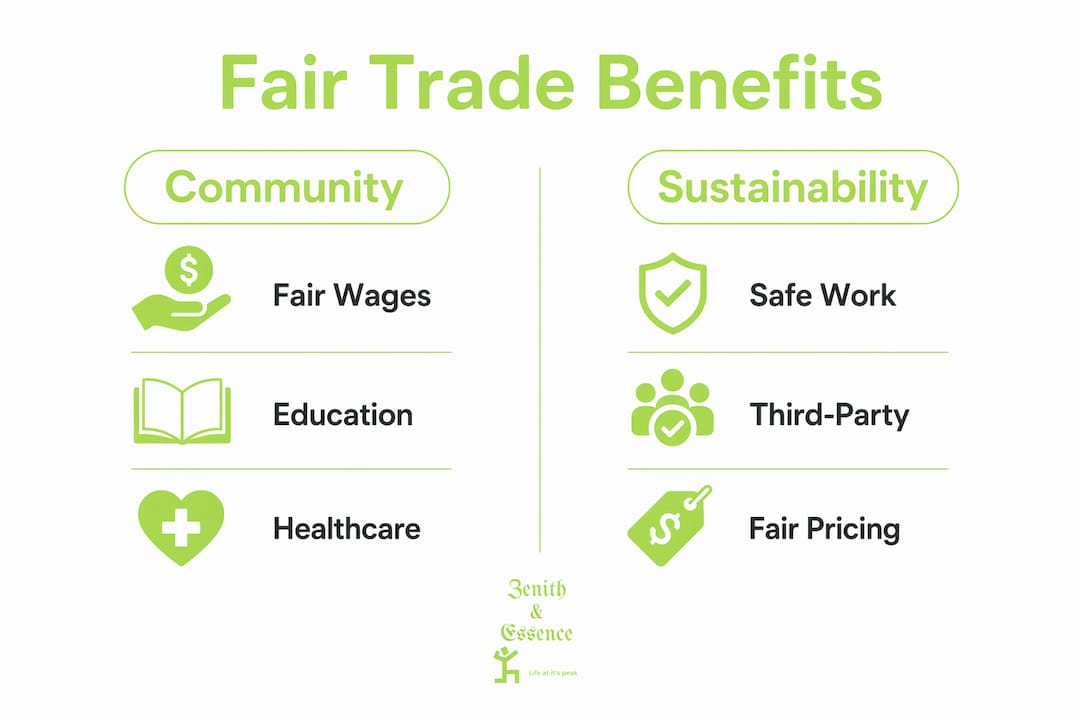
Leading ethical brands donate 2% or more of sales to community projects that benefit producers directly. That percentage funds schools, clean water infrastructure, and healthcare in the same communities that supply the raw ingredients. The model is not charity. It is a structural pricing correction built into the supply chain.
Sustainable beauty practices depend on this structure. Without guaranteed pricing floors and third-party oversight, producers remain vulnerable to market swings that can wipe out a season’s income overnight. Fair trade creates a financial floor that makes long-term investment in quality and sustainability possible for producers.
How does fair trade support communities through beauty ingredients?
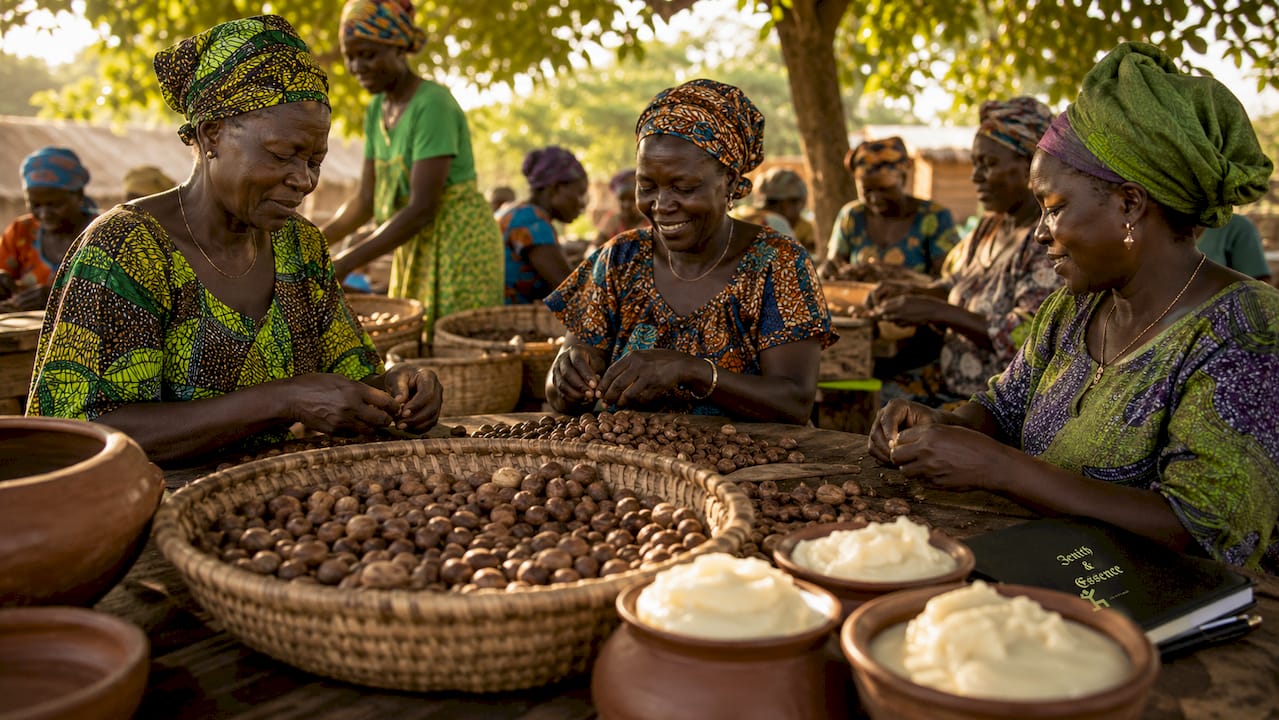
Fair trade sourcing directly supports rural female-led cooperatives, particularly in ingredients like shea butter and coconut oil. The key mechanism is local processing. When cooperatives process raw materials before export, they capture significantly more value than they would by selling unprocessed goods.
Shea butter cooperatives in Burkina Faso are a clear example. Women’s groups that refine shea locally earn more per kilogram than those who sell raw nuts to intermediaries. Fair trade agreements formalize this by bypassing exploitative middlemen and connecting cooperatives directly to international buyers. The community keeps more of the money.
Fair trade premiums add another layer of support. These are funds paid above the guaranteed price, which cooperatives vote on how to spend. Common investments include:
School construction and teacher salaries in producing villages
Clean water access and sanitation projects
Micro-loan programs for women starting small businesses
Agricultural training to improve yield and reduce environmental impact
Pro Tip: When evaluating a fair trade beauty brand, look specifically for evidence of community premium spending, not just fair wage claims. A brand that publishes annual reports showing how premiums were allocated is demonstrating real accountability.
Fair trade also addresses a less visible issue: unpaid female labor embedded in traditional ingredient preparation. Some advanced fair trade models now factor this labor into pricing formulas. That recognition is a meaningful step toward gender economic justice, not just a marketing point.
How can you spot authentic fair trade beauty products?
Genuine fair trade beauty products carry third-party certifications and publish transparent impact reports. The certifications to look for include Fairtrade International, Fair for Life, and the World Fair Trade Organization mark. Each requires independent audits of supply chains, not self-reported claims.
Supply chain transparency and life-cycle assessments are the clearest proof of commitment. A life-cycle assessment traces a product from raw material harvest to finished packaging, identifying where environmental and labor risks exist. Brands that publish these documents are showing their work, not just their values.
The contrast between authentic fair trade and impact washing is sharp. Impact washing occurs when a brand uses one or two fair trade ingredients but consolidates value-added processing in Western headquarters. The community supplies the raw material but captures almost none of the profit from formulation, branding, or retail markup. The fair trade label appears on the packaging, but the economic benefit barely reaches the source.
Feature | Authentic fair trade | Impact washing |
Certification | Third-party verified, audited annually | Self-certified or proprietary program |
Processing location | At or near the source community | Centralized in Western facilities |
Impact reporting | Public, detailed, community-verified | Vague or absent |
Community involvement | Cooperatives have decision-making power | Producers are suppliers only |
Premium allocation | Documented and voted on by producers | Not disclosed |
Pro Tip: Search a brand’s website for its impact report or supplier list before buying. If neither exists, that absence tells you something. Genuine ethical beauty brands treat supply chain transparency as a baseline, not a bonus.
Beware proprietary fair trade programs that lack rigorous third-party oversight. A brand can create its own “ethical sourcing standard” with no external verification. Verified processing at the origin community is the clearest signal that producer value is being preserved, not just claimed.
What are the real challenges of fair trade in beauty?
Fair trade is not a guaranteed fix for producer poverty. Balancing international market demand with sustainable local production is one of the hardest problems in ethical sourcing. When demand spikes, cooperatives face pressure to scale faster than their land, labor, and infrastructure can support.
The risks of poorly managed scaling include:
Soil degradation from over-harvesting wild-grown ingredients like shea
Burnout among cooperative members who take on more work without proportional pay increases
Dependency on a single international buyer, which recreates the vulnerability fair trade was meant to eliminate
Loss of traditional knowledge when speed replaces quality in processing
True economic partnership requires asking harder questions than “is this fair trade certified?” Who profits, who decides, and who reinvests are the three questions that separate genuine partnership from a charity model dressed up as commerce. A brand that controls pricing, branding, and distribution while paying a fair trade premium is still holding most of the power.
Gender equality within fair trade also requires scrutiny. Female-led cooperatives are often celebrated in brand marketing, but unpaid labor recognition in pricing models remains rare. Women may receive fair wages for harvesting while their traditional processing knowledge goes uncompensated. Addressing this gap is a frontier issue in responsible beauty sourcing that few brands have tackled seriously.
How can you and brands engage with fair trade beauty responsibly?
Consumers hold real leverage in this system. The way you spend shapes what brands prioritize. Here is a practical approach to engaging with fair trade beauty products with genuine impact:
Research before you buy. Look for third-party certifications from Fairtrade International or Fair for Life on product pages. Check the brand’s website for an impact report or supplier transparency page. The signs of authentic products go beyond the label.
Demand transparency. Email brands directly and ask where a specific ingredient is sourced and how the community premium is spent. Brands that answer clearly are the ones worth supporting.
Think beyond the ingredient. A product with one fair trade ingredient and five others with no sourcing information is not a fair trade product. Ask about the full formulation.
Consider the full trifecta. True sustainable beauty integrates environmental care, fair labor, and animal welfare together. A brand that excels at one but ignores the others is not operating from genuine values.
Support brands that reinvest locally. Brands that fund infrastructure, education, or healthcare in producing communities are creating lasting impact. Some brands commit at least 2% of total sales to these causes. That benchmark is a useful starting point for comparison.
For brands, the path forward is economic partnership, not just ethical sourcing. That means giving cooperatives decision-making power, investing in local processing capacity, and publishing honest impact data. The sustainable beauty explained framework covers this well: sustainability is not a feature, it is a business model.
Key Takeaways
Fair trade in beauty creates lasting economic and social change only when brands commit to third-party certification, local processing, transparent impact reporting, and genuine community decision-making power.
Point | Details |
Fair trade corrects economic imbalance | Guaranteed pricing floors protect producers from market volatility and fund community projects. |
Local processing multiplies community value | Cooperatives that refine ingredients locally earn more than those exporting raw materials. |
Third-party certification is non-negotiable | Fairtrade International and Fair for Life audits separate real commitments from self-certified claims. |
Impact washing is a real risk | Brands using one fair trade ingredient while centralizing processing elsewhere capture most of the value themselves. |
Consumer demand drives brand behavior | Asking for impact reports and full-ingredient sourcing pushes brands toward genuine accountability. |
Why I think fair trade in beauty deserves harder questions
The beauty industry has made real progress on fair trade language. Fewer brands now use the term loosely without any certification behind it. That is a genuine improvement. But the conversation still stops too early, too often.
What I keep coming back to is the question of control. A cooperative that supplies shea butter under a fair trade agreement but has no say in how the final product is priced, branded, or distributed is still a supplier, not a partner. The economic justice framing of fair trade demands more than a premium payment. It demands that the people who grow and process the ingredients have a seat at the table where the real money decisions are made.
The unpaid labor issue is the most underreported gap in this space. Traditional knowledge, generational processing techniques, and community-organized harvest systems all have economic value. Most fair trade models still do not price them. Until they do, the system is more equitable than conventional sourcing but still not fully just.
Consumers are more powerful than they realize here. Brands respond to purchasing patterns and direct questions. If enough people ask “where was this processed and who decided how the premium was spent,” brands will start answering. That pressure is the fastest path to systemic change, faster than regulation and faster than voluntary industry pledges.
— Norman
Essencezenith’s commitment to ethical beauty
Essencezenith curates beauty products with a clear standard: ingredients must be traceable, brands must be transparent, and sourcing must reflect genuine care for the people and environments behind every formula.

Every product in the Essencezenith catalog is selected with fair trade and sustainability criteria in mind. The 30-day satisfaction guarantee means you can try products with confidence, knowing returns are straightforward if something does not work for you. For beauty shoppers who want to put their money where their values are, explore ethical beauty products at Essencezenith and find brands that back their claims with real transparency.
FAQ
What does fair trade mean in beauty products?
Fair trade in beauty means ingredients are sourced through agreements that guarantee producers fair wages, safe conditions, and a share of profits for community development. Third-party bodies like Fairtrade International verify these standards through independent audits.
How do I know if a fair trade beauty product is genuine?
Look for certifications from Fairtrade International, Fair for Life, or the World Fair Trade Organization, and check whether the brand publishes a public impact report. Brands without third-party verification or transparent sourcing documentation are higher-risk for impact washing.
What is impact washing in beauty?
Impact washing occurs when a brand uses one or two fair trade ingredients but keeps most value-added processing and profit in Western facilities, leaving producing communities with minimal economic benefit. True fair trade requires community control and local processing, not just a certified raw material.
How does fair trade support women in beauty supply chains?
Fair trade cooperatives in ingredients like shea butter are predominantly female-led, and fair trade premiums fund education, healthcare, and micro-loans in those communities. Some advanced models also recognize unpaid traditional female labor in pricing, though this practice is still not widespread.
Can fair trade alone solve poverty in producing communities?
Fair trade reduces economic vulnerability but is not a guaranteed solution to poverty on its own. Sustainable impact requires balancing international demand with local production capacity and giving communities decision-making power over how premiums and profits are reinvested.
Recommended
Comments