
Your Complete Vitamin C Serum Guide for Brighter Skin
- Norman Church
- Aug 9
- 11 min read


A well-formulated vitamin C serum protects skin from free-radical damage, supports collagen production, and gradually brightens uneven tone.
Pick a serum with L-ascorbic acid or a derivative like sodium ascorbyl phosphate (SAP), stored in an opaque or airless container
Apply 2–4 drops to clean, dry skin each morning before moisturizer and SPF
Patch-test for 48 hours before adding it to your full routine
Pro Tip: Tingling does not mean the serum is working harder. It usually signals a low pH or a compromised skin barrier. If your skin stings consistently, switch to a derivative form or lower the concentration.
Key Takeaways
Point | Details |
Concentration sweet spot | 10–15% L-ascorbic acid covers most skin types; above 20% adds irritation risk with diminishing returns. |
Stability over percentage | A stabilized 10–15% formula with vitamin E and ferulic acid outperforms an unstabilized higher-percentage product. |
Apply in the morning | Morning use under SPF maximizes photoprotective synergy between vitamin C and sunscreen. |
Patch-test first | Test on the inner forearm for 48 hours before applying to your face, especially with L-ascorbic acid. |
Essencezenith’s approach | Essencezenith curates stabilized vitamin C serums with protective packaging and a 30-day satisfaction guarantee. |
Table of Contents
What does vitamin C serum actually do for your skin?
Topical vitamin C does three things that are well-supported by evidence: it neutralizes free radicals, it supports the enzymes your skin uses to build collagen, and it interferes with melanin production to reduce dark spots.
The antioxidant mechanism is the most immediate. UV radiation and pollution generate reactive oxygen species that damage skin cells and break down collagen. Vitamin C donates electrons to neutralize those molecules before they cause structural harm. A PMC review of topical vitamin C confirms this antioxidant role and its connection to collagen synthesis, and research published in Frontiers in Physiology identifies vitamin C as a direct cofactor for the prolyl and lysyl hydroxylase enzymes that stabilize the collagen triple helix. Without adequate vitamin C, that process stalls.
The brightening effect works differently. Vitamin C inhibits tyrosinase, the enzyme that drives melanin synthesis. Consistent use can fade post-acne marks and sun-induced hyperpigmentation over time, though the American Osteopathic College of Dermatology notes that vitamin C plays an adjunctive role in hyperpigmentation treatment rather than acting as a standalone cure.
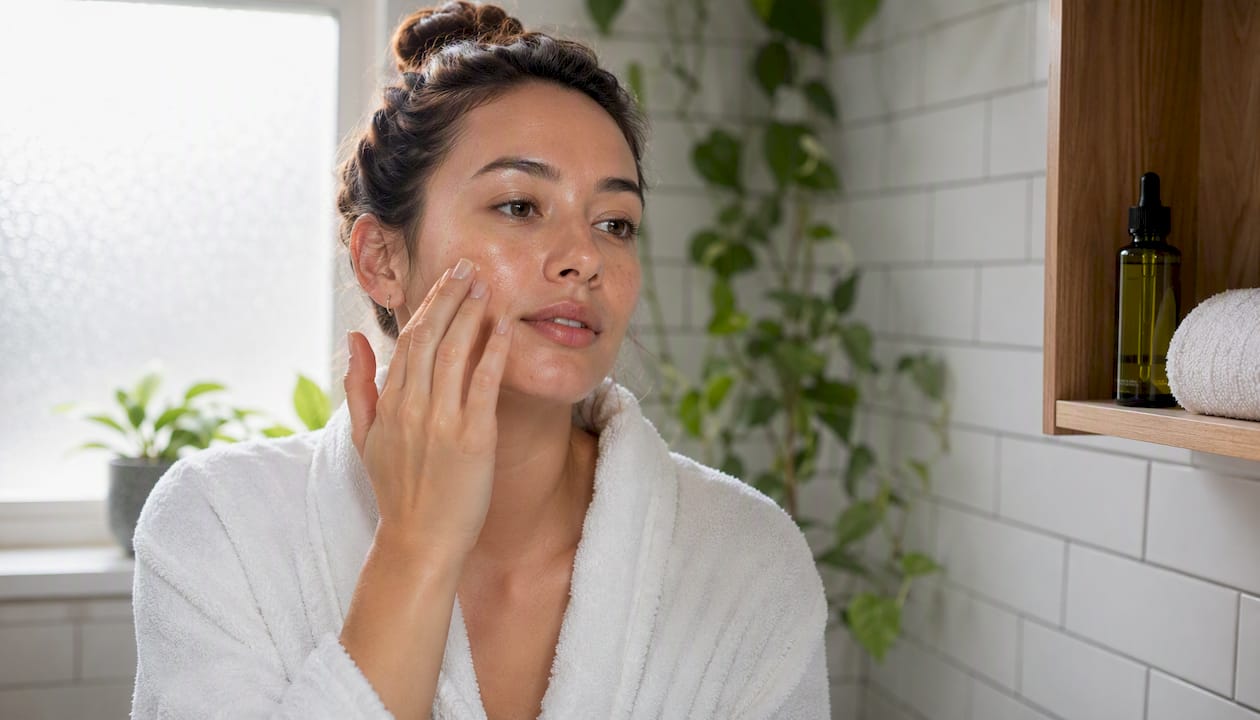
One expectation worth setting early: topical vitamin C is more preventive than corrective. It slows future oxidative damage and modestly improves existing signs of aging with continuous use. It will not erase deep wrinkles in a month.
The NIH Office of Dietary Supplements makes a point worth repeating: topical delivery targets local skin effects that oral vitamin C simply cannot replicate at the same tissue level. Taking a supplement and applying a serum are not interchangeable.
Benefits backed by clinical and review-level evidence:
Antioxidant protection against UV and pollution-induced free radicals
Collagen synthesis support via enzyme cofactor activity
Reduction of hyperpigmentation through tyrosinase inhibition
Modest improvement in skin texture and firmness with sustained use
Photoprotective synergy when layered under SPF, per Harvard Health
What are the different forms of vitamin C in serums?
Not every vitamin C serum uses the same molecule. The form matters for stability, tolerability, and how effectively the ingredient converts to active ascorbic acid in your skin.
L-ascorbic acid (LAA) is the gold standard. It is the biologically active form, requires no conversion, and has the most clinical evidence behind it. The catch: it oxidizes quickly when exposed to air, light, or water, and it needs a low pH (around 3.5) to penetrate skin effectively. That acidity is why some people feel stinging.
Sodium ascorbyl phosphate (SAP) is water-soluble, more stable at neutral pH, and noticeably gentler. It converts to ascorbic acid after absorption. Research suggests it also has some antimicrobial properties, which makes it a reasonable pick for acne-prone skin.
Ascorbyl glucoside is another stable, water-soluble derivative. Conversion to active ascorbic acid is slower than SAP, but it handles heat and light better than LAA.
Tetrahexyldecyl ascorbate (THD) is oil-soluble, which gives it excellent skin penetration and strong stability. It suits dry or mature skin well and causes minimal irritation. A PMC review of vitamin C derivatives confirms that these derivatives generally offer improved tolerability versus LAA, though potency and conversion efficiency vary.
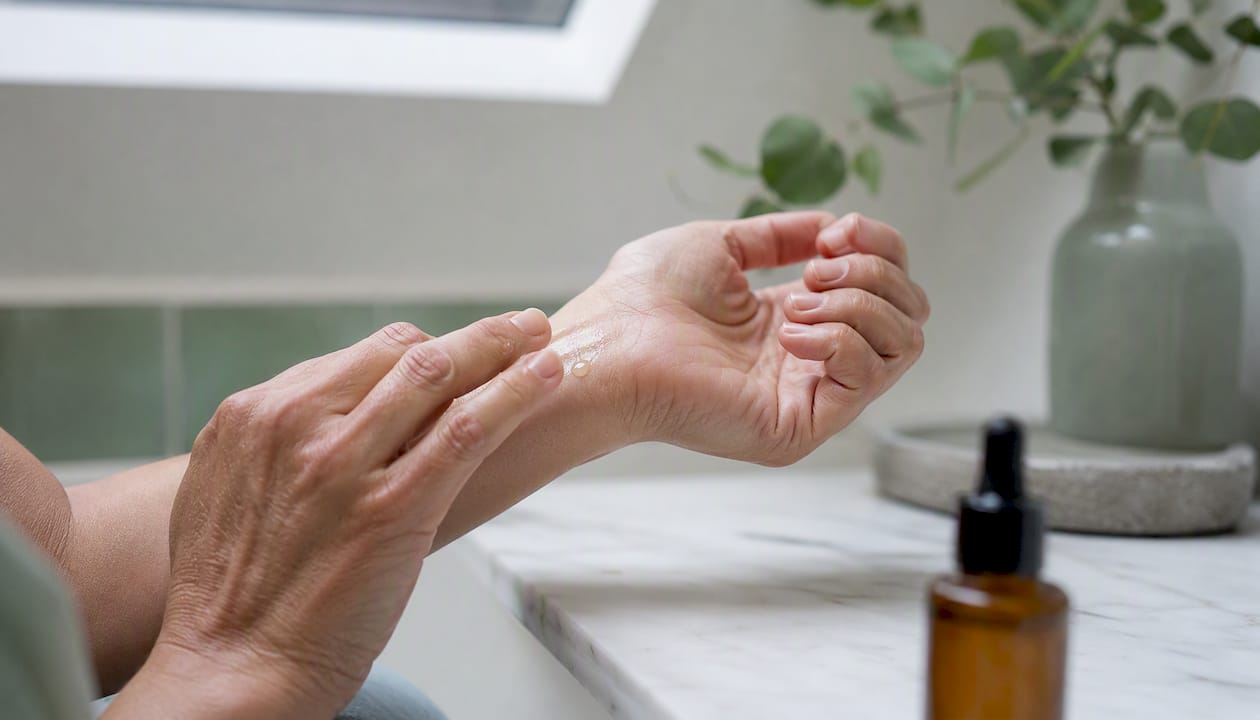
Magnesium ascorbyl phosphate (MAP) is gentle and hydrating, often found in formulas targeting sensitive or redness-prone skin.
Pro Tip: If a serum makes your skin tingle every time, that sensation is not a sign of efficacy. Switch to SAP or THD. You will get real antioxidant and brightening benefits without the barrier stress.
How do you pick the right vitamin C serum for your skin?
The label tells you most of what you need to know, if you know what to look for. Here is a prioritized checklist.
What to look for:
Form and concentration: L-ascorbic acid at 10–20% for normal or oily skin; a derivative (SAP, THD, ascorbyl glucoside) for sensitive or dry skin
Stabilizing co-ingredients: Vitamin E (tocopherol) and ferulic acid are the most studied combination. Formulation research shows this trio can significantly increase photoprotective performance versus vitamin C alone
Packaging: Airless pump or opaque bottle. A clear dropper bottle with L-ascorbic acid is a red flag; light and air degrade it fast. Stability research confirms that packaging is a primary determinant of real-world shelf life
pH disclosure: Not always listed, but a pH of 3.0–3.5 is optimal for LAA absorption. Some brands publish this; it is a mark of transparency
Expiration and lot info: Present on reputable products. Absence is a minor red flag
Brand transparency: Ingredient lists that name the vitamin C form specifically (not just “ascorbic acid complex”) and disclose concentration
Red flags:
A 30% L-ascorbic acid formula with no stabilizers listed
Clear glass or plastic packaging for an LAA serum
A serum that already looks yellow-orange in the bottle before you open it
Vague claims like “vitamin C blend” with no form disclosed
Decision flow by skin type: Sensitive or reactive skin should start with a derivative at a lower percentage. For hyperpigmentation specifically, LAA or ascorbyl glucoside tend to have the strongest evidence. Learning how to identify quality beauty ingredients on a label makes this process faster.
Concentration without stability is just marketing.
What concentration and pH should your vitamin C serum be?
Concentration is where a lot of marketing noise lives. Here is what the evidence actually supports.
Clinical and lab research shows that L-ascorbic acid penetrates skin effectively at concentrations between roughly 5–20%, formulated at a low pH. Tissue saturation is the reason: skin can only absorb so much active vitamin C before the excess sits on the surface and causes sensitivity without adding efficacy.
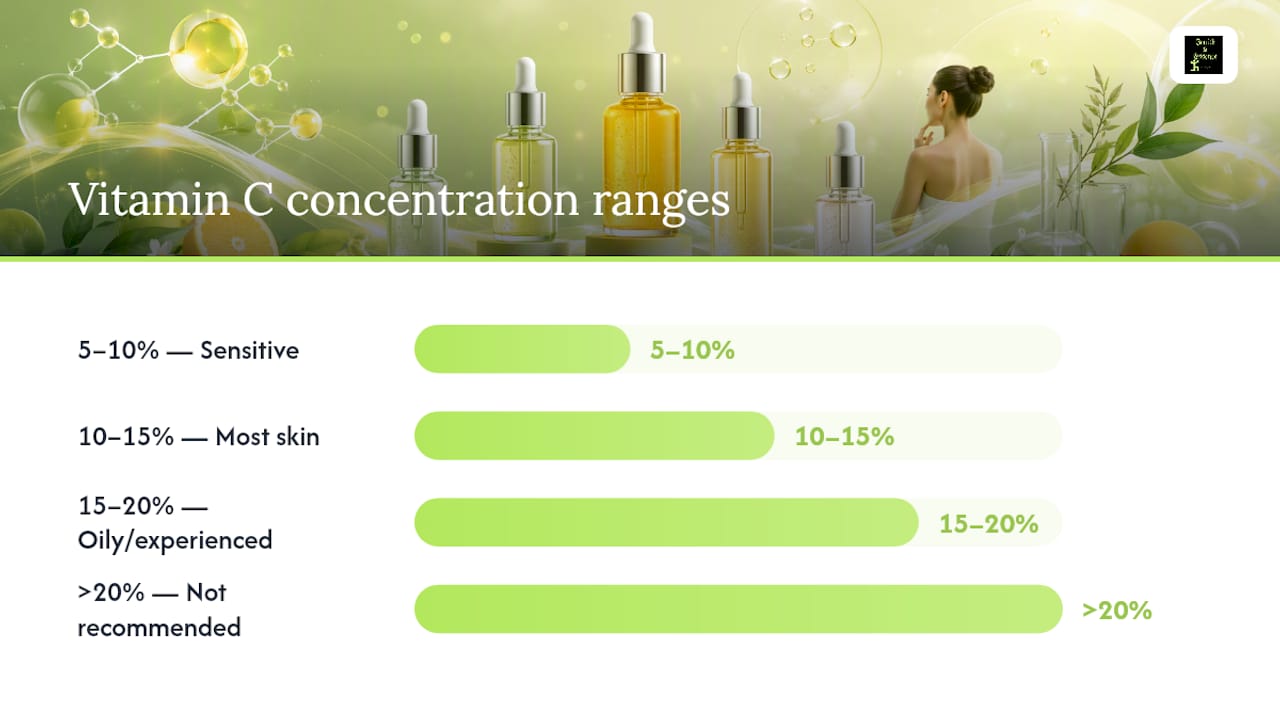
Practical concentration mapping:
Concentration | Skin type fit | Expected benefit | Risk level |
5–10% | Sensitive, first-time users | Antioxidant protection, mild brightening | Low |
10–15% | Normal, combination, most skin types | Brightening, collagen support, photoprotection | Low to moderate |
15–20% | Oily, experienced users | Stronger brightening, more pronounced collagen effect | Moderate |
>20% | Not recommended for most | Diminishing returns, higher irritation risk | High |
Understanding what concentrated beauty formulas actually mean helps decode those label claims.
pH matters specifically for L-ascorbic acid. At a pH above 4, LAA becomes less stable and absorbs poorly. The sweet spot is pH 3.0–3.5. Derivatives are less pH-dependent, which is part of why they cause less stinging.
Building frequency before increasing concentration is the fastest way to tolerance without barrier damage.*
How do you apply vitamin C serum step by step?
Application order and timing determine how much of the serum’s benefit your skin actually captures.
Morning routine (recommended)
Cleanse with a gentle, pH-balanced cleanser
Pat skin dry, then wait 30 seconds
Apply 2–4 drops of vitamin C serum to fingertips and press gently into face and neck (do not rub)
Wait 60–90 seconds for the serum to absorb
Apply moisturizer
Finish with a broad-spectrum SPF 30 or higher
Vitamin C in the morning makes sense because its antioxidant activity is most useful when your skin is about to face UV and pollution. Harvard Health confirms that topical vitamin C augments sunscreen protection when applied underneath it. The two work on different mechanisms, so they genuinely add up.
Evening use
Vitamin C at night is fine on most days. Skip it on nights when you are using a strong AHA/BHA exfoliant at full strength, since stacking two low-pH actives can over-acidify the skin surface and cause irritation.
Layering rules
Retinol: Use vitamin C in the morning and retinol at night. They are both effective actives, but combining them in the same application can cause irritation and reduce stability of both
Niacinamide: The old advice to never mix these has largely been debunked. At typical serum concentrations, the reaction that produces niacin flush is negligible. You can layer them, though applying separately (vitamin C first, niacinamide second) keeps pH conditions cleaner
AHAs/BHAs: Space them out. Vitamin C in the morning, chemical exfoliants at night
Benzoyl peroxide: Avoid combining directly. Benzoyl peroxide can oxidize vitamin C and render it inactive
For a deeper look at why layering order matters, the sequencing logic applies across your whole routine, not just vitamin C.
Pro Tip: Two to four drops covers the full face and neck. More product does not mean more benefit. Pressing in rather than rubbing reduces friction on the skin barrier and minimizes pilling.
How do you know if your vitamin C serum has oxidized?
An oxidized serum is not just less effective. In some cases it can cause irritation without delivering any of the antioxidant benefit you bought it for.
Signs your serum has turned:
Color has shifted from clear or pale yellow to orange, amber, or brown
A metallic or sour smell that was not there when you opened it
Texture has thickened, become gritty, or separated
Skin feels more irritated than usual after application with no other variable changed
NewBeauty’s clinical guidance identifies color change, off-odors, and texture shifts as the practical signs of oxidation and the clearest reasons to discard a serum. A slightly yellowed serum has begun to degrade but may still have some activity. A brown or orange serum is spent.
Storage checklist:
Keep it away from direct light and heat (a bathroom shelf above a hot shower is one of the worst spots)
A cool, dark drawer or cabinet works well; the refrigerator is optional but does slow degradation
Always close the cap fully after each use
Buy sizes you will finish within 2–3 months of opening, especially for LAA formulas
Airless pump packaging is the most protective format because it minimizes air contact with every use. Opaque bottles are the next best option. A clear dropper bottle is the least protective format for L-ascorbic acid specifically.
Pro Tip: Write the date you opened the serum on the bottom of the bottle. Most LAA serums are best used within 60–90 days of opening, regardless of the printed expiration date.
Is vitamin C serum safe for sensitive skin?
For most people, yes, but the form and concentration you choose make a significant difference.
Patch-test instructions:
Apply a small amount of serum to the inner forearm or behind the ear
Leave it on for 24 hours without washing
Check for redness, itching, swelling, or breakouts
If no reaction, repeat for a second 24-hour period
If still clear, introduce it to your face every other day for the first two weeks
Cleveland Clinic guidance specifically notes that L-ascorbic acid can irritate sensitive skin and recommends starting at lower frequency or switching to a derivative form to reduce barrier damage risk.
If irritation occurs:
Stop use immediately and apply a fragrance-free, barrier-supporting moisturizer
Wait until the skin is fully calm (no redness, no tightness) before reintroducing
When you restart, try a lower concentration or a derivative like SAP or THD
If strong reactions persist, consult a dermatologist before continuing
Mixing cautions:
Do not apply vitamin C and a retinoid in the same session
Avoid pairing with benzoyl peroxide (it oxidizes the vitamin C)
Space strong AHAs and BHAs to a different time of day
How long until you see results? Most people notice a subtle brightening effect within 4–6 weeks of consistent daily use. More visible improvements to hyperpigmentation and skin texture typically take 8–12 weeks. Vitamin C is a long-game ingredient.
What do formulators say about stability versus concentration?
The skincare industry has a concentration obsession, and most formulators will tell you it is misplaced.
A well-stabilized 10–15% L-ascorbic acid formula with vitamin E and ferulic acid consistently outperforms a higher-percentage unstabilized product. Formulation, pH, and packaging determine what your skin actually receives — not the number on the label. Prioritize airless or opaque packaging, confirmed co-antioxidants, and a disclosed pH when choosing a vitamin C serum.
That is the practitioner consensus, and the stability research from the School of Dermatology backs it: formulation, pH, stabilizers, and packaging are the primary determinants of real-world performance. The PMC formulation study also shows that combining L-ascorbic acid with tocopherol and ferulic acid can significantly increase photoprotective performance versus vitamin C alone. For a broader look at how antioxidants work together in skincare, the synergy between vitamin C, vitamin E, and ferulic acid is one of the most studied combinations in topical formulation.
If tingling is a consistent problem, two approaches help without sacrificing efficacy: apply the serum to slightly damp skin (which dilutes the acidity slightly at the surface) or mix one drop into your moisturizer before applying. Neither eliminates the active ingredient’s function; both reduce the pH shock to the skin surface.
Pro Tip: If you want to check how clinical evidence is evaluated in beauty formulations, the role of clinical studies in beauty is worth reading before you take any label claim at face value.
A note on sustainable, consistent vitamin C use
At Essencezenith, the position on vitamin C serums is straightforward: a formula you can use every day without irritation will always outperform a high-percentage product you use twice a week because it stings. Stability, transparent ingredient disclosure, and packaging that actually protects the formula are the criteria that matter. Vitamin C’s role in collagen support is well-established, but only a serum that stays active in the bottle and absorbs properly delivers those benefits.
Consistency over months, not weeks, is what produces visible results. Choose a formula you can commit to.
Essencezenith’s pick for a daily vitamin C serum
Readers who have worked through this guide know what to look for: a stabilized formula, the right concentration for their skin type, protective packaging, and a brand that discloses what is actually in the bottle.

Essencezenith curates vitamin C serums selected for exactly those criteria: stable formulations with co-antioxidants like vitamin E and ferulic acid, opaque or airless packaging, and concentration ranges suited to both first-time users and experienced routines. Every product ships fast, and every purchase is backed by a 30-day satisfaction guarantee on unused items, so you can try a formula without risk.
Stabilized formula: co-antioxidants and protective packaging included
Tolerability-first: options for sensitive skin and derivative-based formulas available
Risk-free trial: 30-day return policy on unused products
Browse the full selection and find the right formula for your skin at Essencezenith.
Sources
FAQ
How do I know which vitamin C serum to use?
Look for stabilizing co-ingredients (vitamin E, ferulic acid) and opaque or airless packaging.
Is 10% or 20% vitamin C serum better?
How much vitamin C serum should I use per day?
Two to four drops is enough to cover the full face and neck. Apply once daily, ideally in the morning before moisturizer and SPF. More product does not increase efficacy and can increase irritation.
What should you not mix with vitamin C serum?
Avoid combining vitamin C directly with benzoyl peroxide (it oxidizes the vitamin C) or applying it in the same session as a retinoid. Space strong AHAs and BHAs to a different time of day. Niacinamide can be layered with vitamin C at typical serum concentrations without significant concern.
Recommended
Comments