
Walmart.com Alternatives: Best Picks for Every Shopper
- Norman Church
- Aug 6
- 13 min read


TL;DR:
Amazon offers broad selection and fast delivery, but product quality varies among third-party sellers.
Target provides curated home and apparel with generous return policies and same-day pickup options.
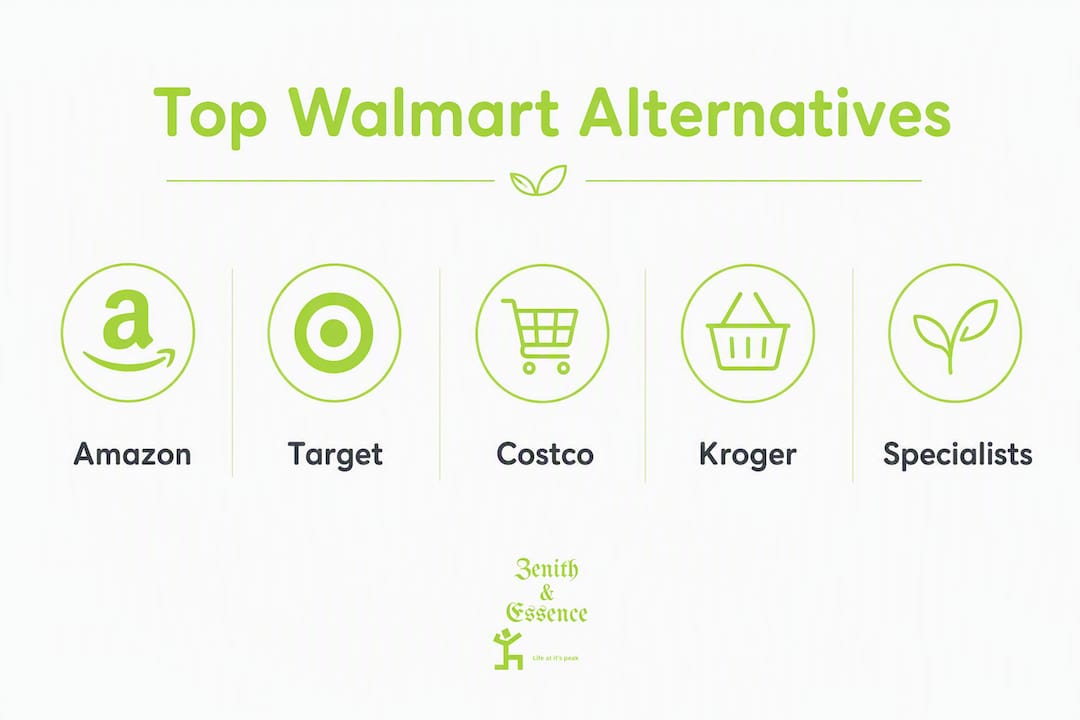
The best Walmart.com alternatives, organized by what you actually buy: Amazon for convenience and speed, Target for curated home and apparel, Costco for bulk value, Kroger or Aldi for groceries, Wayfair for furniture, Home Depot for hardware, Best Buy for electronics, Sephora or Nordstrom for beauty and fashion, Thrive Market for organic staples, eBay or Etsy for unique finds, and Essencezenith for premium sustainable beauty.
No single retailer matches Walmart across every category. The smarter move is matching each purchase to the store built for it, then combining two or three to cover your full basket.
Convenience: Amazon Prime two-day (or same-day) delivery covers most household needs.
Lowest price: Aldi for groceries; Costco for bulk staples.
Groceries: Kroger for full-service; Aldi for no-frills savings.
Home goods: Wayfair for furniture; Home Depot for hardware and seasonal.
Electronics: Best Buy, with in-store expertise and price-match.
Beauty: Sephora for prestige brands; Essencezenith for sustainable, ingredient-focused products.
Curated/sustainable: Thrive Market, Etsy, Essencezenith.
Table of Contents
How do the main Walmart.com alternatives compare at a glance?
Retailer | Best for | Pricing & membership | Shipping & pickup | Product range | Returns & support | Sustainability focus |
Amazon | Convenience, broad selection | Free with Prime membership; pay-per-order otherwise | Two-day to same-day (Prime); standard 5–8 days free | Everything | 30-day returns; online chat support | Moderate (Climate Pledge Friendly filter) |
Target | Curated home, apparel, everyday | No membership required; Target Circle free loyalty | Same-day via Shipt; free 2-day on $35+; Drive Up | Curated private labels + national brands | 90-day returns (RedCard: 120 days) | Growing (Target Zero program) |
Costco | Bulk value, household staples | Membership required; annual fee applies | 2-day delivery on many items; warehouse pickup | Bulk-focused; limited SKUs per category | Generous, no-receipt policy | Some organic/sustainable lines |
Kroger | Full-service groceries | No membership; Kroger Plus free loyalty card | Same-day delivery via Instacart; curbside pickup | Groceries + pharmacy + fuel | Standard grocery return policy | Simple Truth organic line |
Aldi | Lowest grocery prices | No membership | Limited delivery via Instacart; in-store only | Grocery-focused; private label | In-store returns | Sustainable sourcing commitments |
eBay | Used, rare, collectibles | No membership; optional eBay Plus | Varies by seller; some same-day local | Virtually everything, new and used | eBay Money Back Guarantee | Depends on seller |
Wayfair | Furniture, home décor | No membership | Free shipping on most orders $35+; no pickup | Home-focused; massive SKU count | 30-day returns | Some eco-certified products |
Etsy | Handmade, vintage, unique gifts | No membership | Varies by seller; no standard speed | Handmade, vintage, custom | Seller-set policies | Artisan/small-batch by nature |
Home Depot | Hardware, tools, home improvement | No membership; Pro Xtra loyalty free | Same-day/next-day on many items; in-store pickup | Home improvement focused | 90-day returns (180 days for most power tools) | Eco Options product line |
Best Buy | Electronics, appliances | No membership; My Best Buy free loyalty | Same-day Geek Squad delivery in select areas; in-store | Electronics/appliances focused | 15-day standard (30 days for My Best Buy Plus members) | Trade-in and recycling programs |
Sephora | Prestige beauty | No membership; Beauty Insider free loyalty | Free shipping on $35+; same-day in select cities | Beauty and skincare focused | 60-day returns | Clean at Sephora program |
Nordstrom | Premium fashion and beauty | No membership; Nordy Club free loyalty | Free shipping, free returns always | Apparel, shoes, beauty | Free returns, no time limit | Some sustainable brand curation |
Thrive Market | Organic, non-GMO groceries | Membership ~$59.99/yr required | Free shipping on orders $49+; 2–5 days | Organic/natural focused | Satisfaction guarantee | Core mission; certified B Corp |
Essencezenith | Sustainable premium beauty | No membership; free loyalty features | Fast shipping; 30-day satisfaction guarantee | Beauty, wellness, apparel, lifestyle | 30-day returns on unused items | Sustainable ingredients, transparent sourcing |
Standout tradeoffs to know before you switch:
Membership vs. no membership: Costco and Thrive Market require annual fees that only pay off if you shop frequently in their categories. Amazon Prime is worth it if you order more than a few times a month.
Curated vs. mass marketplace: Target and Thrive Market carry fewer SKUs than Walmart but vet what they stock more carefully, which matters most for food, beauty, and home goods.
Amazon’s dominant U.S. e-commerce position means it covers the widest range, but it is not always the cheapest or the most transparent about product sourcing.
Etsy and eBay shift quality control to individual sellers, so return policies vary widely.
Which retailer fits your specific shopping need?
Amazon
Amazon holds the largest share of U.S. e-commerce and covers nearly every product category. Prime membership unlocks two-day and same-day delivery, plus streaming and other perks. Returns are generally easy within 30 days. The tradeoff: pricing on third-party listings varies, and the sheer volume of sellers makes product quality inconsistent without careful review-checking. The Amazon Shopping app is polished and widely rated as one of the best retail apps available.
Target
Target earns its reputation as a premium-curated alternative to big-box discounters through strong private-label brands (Good & Gather for food, Universal Thread for apparel) and exclusive designer collaborations. Free two-day shipping on orders over $35, same-day via Shipt, and Drive Up curbside pickup make it genuinely competitive on fulfillment. The Target Circle app is well-designed and integrates deals, order tracking, and Drive Up in one place. Returns are accepted up to 90 days, or 120 days for RedCard holders.

Costco
Costco requires a membership, but the per-unit pricing on bulk staples, paper goods, and household items is hard to beat. Delivery on many items ships in two days; warehouse pickup is available for members. The product range is intentionally narrow — Costco stocks fewer SKUs per category than Walmart, which speeds up decisions but limits variety. Its return policy is famously generous, requiring no receipt on most items.
Kroger
Kroger is the go-to for full-service grocery shopping, with a pharmacy, fuel rewards, and a broad fresh-produce section. The free Kroger Plus loyalty card unlocks weekly deals and digital coupons. Same-day delivery runs through Instacart, and curbside pickup is available at most locations. Aldi is the sharper choice if price is the only factor, but Kroger wins on selection depth and brand variety.

Aldi
Aldi’s operating model strips out nearly everything that adds cost: limited SKUs, private-label focus, no loyalty program, and a bring-your-own-bag policy. The result is grocery prices that consistently undercut most competitors. Delivery is available through Instacart in many areas, but the in-store experience is where Aldi shines. No mobile app for ordering, but the Aldi Finds weekly specials are worth checking online before you visit.
eBay
eBay covers new, used, refurbished, and collectible goods across virtually every category. No membership is required. Shipping speed depends entirely on the individual seller, ranging from same-day local pickup to two weeks for international listings. The eBay Money Back Guarantee covers most transactions, but the returns process is more variable than with a single retailer. The eBay app handles bidding, buying, and tracking well.
Wayfair
Wayfair is the strongest online alternative to Walmart for furniture, home décor, and seasonal home goods, with a catalog that dwarfs what any physical store can stock. Free shipping on most orders over $35. Returns are accepted within 30 days, though large-item returns can involve repackaging. There is no membership. The Wayfair app includes room visualization tools that help with furniture decisions before you commit.
Etsy
Etsy is the right call for handmade, vintage, or custom items that mass retailers simply do not carry. Pricing and shipping speed vary by seller, and there is no standard return policy across the platform. It is not a Walmart replacement for everyday staples, but for gifts, home décor, and personal-care products from small makers, it fills a gap nothing else does. Payment is handled centrally through Etsy Payments.
Home Depot
Home Depot is the clear winner for hardware, tools, lumber, and home improvement supplies. Same-day and next-day delivery is available on many in-stock items, and in-store pickup is fast. The Pro Xtra loyalty program is free and offers volume pricing for frequent buyers. Returns are accepted within 90 days (180 days for most power tools). The Home Depot app includes a store map feature that saves real time on large shopping trips.
Best Buy
Best Buy is the strongest brick-and-mortar and online destination for electronics and appliances, with the added value of in-store Geek Squad support. Price-match policy covers major competitors. Standard returns run 15 days (30 days for My Best Buy Plus members). Same-day Geek Squad delivery is available in select metro areas. The app is functional for browsing and order tracking, though the in-store experience is where Best Buy genuinely differentiates.
Sephora
Sephora carries prestige and mid-range beauty brands that Walmart does not stock. The free Beauty Insider loyalty program offers points, birthday gifts, and early access to sales. Free shipping kicks in at $35, with same-day delivery available in select cities. Returns are accepted within 60 days. The Sephora app includes a Virtual Artist try-on feature and personalized product recommendations.
Nordstrom
Nordstrom is the premium option for fashion, shoes, and beauty, with a return policy that has no time limit and free shipping and returns on every order. The Nordy Club loyalty program is free. Product range skews toward mid-to-high price points, so it is not a budget alternative, but for quality apparel and beauty, the shopping experience and customer service are consistently strong.
Thrive Market
Thrive Market requires a ~$59.99/year membership, which pays off quickly if you regularly buy organic, non-GMO, or specialty diet products. Free shipping on orders over $49, with delivery in 2–5 days. As a certified B Corp, its sustainability credentials are independently verified. The catalog covers pantry staples, supplements, clean beauty, and household goods, all curated against ingredient and sourcing standards.
Essencezenith
Essencezenith is built specifically for shoppers who want premium beauty and wellness products with transparent, sustainable ingredients. No membership is required. Fast shipping and a 30-day satisfaction guarantee on unused items make it a low-risk first order. The catalog covers beauty, skincare, personal wellness, apparel, and lifestyle products, all curated with ingredient quality as the filter. For shoppers who find mass-market beauty aisles overwhelming, the curated approach at Essencezenith cuts through the noise.
How do you pick the right alternative for your basket?
A short checklist gets you to the right answer faster than comparing every retailer at once.
List your top three purchase categories. Groceries, household supplies, electronics, beauty, and home goods each have a different best-fit retailer. Knowing your primary categories narrows the field immediately.
Decide whether membership value makes sense. Costco pays off for large households buying in bulk. Thrive Market pays off for organic-focused shoppers. Amazon Prime pays off for anyone ordering more than a few times a month. If you shop infrequently, no-membership retailers (Target, Wayfair, Home Depot) are the cleaner choice.
Check delivery and pickup requirements. Need same-day? Amazon Prime, Target Shipt, and Kroger curbside are your options. Fine with two-to-five days? Almost every retailer on this list qualifies.
Test returns before committing to a big purchase. A 90-day return window (Target, Home Depot) gives you real flexibility. A 15-day window (Best Buy standard) does not. Know the policy before the order, not after.
Use a price-comparison tool before checkout. AI shopping tools like Cartlyt scan 40+ retailers, flag suspicious reviews, and track price drops, so you are not manually checking five tabs to find the best deal.
Consider a hybrid approach. Community shopping guides consistently recommend mixing a discount grocer with a curated specialist rather than defaulting to one big-box store for everything.
Pro Tip: Pair Aldi (or Kroger with a loyalty card) for weekly grocery staples with one curated specialist for beauty, home décor, or supplements. This split typically beats Walmart on both price (for groceries) and quality (for specialty categories) without requiring a single large membership fee.
Where to shop when sustainability or local sourcing matters
Sustainability-focused shopping takes more effort than clicking “add to cart” on a mass marketplace, but the options have improved significantly.
Thrive Market is the most accessible entry point: certified B Corp, curated against ingredient standards, and priced competitively for organic goods.
Etsy connects you directly to small-batch makers, which inherently reduces the supply chain between producer and buyer.
Local co-ops and farmers markets (find them via LocalHarvest.org or your city’s market directory) offer the most transparent sourcing, though with no delivery option.
Essencezenith curates beauty and wellness products around sustainable, powerful ingredients, with full ingredient transparency and genuine customer reviews. For shoppers moving away from mass-market beauty, it is a direct upgrade.
Regional grocery chains (such as Sprouts Farmers Market or Natural Grocers) carry organic and local produce with more regional sourcing than national chains.
The honest tradeoff: sustainable options typically cost more and ship less efficiently than Amazon. That gap is narrowing, but it has not closed.
Pro Tip: Before trusting a “sustainable” or “clean” label, check the actual ingredient list and look for third-party certifications (USDA Organic, EWG Verified, certified B Corp). Marketing language is not regulated the way certifications are. Essencezenith’s guide to what sustainable beauty actually means walks through which labels carry real weight and which are mostly packaging.
For sustainable personal-care products specifically, resources like The Monthlies’ eco guide show how to evaluate sourcing and ingredient claims in categories that Walmart’s shelves rarely address well.
What payment methods do these retailers accept?
Most major alternatives accept the same core payment methods: Visa, Mastercard, American Express, Discover, PayPal, and Apple Pay or Google Pay. A few distinctions worth knowing:
Amazon accepts all major credit and debit cards, Amazon Pay, PayPal (on select purchases), EBT/SNAP for eligible grocery items, and Amazon gift cards. Buy Now Pay Later is available through Affirm at checkout.
Target accepts all major cards, Target RedCard (debit and credit, with 5% discount), PayPal, Apple Pay, Google Pay, and Klarna for installment payments.
Costco accepts Visa cards only (in-warehouse and online), plus Costco Cash Cards, debit, and EBT for eligible items. Mastercard, Amex, and Discover are not accepted in-warehouse.
Kroger accepts major cards, EBT/SNAP, contactless payments (Apple Pay, Google Pay), and Kroger Pay through its app.
Wayfair accepts major cards, PayPal, Affirm, and Wayfair credit cards with financing options on larger purchases.
Etsy processes payments through Etsy Payments, which covers major cards, PayPal, Apple Pay, Google Pay, and Klarna.
Home Depot accepts major cards, PayPal, Apple Pay, Google Pay, and its own Project Loan financing for large home improvement purchases.
Essencezenith accepts major credit and debit cards, PayPal, and Apple Pay, with a straightforward checkout designed for fast, secure transactions.
What do customer reviews say about these alternatives?
Customer satisfaction across these retailers follows a clear pattern: the more specialized the retailer, the higher the satisfaction scores tend to be for their core category.
Amazon scores well on delivery speed and selection but draws consistent complaints about counterfeit products on third-party listings and inconsistent seller quality. Review manipulation is a documented issue, which is one reason tools like Cartlyt that flag suspicious reviews are worth using.
Target consistently earns high marks for in-store experience, Drive Up convenience, and private-label product quality. Customer service complaints tend to center on online order accuracy.
Costco has one of the most loyal customer bases in retail, driven largely by its return policy and the perception of value. Members rarely leave, and satisfaction surveys regularly place it among the top warehouse retailers.
Wayfair receives mixed reviews on furniture quality relative to price, with delivery damage being the most common complaint. Customer service response times have improved, but large-item returns remain a friction point.
Thrive Market earns strong reviews from its core audience of organic and specialty-diet shoppers, with the membership fee being the main barrier for casual buyers.
Essencezenith customers highlight ingredient transparency, fast shipping, and the 30-day satisfaction guarantee as the primary reasons for repeat purchases. The curated catalog means fewer choices, but shoppers report higher confidence in what they are actually buying, which is a consistent gap in mass-market beauty retail.
Key Takeaways
The most effective strategy for replacing Walmart.com is matching each purchase category to the retailer built for it, then combining two or three stores rather than searching for a single substitute.
Point | Details |
Match retailer to category | Aldi or Kroger for groceries, Wayfair for furniture, Best Buy for electronics, Essencezenith for sustainable beauty. |
Membership math matters | Costco, Amazon Prime, and Thrive Market memberships only pay off with regular use in their core categories. |
Hybrid shopping beats one-stop | Pairing a discount grocer with a curated specialist typically outperforms a single big-box store on both price and quality. |
Verify sustainability claims | Look for certified B Corp, USDA Organic, or EWG Verified labels rather than relying on marketing language alone. |
Essencezenith for beauty | Essencezenith offers sustainable, ingredient-transparent beauty with fast shipping and a 30-day satisfaction guarantee, no membership required. |
Why the “one store for everything” model is worth questioning
The appeal of Walmart is obvious: one login, one cart, one checkout. But that convenience comes with real costs that are easy to overlook. Mass marketplaces optimize for volume, not curation. The beauty aisle at a general retailer carries hundreds of products, but almost none of them come with meaningful ingredient transparency or sourcing accountability.
The retailers that consistently earn the highest satisfaction scores are the ones that made a deliberate choice to do fewer things better. Costco stocks a fraction of Walmart’s SKUs and has one of the most loyal customer bases in retail. Thrive Market carries a curated organic selection and built an entire membership model around it. Essencezenith focuses on beauty and wellness products with sustainable ingredients and backs every order with a 30-day guarantee, which is a level of confidence you rarely see from a general marketplace.
The hybrid approach is not just a workaround. It is a better system. Shoppers who split their basket between a low-cost grocer and a curated specialist for beauty, home, or wellness consistently report better outcomes on both price and product quality than those who default to one big-box option. The ethical beauty shopping guide at Essencezenith makes a strong case for why this matters most in the beauty category, where ingredient quality has direct effects on your skin.
Essencezenith: a sharper choice for sustainable beauty
If beauty, skincare, or personal wellness is part of your Walmart basket, Essencezenith is worth a direct look. Mass-market beauty aisles trade on volume and brand recognition; Essencezenith trades on ingredient quality, transparent sourcing, and products that are built to enhance rather than just cover.

Every product in the Essencezenith catalog is curated against sustainability and efficacy standards, backed by genuine customer reviews, and shipped fast. Three things that matter when you are making a switch:
Sustainable ingredients: every product is selected for what is actually in it, not just the label on the front.
Fast shipping: orders arrive quickly, with no membership fee required.
30-day satisfaction guarantee: return any unused item within 30 days, no questions asked.
For shoppers exploring clean beauty alternatives or moving away from generic retail beauty, Essencezenith is a direct upgrade. Visit essencezenith.com to browse the full catalog and place your first order.
FAQ
What are some websites similar to Walmart?
Amazon, Target, Costco, and Kroger are the closest general alternatives to Walmart.com, covering convenience, bulk value, and groceries respectively. For specialty categories, Wayfair (home), Best Buy (electronics), and Essencezenith (sustainable beauty) each outperform Walmart in their core area.
Who is Walmart’s biggest competitor?
Amazon is Walmart’s largest online competitor by U.S. e-commerce market share, while Target is frequently cited as the strongest brick-and-mortar alternative for curated everyday shopping.
Who are Walmart’s top competitors overall?
Walmart’s primary competitors include Amazon, Target, Costco, Kroger, Aldi, Home Depot, Best Buy, and eBay, each stronger than Walmart in at least one major product category or shopping use case.
What is the premium version of Walmart?
Target is the most direct premium-curated alternative to Walmart for everyday goods, while Nordstrom fills that role for fashion and beauty. For sustainable beauty specifically, Essencezenith offers a curated, ingredient-transparent catalog with a 30-day satisfaction guarantee that mass-market retailers do not match.
Recommended
Comments