
What Does Essence Do in Skincare: 2026 Guide
- Norman Church
- Jun 15
- 7 min read

TL;DR:
Essence is a lightweight, concentrated liquid that deeply hydrates the skin with humectants like glycerin and hyaluronic acid. It prepares the skin for better absorption of serums and moisturizers by increasing water content in the outermost layer. Proper use involves applying on damp skin and sealing with moisturizer to lock in hydration effectively.
Essence in skincare is a lightweight, concentrated liquid formulated with active humectants to deeply hydrate skin and prepare it for better absorption of serums and moisturizers. Understanding what does essence do in skincare matters because it sits at the intersection of hydration science and routine efficiency. Products built around glycerin and hyaluronic acid deliver water directly to the stratum corneum, the outermost skin layer, before heavier products seal it in. Essences are not toners, and they are not serums. They occupy a specific, purposeful position in a layered routine.
How does essence hydrate skin and support the skin barrier?
The primary function of essence is to deliver a concentrated dose of water-binding ingredients that plump skin, reduce the appearance of fine lines, and improve overall smoothness. This is not a passive process. Humectants like glycerin and hyaluronic acid are hygroscopic, meaning they actively attract water molecules from the environment and from deeper skin layers and bind them to the surface.
How humectants work on the stratum corneum
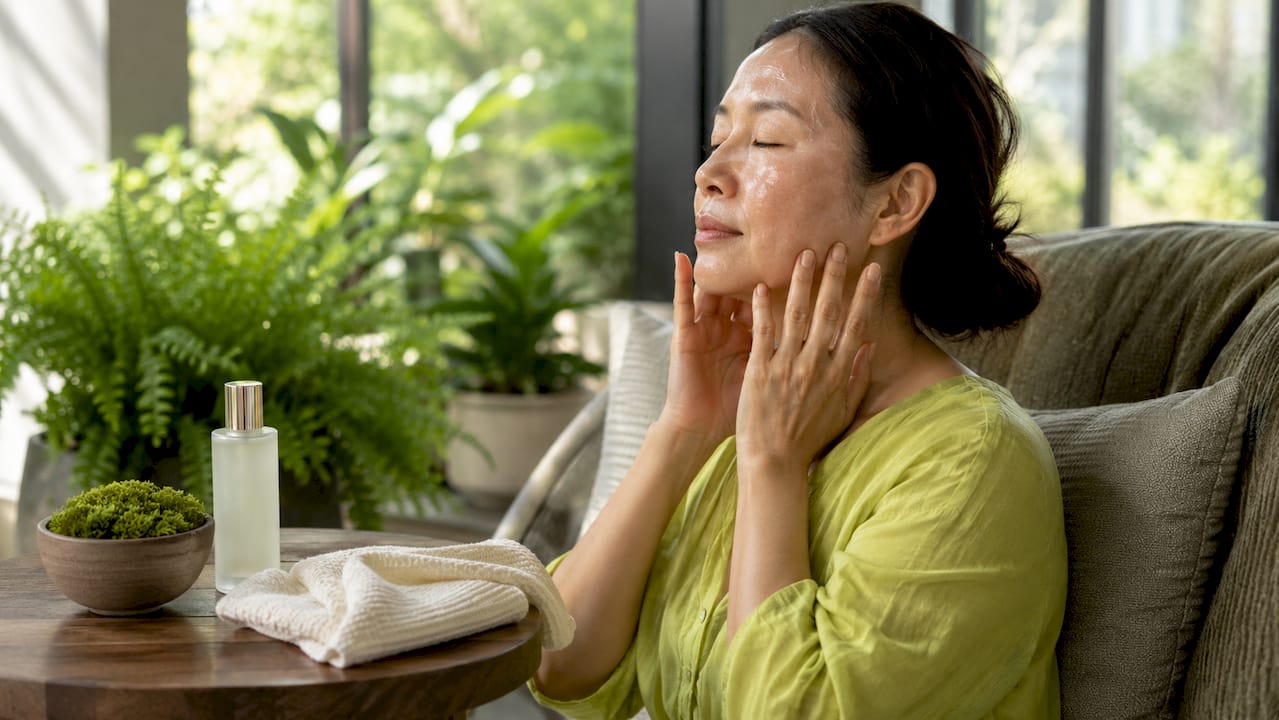
Glycerin and hyaluronic acid increase water content in the stratum corneum, the outermost layer of skin responsible for barrier function. Higher water content in this layer translates directly to softer texture, reduced tightness, and a more supple appearance. Skin that feels tight or papery after cleansing is almost always experiencing water loss at this layer.
Essence is especially effective for skin that feels dehydrated but not necessarily oily. Dehydrated skin shows symptoms like tightness, dullness, and flakiness caused by water loss and barrier stress. An essence applied at the right moment in a routine addresses this directly by flooding the stratum corneum with water-binding molecules before any occlusive layer traps them in.
The key benefits of using essence for skin barrier support include:
Increased hydration depth: Smaller molecules in essence penetrate more readily than thicker creams.
Improved skin comfort: Reduced tightness and dullness after consistent use.
Better product absorption: A hydrated surface accepts serums and moisturizers more effectively.
Barrier reinforcement: Many essences include fermented ingredients or ceramide precursors that support the skin barrier alongside humectants.
Pro Tip: Apply your essence while your skin is still slightly damp from cleansing or toning. Damp skin absorbs humectants faster and more evenly, giving you a stronger hydration result from the same product.
Essence vs. toner vs. serum: what are the differences?
These three products confuse even experienced skincare users. The distinctions matter because layering them incorrectly wastes product and can underdeliver results.
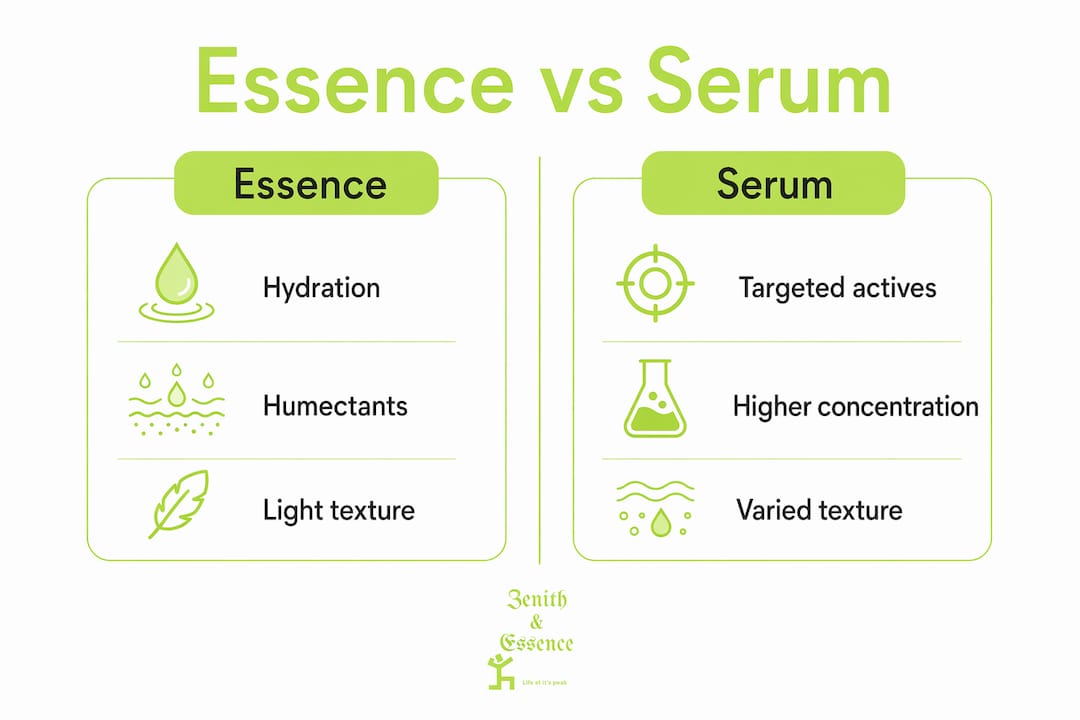
A toner is formulated primarily to rebalance skin pH after cleansing and to sweep away residual impurities. Most toners are water-based but contain minimal active concentrations. A serum is the opposite: high concentration, targeted actives like retinol, vitamin C, or niacinamide, designed to treat specific concerns. Essence sits between them. Essence molecules are smaller than toners, allowing deeper absorption and more effective hydration without the heavy texture of a serum.
Product | Primary Function | Texture | Active Concentration | When to Apply |
Toner | pH balance, light cleanse | Watery | Low | After cleansing |
Essence | Deep hydration, prep | Lightweight liquid | Moderate (humectants) | After toner |
Serum | Targeted treatment | Varies (thin to gel) | High | After essence |
The most common misconception is that essence and toner are interchangeable. They are not. Essence is designed to rehydrate and rebalance skin after cleansing and toning, improving texture and preparing skin for enhanced absorption of what comes next. A toner does not do this at the same depth. A serum does not do this at the same speed.
Pro Tip: If you use an active serum with retinol or acids, applying essence first creates a hydrated buffer that can reduce irritation from those actives. This is especially useful for sensitive skin types.
Essences often include fermented ingredients, a technique refined in Korean skincare, that deliver additional barrier-supporting compounds alongside standard humectants. This makes them more complex than toners while remaining lighter than serums.
Who needs an essence and when is it optional?
Essence is optional, not universally necessary. If your current routine already includes a hydrating toner and a moisturizer with strong humectant content, adding an essence may produce minimal additional benefit. The purpose of essence in skincare is to fill a hydration gap, and if no gap exists, the step is redundant.
Essence delivers the most value in these situations:
Dehydrated skin: If your skin feels tight, looks dull, or shows fine lines that disappear when you press the skin, you are likely dehydrated. Essence addresses this directly.
Complex layering routines: If you use multiple actives like acids, retinoids, or vitamin C, essence creates a hydrated base that improves tolerance and absorption.
Dry climates or heated indoor environments: Low humidity accelerates water loss from the skin surface. Essence adds a hydration layer that partially compensates for this.
Mature skin: Skin produces less natural moisturizing factor with age. Essence supplements this decline efficiently.
You can skip essence without compromising your routine if you use a hydrating toner with glycerin or hyaluronic acid, follow with a moisturizer that contains emollients, and your skin does not feel tight or dehydrated. Skincare is a system, not a checklist. Adding products for the sake of adding them creates complexity without proportional benefit. You can explore affordable skincare layering strategies to find what your skin actually needs.
How to use essence effectively in your skincare routine
Correct application matters as much as product selection. Essence applied incorrectly delivers a fraction of its potential benefit.
Cleanse thoroughly. Start with a clean face. Residual sunscreen, makeup, or pollutants block absorption and reduce how much essence actually reaches the stratum corneum.
Apply toner first if you use one. Toner rebalances pH and preps the surface. Essence applied on top of a balanced pH absorbs more effectively.
Apply essence while skin is still damp. Applying essence on damp skin aids absorption and strengthens its hydration role. Press or pat it in with your palms rather than rubbing. Rubbing creates friction that disrupts the thin liquid layer before it absorbs.
Follow immediately with serum if you use one. Do not let essence fully dry before applying your serum. The hydrated surface improves how well the serum spreads and absorbs.
Seal with moisturizer. This step is non-negotiable. Humectants like glycerin bring water to the surface but require emollients or occlusives in follow-up steps to prevent that moisture from evaporating. A ceramide night cream or a moisturizing day cream applied after essence locks in the hydration you just delivered.
Finish with SPF in the morning. Sunscreen is the final step in a daytime routine and protects the hydrated, prepped skin from UV damage.
A critical pitfall to avoid: applying multiple watery humectant layers without lipid support in dry climates can cause a “wet then tight” sensation. Humectants pull water but need an occlusive or emollient layer to hold it. Skipping moisturizer after essence in a dry environment can leave skin feeling tighter than before you started.
Pro Tip: In winter or low-humidity environments, layer a few drops of a facial oil over your moisturizer after essence. The oil acts as an occlusive seal that prevents the water essence delivered from evaporating throughout the day.
Key takeaways
Essence is a targeted hydration step that works only when followed by an emollient or moisturizer to lock in the water it delivers.
Point | Details |
Core function | Essence delivers humectants like glycerin and hyaluronic acid to deeply hydrate the stratum corneum. |
Layering position | Apply after toner and before serum, on damp skin, for maximum absorption. |
Seal with moisturizer | Humectants alone evaporate without an emollient follow-up, making moisturizer non-negotiable. |
Not universally required | Skip essence if your toner and moisturizer already provide sufficient hydration for your skin type. |
Best for dehydrated skin | Essence delivers the most visible benefit when skin feels tight, dull, or shows surface dehydration. |
Why i think most people misuse essence
Most skincare content treats essence like a luxury add-on. That framing misses the point entirely. Essence is a delivery mechanism. Its job is to get water-binding molecules into the stratum corneum before heavier products create a barrier that slows absorption. When you use it correctly, everything that follows works better.
What I have found after years of studying skincare formulations is that the moisturizer you apply after essence matters more than the essence itself. Hydration benefits from essence come from combining humectants that attract water and emollients that seal it in. If you use a great essence and follow it with a thin, water-based moisturizer in a dry climate, you will likely feel tighter an hour later. The essence did its job. The moisturizer did not finish it.
The other mistake I see constantly is people buying expensive essences with long ingredient lists and ignoring the basics. Glycerin is one of the most effective humectants in skincare and it costs almost nothing. A well-formulated essence with glycerin, hyaluronic acid, and a few barrier-supporting ingredients will outperform a complicated formula used incorrectly. You can read more about what you really know about skincare to pressure-test your routine assumptions.
My honest recommendation: if your skin feels tight after cleansing, add an essence. If it does not, spend that money on a better moisturizer instead.
— Norman
Build your essence routine with Essencezenith
Essence sets the stage. What you layer on top determines how long that hydration lasts.
Essencezenith curates hydrating products designed to work in exactly this sequence. The Hydrating Facial Serum from Essencezenith is formulated to absorb into the hydrated base that essence creates, delivering actives more effectively than applying it to dry skin. Pair it with a niacinamide gel moisturizer with ceramides to seal in the hydration your essence delivered. Every product at Essencezenith comes with a 30-day satisfaction guarantee, so you can build your routine with confidence. Browse the full Essencezenith collection and find the products that complete your layering system.
FAQ
What does essence do in skincare?
Essence is a lightweight liquid that delivers humectants like glycerin and hyaluronic acid to the stratum corneum, boosting hydration and preparing skin to absorb serums and moisturizers more effectively.
Is essence the same as toner?
No. Toner primarily rebalances skin pH after cleansing, while essence focuses on deep hydration. Essence molecules are smaller than toner molecules, allowing deeper absorption and more concentrated moisture delivery.
Do i need essence if i already use a serum?
Not necessarily. If your serum contains strong humectants and your moisturizer provides emollient support, essence may be redundant. Essence adds the most value when skin feels dehydrated or tight before serum application.
Can essence cause skin to feel tighter?
Yes, if used without a follow-up moisturizer. Humectants attract water but can pull moisture from deeper skin layers and allow it to evaporate without an occlusive or emollient layer to seal it in, especially in dry climates.
What ingredients should i look for in an essence?
Look for glycerin, hyaluronic acid, fermented extracts, or ceramide precursors. These ingredients hydrate, support the skin barrier, and improve how subsequent products absorb into the skin.
Recommended
Comments