
Why Drugstore Products Underperform: The Real Reasons
- Norman Church
- 9 hours ago
- 15 min read

TL;DR:
Drugstore beauty products often underperform due to conservative formulations, cost-driven manufacturing, and storage conditions.
While OTC actives like benzoyl peroxide and sunscreen SPF can work effectively at labeled doses, many products contain lower active concentrations than claimed.
Drugstore beauty products often underperform not because they are poorly made, but because conservative formulations, cost-driven manufacturing decisions, retail storage conditions, and influencer-fueled expectations all work against them at once. The gap between what the label implies and what the formula delivers is real, and it is structural.
Three forces drive most of the disappointment:
Formulation conservatism: Active ingredients like retinol, vitamin C, and benzoyl peroxide are kept at low concentrations to stay safe across millions of users with no professional guidance.
Cost and supply chain pressure: Thin retail margins push brands toward cheaper raw materials, shared contract manufacturers, and faster product cycles that leave little room for deep R&D.
Expectation inflation: Influencer before-and-afters and clinical-sounding packaging set a performance bar that many mass-market formulas were never designed to clear.
The sections below break down each cause in detail, show where the research supports or complicates the picture, and give you practical steps to get better results from budget buys.
Table of Contents
Why drugstore products underperform: formulation limits explained
How brand economics and manufacturing consolidation shape what’s inside the bottle
Packaging and user experience problems that feel like formula failures
How retail distribution and shelf conditions degrade what you actually buy
How marketing and influencer culture widen the expectation gap
Practical tips to get better results from drugstore products
What the research actually says about drugstore product efficacy
What “underperform” actually means for drugstore beauty
Underperformance is not one thing. It shows up differently depending on the product category and what you were expecting.
The most common complaints fall into a few patterns:
Weak or absent efficacy: An acne treatment that does not reduce breakouts, a vitamin C serum that never brightens, a retinol that produces no visible texture change after months of use.
Inconsistent results across batches: A foundation that matched perfectly last time but pulls orange from a new bottle, or a moisturizer that used to feel rich but now feels thin.
Poor wear time and payoff: Eyeshadow that fades within two hours, a lip color that transfers immediately, a concealer that creases before noon.
Unexpected irritation: A product that worked fine for six months suddenly causes redness or breakouts after a reformulation.
Consumer expectations have shifted sharply in the last decade. Influencer content routinely shows dramatic skin transformations attributed to a single product, and marketing copy borrows clinical language (“clinically proven,” “dermatologist tested”) without always disclosing what that testing actually measured. The result is a perception gap: shoppers expect corrective results from products that were formulated to maintain, not treat.
Underperformance is most noticeable in topical actives (acne treatments, vitamin C serums, retinoids), long-wear color cosmetics, and skincare products making anti-aging claims. It is least noticeable in basic cleansers, simple moisturizers, and gentle physical exfoliants, where formulation overlap with higher-priced products is genuinely common.
Why drugstore products underperform: formulation limits explained
The single biggest technical reason budget beauty products feel less effective is ingredient concentration and formulation. Mass-market formulas are deliberately conservative because they must be safe for every skin type, age group, and sensitivity level without any professional guidance. That safety-first design directly caps potency.

Dose-dependent actives are where this matters most. Retinol, benzoyl peroxide, salicylic acid, and vitamin C all follow a concentration-response curve: below a threshold, results are minimal. A drugstore retinol at 0.025% and a prescription tretinoin at 0.05% are not interchangeable, even though both appear on an INCI list as “retinol” or “tretinoin.” Skincare regulations do not require brands to disclose exact concentrations, so a product can legally feature an active on its front label at a level too low to create meaningful change.
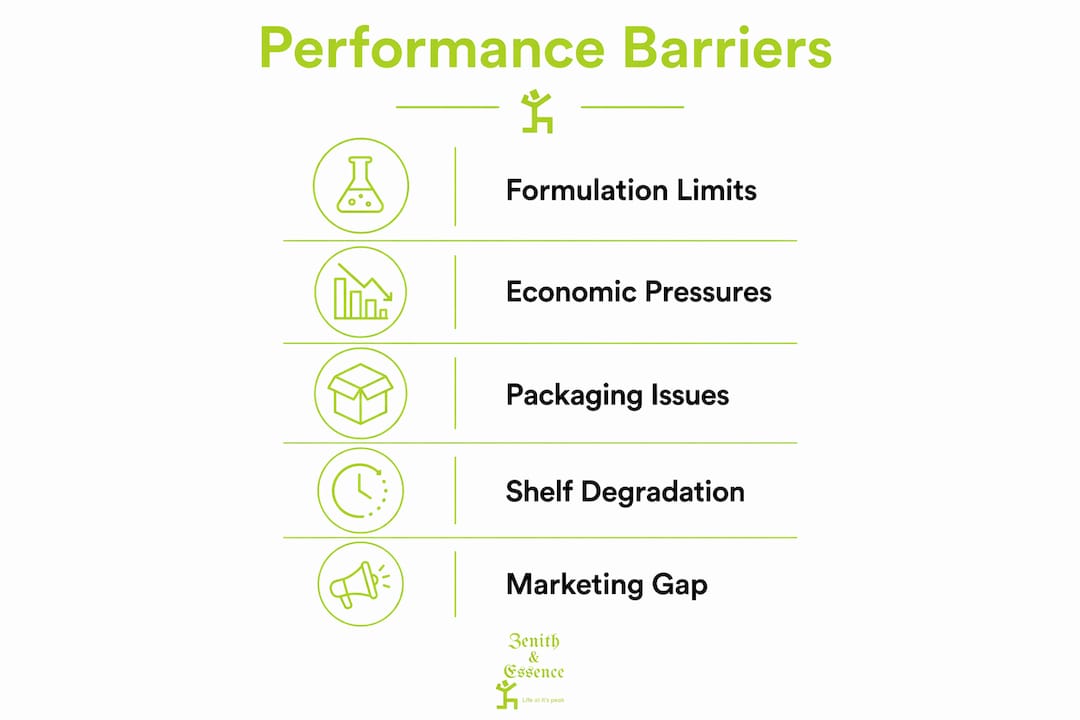
Preservation and pH stability add another layer of constraint. Vitamin C (L-ascorbic acid) is most effective at a pH below 3.5, but that acidity can irritate sensitive skin and degrade packaging. Mass-market brands often buffer the pH higher or use a more stable but less potent vitamin C derivative, which extends shelf life and reduces complaints but also reduces efficacy. Similarly, preservative systems must be compatible with every other ingredient in the formula, which sometimes forces formulators to drop or reduce actives that cause compatibility issues.
Fragrance is a related tradeoff. High on the INCI list, fragrance can mask the smell of active ingredients and improve the sensory experience, but it also occupies formula space and can cause sensitization that gets attributed to the active ingredient.
Pro Tip: To gauge likely potency, check the INCI list. Ingredients are listed in descending order of concentration. If a marketed active (say, niacinamide or retinol) appears after fragrance or near the bottom of a long list, it is almost certainly present at a low concentration — likely below the threshold for visible results.
How brand economics and manufacturing consolidation shape what’s inside the bottle
Retail margins for mass-market beauty are thin. A drugstore brand selling a serum for $14 faces retailer margins, distribution costs, packaging, and marketing before a dollar reaches R&D. That math pushes brands toward cheaper raw materials, simpler formulas, and faster product cycles.
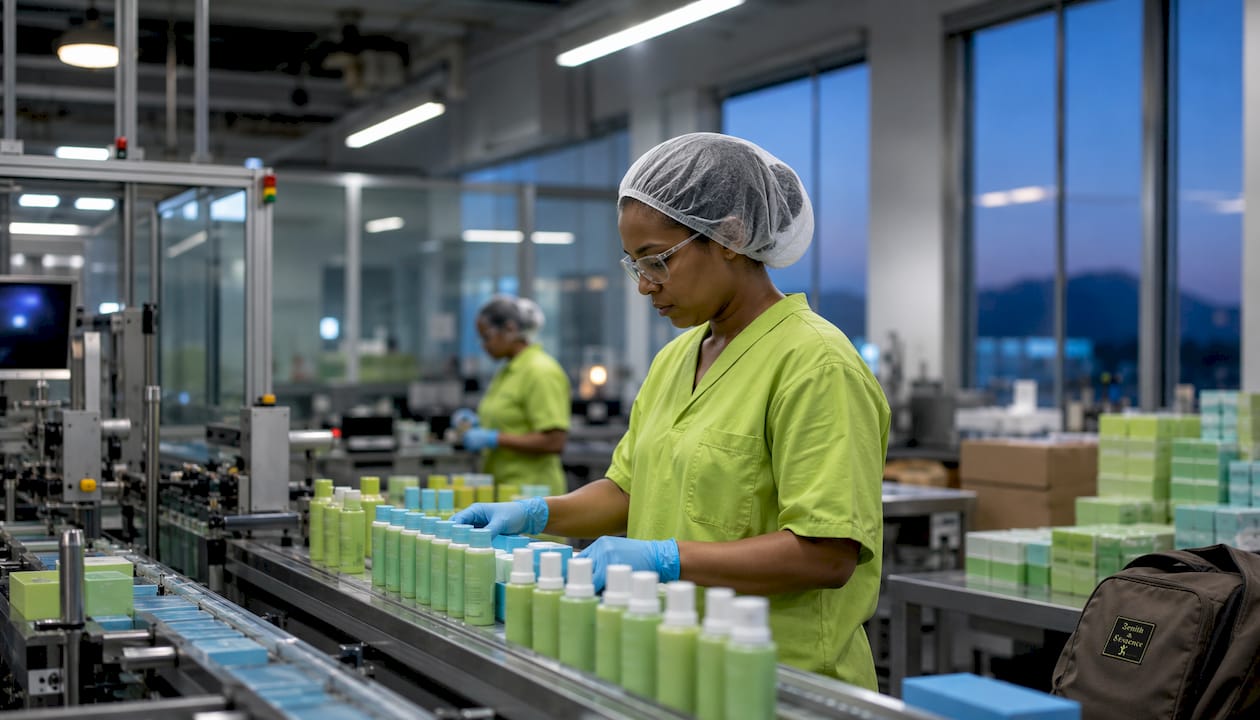
Contract manufacturing is the norm, not the exception. Many brands across very different price points share the same factories and sometimes nearly identical base formulas. The differentiation lives in the packaging, the marketing, and occasionally a proprietary concentration of one ingredient. This is not fraud; it is how the economics of scale work. But it does mean that a “new” drugstore launch may be a reformulated version of an existing contract formula with a new label.
SKU churn makes deep formulation work financially risky. An analysis of 83,719 CPG SKUs across 31 U.S. categories found that roughly 25% of new products disappear from shelves within one year, rising to about 40% after two years. When a product has a high probability of being discontinued within 24 months, investing in multi-year iterative formulation refinement does not pencil out.
By the numbers: ~40% of new CPG SKUs are gone within two years of launch — a failure rate that discourages the kind of long-term R&D that produces genuinely differentiated formulas.
Ingredient substitution is a quieter problem. Contract manufacturers may swap ingredient sources under cost pressure, using materials with the same INCI name but different molecular properties or purity levels. The label stays identical; the performance does not. This is one of the primary causes of batch-to-batch variability that consumers notice as a product “changing” without any announced reformulation.
Packaging and user experience problems that feel like formula failures
A formula can be sound and still underperform because of how it is packaged and dispensed. This is an underappreciated source of cheap cosmetics performance issues.
Open jars expose cream and serum formulas to air and light with every use, accelerating oxidation of actives like vitamin C and retinol. A product that tested well in a sealed container can degrade noticeably within weeks of opening.
Squeeze tubes vs. pumps: Pumps deliver a consistent dose and limit air exposure. Squeeze tubes are cheaper to produce but allow more air ingress and make dose control harder, which affects both efficacy and the risk of over-application.
Opaque vs. clear packaging: UV-sensitive actives (vitamin C, certain peptides) degrade faster in clear bottles. Mass-market brands sometimes choose clear packaging for shelf appeal over stability.
Applicator design: A mascara wand that deposits too little product, a foundation brush that sheers out coverage, or a roller-ball eye cream that barely dispenses — these are user-experience failures that register as product failures.
Testing budgets also differ. Mass-market brands run fewer consumer-use studies and shorter in-market pilots before launch. A higher-end brand might run a 12-week in-use study with 60 participants; a drugstore brand might rely on a shorter internal panel. Neither is inherently dishonest, but the data behind the claims is not equivalent.
Shade range is another real tradeoff. Formulating a foundation across 40 shades costs more than formulating across 12, and each shade requires its own stability and compatibility testing. Narrower shade ranges mean more consumers are using a formula that does not quite match their skin tone, which reads as poor coverage or oxidation when it is actually a color-match problem.
How retail distribution and shelf conditions degrade what you actually buy
The product that leaves the factory is not always the product that reaches your bathroom. Distribution and retail storage introduce real degradation, especially for actives sensitive to heat, light, and humidity.
Warehouse dwell time: Products can sit in non-climate-controlled distribution centers for weeks or months before reaching store shelves. Heat accelerates oxidation and hydrolysis of actives; a vitamin C serum that was potent when manufactured may have lost a significant portion of its active concentration by the time it is purchased.
Store shelving conditions: Fluorescent lighting, temperature fluctuations near doors or windows, and high-traffic handling all affect stability. Active-ingredient degradation accelerates with heat, light, and humidity — conditions that are hard to control across thousands of retail locations.
Discount and clearance channels: Products sold at deep-discount retailers frequently come from overstock or clearance inventory. These items may have spent extended periods in poor storage before reaching the shelf, compounding the degradation problem.
Dollar-store acne treatments: A large majority of acne products tested at dollar stores contained lower active ingredient concentrations than their labels claimed. That is not just a storage issue; it reflects labeling and quality-control gaps specific to deeply discounted channels.
Understanding beauty product shelf life is one of the most practical things a shopper can do. Lot codes and period-after-opening symbols are on almost every product; most shoppers never check them.
Assortment planning adds a formulary constraint too. A drugstore chain allocates limited shelf space per category, which means brands must formulate for the broadest possible audience to justify a single SKU. A moisturizer that works adequately for oily, dry, and combination skin is a better commercial bet than one optimized for one type, even if the optimized version would work better for the person who needs it.
How marketing and influencer culture widen the expectation gap
Modern beauty marketing is extraordinarily good at making products sound more potent than they are. That is not unique to drugstore brands, but the gap between promise and delivery tends to be wider at the mass-market end.
Influencer before-and-afters are typically shot under controlled lighting, edited, and represent the best-case outcome for one person’s skin. They set a visual benchmark that a product used by millions of people with different skin types, climates, and routines cannot reliably replicate.
“Proprietary blend” and “miracle technology” are marketing terms that justify premium pricing more than they indicate scientifically unique ingredients. The same base formula can be sold under a clinical-sounding name at three times the price with different packaging.
Celebrity endorsements shift perceived value without changing the formula. A foundation endorsed by a celebrity with a professional makeup artist, studio lighting, and post-production retouching will always look better in the ad than on your bathroom mirror.
Price-performance psychology: Research consistently shows that people rate identical products higher when they believe they paid more for them. Budget packaging primes shoppers to expect less, which can become a self-fulfilling perception even when the formula is solid.
Marketing investment can genuinely outpace formulation investment in the mass channel. A brand might spend more on a single influencer campaign than on a year of stability testing. That is a rational business decision given the SKU failure rates discussed above, but it creates a credibility gap that erodes trust when results do not match the ad.
Where drugstore products actually work well
Not every category is a disappointment. Budget beauty products perform reliably in several situations, and knowing where to trust them saves money without sacrificing results.
OTC acne actives at correct doses: Randomized, evaluator-blinded studies found that OTC acne regimens produced clinically significant lesion-count reductions over eight weeks, comparable to higher-priced alternatives in those trials. Benzoyl peroxide and salicylic acid at labeled concentrations from reputable retailers can be genuinely effective.
Cleansers and basic moisturizers: These categories have the most formulation overlap across price points. A gentle foaming cleanser or a ceramide moisturizer from a drugstore brand often contains the same functional ingredients as a version costing four times as much. Check out effective budget skincare options for curated examples where the value is real.
Sunscreens with correct SPF labeling: SPF is a regulated, tested claim. A broad-spectrum SPF 50 from a reputable drugstore brand has been tested to that standard. The formula may feel less elegant, but the UV protection is real.
Sensitive skin and beginners: Conservative formulations are actually an advantage here. Lower active concentrations reduce the risk of over-exfoliation, retinol purging, or acid burns for someone new to actives or with reactive skin.
Multi-user households: When multiple people with different skin types share a product, a gentle, broad-spectrum formula is often the right call.
The practical rule: spend more on dose-dependent actives (retinoids, vitamin C serums, targeted acne treatments) where concentration matters, and save on basics where formulation overlap is high.
Practical tips to get better results from drugstore products
Getting more from budget buys is mostly about buying smarter and storing better, not spending more.
Read the INCI list before you buy. Actives listed in the bottom third of a long ingredient list are likely present at low concentrations. For a label-reading primer, check the linked guide. Look for concentration cues: “2% salicylic acid” or “0.1% retinol” on the label is more informative than a hero ingredient splashed across the front.
Store products correctly. Keep vitamin C serums, retinols, and benzoyl peroxide treatments in a cool, dark place. Never leave sunscreen or active serums in a hot car. Heat and light degrade actives faster than the expiration date assumes.
Buy from reputable retailers and check lot codes. Avoid deeply discounted acne treatments from dollar stores or clearance bins. Check the period-after-opening symbol (the open-jar icon) and the lot code to estimate how long the product has been sitting. A beauty purchase protection checklist covers this in detail.
Layer strategically. A low-dose niacinamide serum layered under a basic moisturizer with ceramides can outperform either product alone. Pairing a drugstore retinol with a good occlusive moisturizer reduces irritation and improves barrier support, making the active more tolerable at consistent use.
Prefer sealed, recently stocked items. On a store shelf, reach toward the back for newer stock. Avoid products with damaged seals, dented packaging, or discolored formulas.
Pro Tip: Before committing to a full-size foundation or concealer, test a small amount on clean skin in natural light. Check spreadability, oxidation after 30 minutes, and any initial tingling. A five-minute in-store or at-home test catches most user-experience failures before you spend money on a full bottle.
What the research actually says about drugstore product efficacy
The evidence is more nuanced than either “drugstore is fine” or “drugstore never works.”
On the positive side, peer-reviewed dermatology trials show real efficacy for OTC actives when used correctly. Randomized, evaluator-blinded studies comparing OTC acne regimens found clinically significant lesion reductions at eight weeks, matching higher-priced alternatives in those specific comparisons. For standardized actives at labeled concentrations, the drugstore version can genuinely work. Understanding how clinical studies are designed helps you read efficacy claims more critically.
On the manufacturing side, scale-up production introduces failure modes that do not exist in a lab. Large-batch mixing changes droplet size distribution in emulsions, heat transfer differs from lab-scale equipment, and supplier variability introduces ingredient inconsistency. A formula that passed stability testing in a 5-liter batch can behave differently in a 5,000-liter production run. This is a structural problem for any mass-market product, not a sign of bad intent.
The CPG failure data adds important context. Consumer behavior research on new product failure rates found that roughly 25% of new SKUs disappear within one year and about 40% within two years across 31 U.S. CPG categories. For beauty brands, that churn rate means the product you loved may be discontinued before you finish your second bottle, and its replacement may use a different formula.
Evidence | Key Finding | Implication |
OTC acne RCT (J Drugs Dermatol) | Clinically significant lesion reduction at 8 weeks, comparable to higher-priced alternatives | OTC actives at correct doses can work |
CPG SKU failure analysis (83,719 SKUs) | — | Short product cycles limit iterative formulation improvement |
Scale-up manufacturing research | Batch instability from heat, shear, and supplier variability | Explains batch-to-batch inconsistency consumers report |
Dollar-store acne product testing | 78%+ tested below labeled active concentration | Discount channels carry real quality-control risk |
One number worth remembering: A large majority of dollar-store acne products tested below their labeled active concentration. For a dose-dependent treatment, that is not a minor shortfall.
Key Takeaways
Drugstore beauty products underperform most often because of conservative formulation concentrations, cost-driven manufacturing decisions, and retail storage conditions that degrade actives before purchase.
Point | Details |
Check active concentrations | INCI order reveals likely potency; actives near the bottom of a long list are probably below effective thresholds. |
Avoid discount-channel actives | A large majority of dollar-store acne products tested below labeled concentration; buy from reputable retailers. |
Storage degrades potency | Heat, light, and humidity accelerate active-ingredient breakdown; store serums and treatments in a cool, dark place. |
Basics are worth the savings | Cleansers, simple moisturizers, and SPF-labeled sunscreens show strong formulation overlap across price points. |
Essencezenith curates for confidence | Essencezenith’s 30-day satisfaction guarantee and verified sourcing reduce the trial-and-error cost of finding products that actually work. |
The real problem with how we talk about drugstore beauty
There is a version of this conversation that goes: “drugstore products are basically the same as luxury ones, just cheaper packaging.” There is another version that goes: “drugstore products are a waste of money and you should always buy professional grade.” Both are wrong, and both are commercially motivated.
The honest picture is that drugstore products are designed for a specific job: broad safety, wide distribution, and a price point that makes them accessible to millions of people. That design produces real tradeoffs. Conservative concentrations, shared manufacturing, and retail storage conditions are not failures of the system; they are features of it. The problem is that marketing language has drifted so far from what the formulas actually do that shoppers have no reliable way to calibrate expectations.
What actually moves the needle is not price. It is concentration, stability, and consistency of use. A well-formulated drugstore benzoyl peroxide wash used every day will outperform an expensive cleanser used sporadically. A vitamin C serum stored correctly in an opaque pump bottle will outperform the same formula left in a clear jar on a sunny windowsill. The MIT Sloan analysis on product failure makes this point cleanly: consumer understanding and correct use matter as much as formula quality. That is not a consolation prize. It is a real lever.
The category that deserves the most skepticism is not drugstore basics. It is the mid-tier “clinical” product that uses professional-sounding language and premium packaging to charge three times the price of a drugstore equivalent while delivering a formula that is nearly identical. That gap is where the most money gets wasted.
Curated picks that skip the guesswork
If reading INCI lists and checking lot codes sounds like more work than you signed up for, that is exactly the problem Essencezenith was built to solve. Rather than sending you into a drugstore aisle to decode labels under fluorescent lighting, Essencezenith curates products with verified sourcing, transparent ingredient standards, and a focus on formulas that are designed to do what they claim.

Every product in the sustainable living essentials collection is selected for ingredient quality and efficacy, not just shelf appeal. Essencezenith backs every purchase with a 30-day satisfaction guarantee: if an item does not perform, you can return it unused, no friction. For shoppers who want a personalized recommendation based on their specific skin concerns, the customer service team can help narrow down the right picks. Fast shipping and a clean, transparent shopping experience mean you spend less time guessing and more time seeing results.
Useful sources
The following sources support the key claims in this article. They are worth reading directly if you want to go deeper on any one topic.
J Drugs Dermatol — OTC acne RCT: The peer-reviewed randomized trial comparing OTC acne regimens (MaxClarity vs. Proactiv and Murad) that supports the claim that drugstore actives can be clinically effective at labeled doses. Read the study.
Springer Nature / Marketing Letters — CPG SKU failure rates: The analysis of 83,719 SKUs across 31 U.S. CPG categories that produced the 25%/40% one- and two-year failure statistics. Read the analysis.
Blue Vision Solutions — scale-up manufacturing failures: Technical explanation of how emulsion instability, heat transfer differences, and ingredient substitution cause batch variability in mass-market production. Read the resource.
Acne Advocate — dollar-store acne product testing: Consumer investigation finding that 78%+ of dollar-store acne products tested below labeled active concentrations, with context on overstock and storage conditions. Read the report.
MIT Sloan Management Review — why products fail: Analysis of the consumer-side factors in product failure, including the role of user understanding and correct use. Read the article.
EB Skin Retreat — professional vs. drugstore skincare: Practitioner-written overview of concentration and formulation differences between mass-market and professional-grade products. Read the post.
Talking Pretty — luxury vs. drugstore ingredient truth: Reporting on shared manufacturing and ingredient overlap across price points, with dermatologist commentary. Read the piece.
FAQ
Are drugstore makeup brands actually good?
Many drugstore brands are genuinely effective for basics like cleansers, moisturizers, and SPF-labeled sunscreens, where formulation overlap with higher-priced products is common. Performance drops most noticeably in dose-dependent actives (retinoids, vitamin C, acne treatments) where concentration and stability matter most.
Why do drugstore acne products sometimes not work?
Concentration is the most common reason. Dose-dependent actives like benzoyl peroxide and salicylic acid require a minimum effective concentration, and mass-market formulas often keep levels conservative for broad safety. Dollar-store versions carry an additional risk: a large majority of dollar-store acne products tested below their labeled active concentration.
Is Maybelline a drugstore brand?
Yes, Maybelline is a mass-market drugstore brand, owned by L’Oréal. It sits firmly in the drugstore tier by price point and distribution, though some of its formulas use the same contract manufacturing infrastructure as higher-priced lines in the same parent company.
When should I see a dermatologist instead of relying on drugstore products?
If a skin concern (persistent acne, hyperpigmentation, rosacea, eczema) has not responded to consistent use of correctly stored, reputable drugstore actives after 8–12 weeks, a dermatologist can prescribe prescription-strength formulations that are legally permitted to work at concentrations OTC products cannot reach.
How can I tell if a drugstore product is worth buying?
Check the INCI list: the active ingredient should appear in the top half of the list, not buried after fragrance or preservatives. Buy from reputable retailers, check the lot code and period-after-opening symbol, and avoid deeply discounted or clearance stock for any active treatment. A smart shopping checklist can walk you through the full process.
Recommended
Comments